Kenya has been challenged to strengthen domestic health financing and invest in resilient, locally driven healthcare systems to improve service delivery and preparedness against emerging health threats.
The call was made during the World Health Summit (WHS) Regional Meeting 2026 held at the United Nations Office in Nairobi (UNON), which brought together policymakers, health experts, development partners and private sector players to deliberate on sustainable health sector reforms.
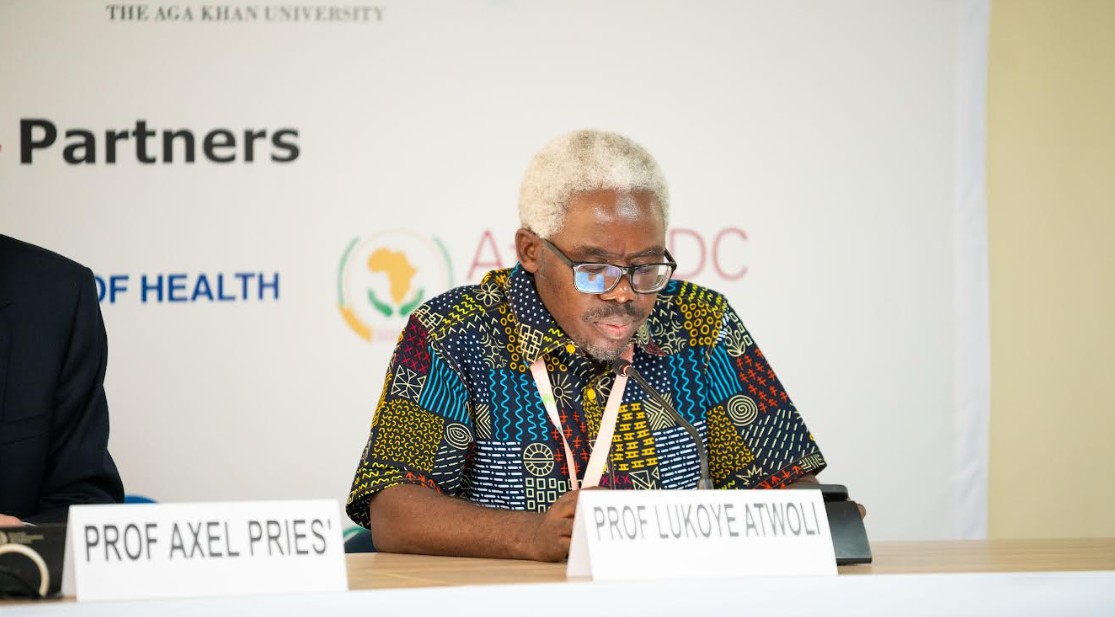
Speaking during the summit, WHS Regional Meeting 2026 International President Prof. Lukoye Atwoli emphasised the need for countries to take greater ownership of their health systems through increased domestic investment and policy alignment.
“The central outcome of the Summit is a strong push toward health sovereignty emphasizing the need for countries to expand local manufacturing of health products, increase domestic health financing and build resilient systems capable of responding to shocks,” said Atwoli.
He said countries must now move from policy commitments to implementation to ensure measurable improvements in health outcomes.
World Health Organization Regional Director for Africa, Dr Mohammed Janabi, said strengthening primary healthcare systems remains central to improving access and building resilience.
“Our focus is supporting countries to strengthen primary healthcare, mobilise sustainable domestic financing, responsibly harness digital innovation, and build systems that are resilient to shocks,” he said.
Janabi added that long-term investments and strong partnerships will be key in supporting countries to respond to future challenges, including pandemics, climate change and economic pressures.
World Health Summit Chief Executive Officer Carsten Schicker noted that the Nairobi meeting signalled a shift in how countries, including Kenya, are approaching health financing and collaboration.
He observed that discussions at the summit focused less on crises and more on building forward-looking, resilient systems, with countries increasingly stepping forward with practical proposals for reform.
“We are talking less about crisis and more about what comes next: how to build resilient health systems and stronger partnerships,” said Schicker.
He further emphasised that treating health as an investment rather than a cost will support economic stability and long-term development, adding that Kenya’s progress in digital health innovation offers valuable lessons.
Stakeholders at the meeting also called for improved coordination of health investments to reduce fragmentation and enhance efficiency in service delivery.
In addition, participants emphasised the need to invest in the health workforce through training, retention and leadership development to address existing gaps and improve service delivery across the country.
There were also calls to strengthen digital health infrastructure and data systems to support planning, monitoring and decision-making, with experts noting that technology will play an increasingly important role in improving healthcare access.
The meeting further highlighted the importance of involving communities, youth and civil society in health governance to ensure programmes are responsive to local needs.
Speakers also underscored the role of regional cooperation in addressing cross-border health challenges, including disease outbreaks and emergency preparedness, noting that coordinated approaches are essential for effective response.
The outcomes of the summit are expected to inform Kenya’s ongoing health sector reforms and contribute to global health discussions at the World Health Summit later this year.
By Joseph Ng’ang’a