For Majority of Kenyans, when the rain falls, it is always a rejoice because it brings forth another season of planting and growing crops, pasture or an opportunity to collect rainwater for commercial, domestic or livestock use.
For most Kenyans, the rainfall offers a chance to secure livelihoods through agricultural production while providing relief from water scarcity.
This is not the case for most people living in Garissa and Tana River counties, especially those living along the River Tana riverine area.
To them, the rains bring mass displacement due to loss of shelter to floods, destruction of livelihoods, especially when their farms are swept off and the disruption of education for their children.

Every rain season, the residents in these counties have to keep listening to their radios or watching the news on Television for flood alerts so that they can move to higher ground before the floods hit their villages.
Sometimes, the flooding is not even as a result of rains in the region, it is when rains fall in the River Tana Upstream counties or the controlled release of water from the seven folk dams ( Masinga, Kaburu, Gitaru, Kindaruma and Kiambere) which causes the swelling and breaking of the River banks leaving behind a tail of destruction.
This rain season, according to the Garissa county Steering group, as of 6th this month, at least 1000 households in Garissa township had been displaced by floods while at least 60,000 others are at the risk of displacement in the entire county.
Those affected are mainly from Bulla Punda, Bulla Kamor, Bulla Sheikh, Bakuyu, and Ziwani villages and are camping at the Farmer Training Centre (FTC), Hyuga and Police Training Centre internal displacement camps.
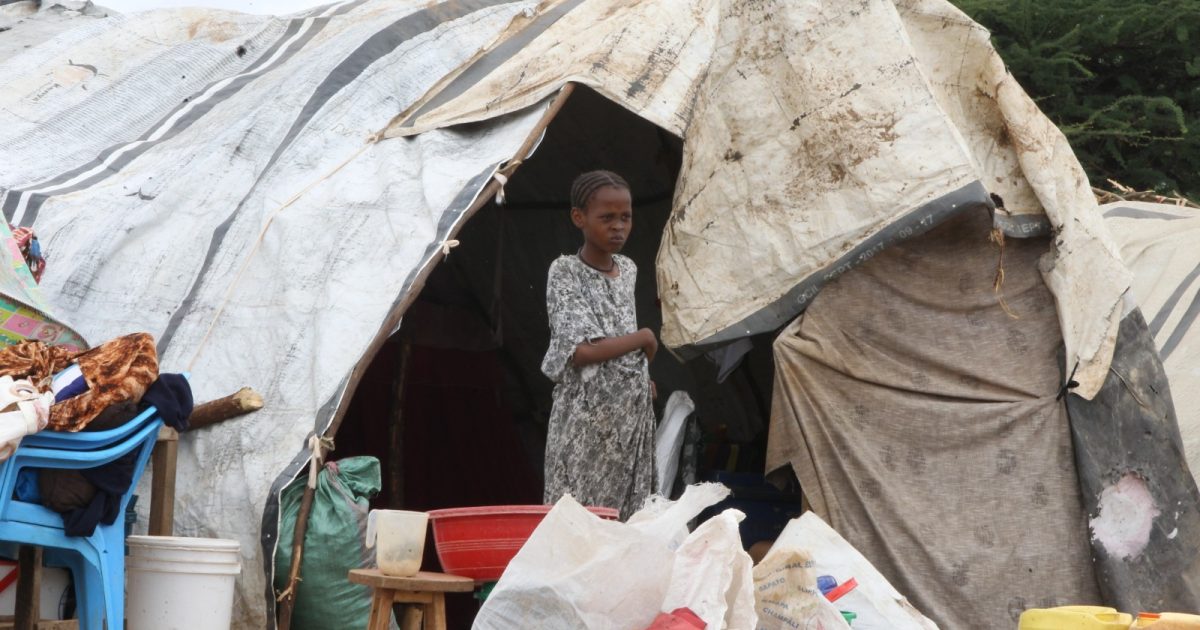
It is around 9am. At the FTC camp, we meet Mzee Issa Malio with his wife and grandchildren in a ragged makeshift tent that hosts six members of his family.
He has been here in the last one week since floods hit his Ziwani village, which is barely 2 kilometres from the camp.
Malio tells us that their source of livelihood has been destroyed. Their farms in the village have been swept off by the floods and now they are left with nothing. Not even the clothes.
“We have a big problem here in Ziwani because it is also where we have a lot of benefits to our livelihood. We have had farms along the river and our people burn charcoal from the Mathenge trees, which brings in some income,” Malio narrates.
“Sometimes floodwaters reach our houses at night when you are sleeping and by the time you wake up, everything, including our clothes and kitchen items, is swept off. We have been here since the 28th last month; although waters have now subsided, we are still worried because we have that more dams in the Tana river upstream will be released,” he added.
Malio tells us that sleeping in the tents has not been easy especially because the tents are old and full of slits. When it rains, water flows directly into the tent and if the rains do not come, then they have mosquitoes to deal with.
“You cannot sleep here without a mosquito net which we do not have. Our children are now sick, some have diarrhoea, others are vomiting every time, and others have fever. We hear that there is an outbreak of dengue fever,” Malio says.
“We appeal to the government and well-wishers to come and help us with food, mosquito nets, blankets and even cooking utensils,” he adds.
Asked why they have not moved to permanently higher grounds as advised by the county governments, Malio says that the areas they are asked to move to are unsafe due to inter community conflicts and without proper measures, they cannot risk their lives to move there.
Khadija Swale’s tent is just next to the Malio’s. We meet her washing her morning dishes and she paints a gloomy picture of life at the IDP camps.
“Our lives have been about moving here and there. When there are floods, we come here and when the waters subside, we go back. Even our children are also affected because the schools also flood, disrupting their education,” Khadija relates.
“Our children here are prone to diseases because we do not even have toilets. When our children have a long call, we do not have a place to dispose of the stool, and even us adults have no place to respond to the call of nature,” she says.
Abubakar Mohamed Ali is the headman for Bakuyu village where he says at least 200 households have been affected by floods.
Ali says food is their biggest challenge. They have nothing to eat and want the government to intervene to save the situation.

Daud Ahmed, the county coordinator for the Kenya Red Cross in Garissa says that they have been coordinating a multi-stakeholder assessment of the floods in the county to get the correct data for intervention measures.
However, Ahmed called on other development partners to bring resources together to support Kenyans who have been negatively affected by the ongoing flooding in the county.
“We will do differentiated assistance for the most vulnerable households affected by the floods with non-food items and wash supplies as well as food items but currently we do have food,” Ahmed said.
“As Kenya Red Cross, we are also doing evacuation services for the people who are marooned or have been surrounded by floodwaters. We appeal to the farms doing farming along the river line to avoid those areas because it is not safe,” he added.
by Erick Kyalo