The Centre for Mathematics, Science and Technology Education in Africa (CEMASTEA) has intensified a nationwide mentorship programme aimed at increasing uptake of Science, Technology, Engineering and Mathematics (STEM) subjects in primary and junior schools as Kenya seeks to build a skilled workforce through the competency-based curriculum (CBC).
STEM mentorship currently underway in Taita Taveta County is part of a national outreach initiative that has been undertaken in 11 counties, targeting especially rural schools grappling with inadequate laboratories, limited learning materials and low exposure to practical STEM learning.
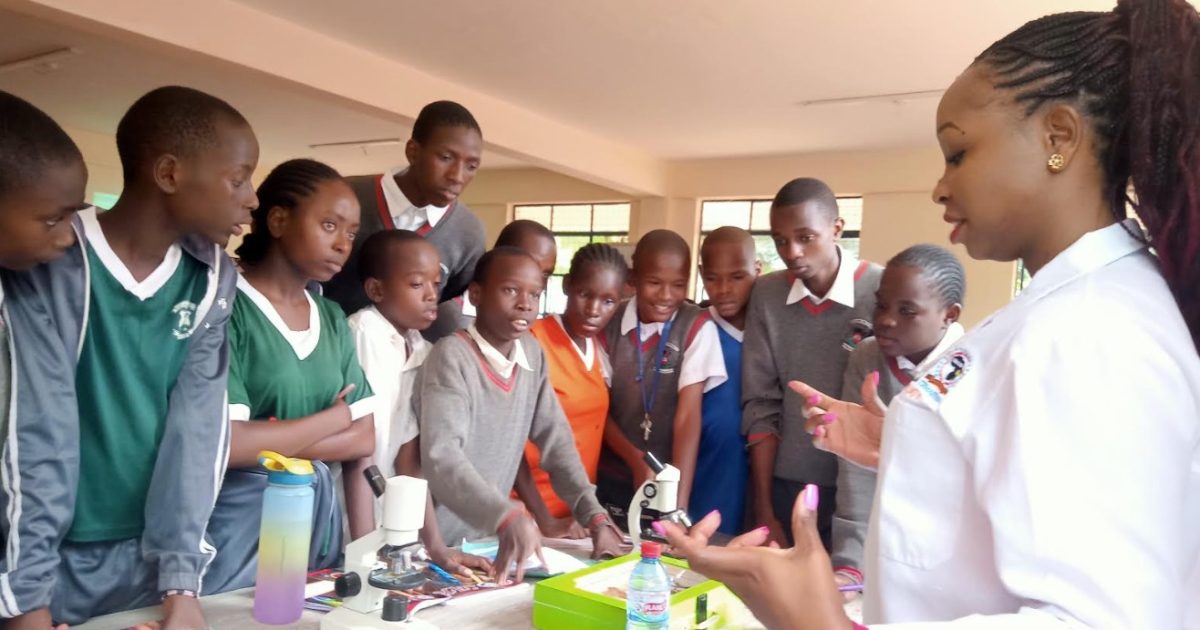
Speaking during the training at Mwanyambo Junior School in Voi Sub-county, CEMASTEA Coordinator for STEM Mentorship and Outreach, Joseph Kuria, said the initiative seeks to nurture interest in STEM pathways at an early stage to prepare learners for senior secondary school and future careers.
“We are conducting in-service education for teachers while also interacting directly with learners through practical activities that make STEM subjects more relatable and enjoyable,” Kuria said.
The government is targeting at least 60 percent of learners to transition into the STEM pathway under CBC as part of efforts to align education with Kenya’s Vision 2030 industrialisation agenda and the growing demand for technical and digital skills.
Kuria said the mentorship programme is designed not only to improve performance in science subjects but also to equip learners with competencies such as critical thinking, creativity, collaboration, digital literacy and problem-solving.
“We want learners to see STEM as a pathway for solving real-life problems and creating opportunities within their communities,” he said. The country needs skilled manpower to steer industrialisation and economic transformation.
According to Kuria, many rural schools continue to face serious infrastructure challenges that threaten effective implementation of the STEM pathway, particularly at the junior school level.
“Some schools lack laboratories, equipment and proper facilities for practical learning. That is why we are advocating for the establishment of STEM centres at the county level to support learners and teachers,” he said.
A team of 18 CEMASTEA staff is conducting the five-day outreach programme in the county, engaging both teachers and learners through practical demonstrations and interactive sessions.
Education stakeholders say the shift toward STEM is intended to move Kenya away from an education system heavily associated with rote learning and a job-seeking mentality toward one that nurtures innovation, entrepreneurship and technical problem-solving skills.
At Mwanyambo Junior School, Pre-technical studies teacher Christine Mwatati said the programme had already begun changing learners’ attitudes toward science subjects.
“Many learners believe STEM subjects are only meant for very bright students, which creates fear,” she said. “But through these practical sessions, they are beginning to understand that STEM can be fun and achievable.”
Mwatati said teachers had also benefited from new student-centred teaching approaches aligned with CBC requirements.
“We have learnt more practical ways of teaching that encourage collaboration and critical thinking among learners,” she said, while calling for increased government investment in laboratories, apparatus and infrastructure in rural schools.
Learners who attended the mentorship sessions expressed renewed confidence in pursuing STEM careers.
Grade 9 learner, Reaynold Mwambanga, said the programme had encouraged him to view science as a tool for addressing local challenges.
“Physics can help us solve electricity problems in our communities and even become entrepreneurs,” he said.
Another learner, Wendy Kalegha, said the mentorship had strengthened her ambition of becoming a dentist.
“I now feel empowered to pursue chemistry and biology in senior school,” she said. “The government should also help improve infrastructure so that learners interested in STEM can have better facilities.”
The outreach comes amid growing national concern over disparities in STEM preparedness between urban and rural schools, with experts warning that inadequate infrastructure could undermine the government’s ambitious CBC transition goals.
By Arnold Linga Masila