Vulnerable women and orphaned youths in Migori County have appealed to President William Ruto to consider reintroducing the once popular Kazi Mtaani Programme, saying it previously offered relief to struggling families and created employment opportunities for thousands of poor households.
The residents said the programme, which was introduced during former President Uhuru Kenyatta’s administration, enabled widows, unemployed youth, and orphaned children to earn an income through public works such as road maintenance, drainage cleaning, and environmental sanitation.
Speaking to the Kenya News Agency in Uriri Town, several widows and young people described the programme as a lifeline that helped them feed their families, educate children, and meet daily basic needs during difficult economic times.
Forty-year-old Perez Anyango, a widow from Kamuga village in South Kanyamkago Ward, Uriri Sub-County, said the programme greatly transformed her life after she lost her husband at the age of 32.
“I am one of the widows who benefited greatly from Kazi Mtaani. The money I earned helped me feed my children, educate them, and provide basic needs for my family,” she explained.
Anyango said the programme gave many vulnerable women dignity and hope by offering them an opportunity to work and support themselves rather than relying entirely on donations or relatives.
Another widow, 57-year-old Caroline Nekesa from Achuth village in Uriri Sub-County, also praised the impact the programme had on her family and the wider community.
Nekesa said she participated in the programme for one year and used the income earned from the work to improve her household’s living standards significantly.
“We plead with President Ruto and the Kenya Kwanza government to revive this programme because many poor people in villages have limited opportunities to secure formal employment,” she said.
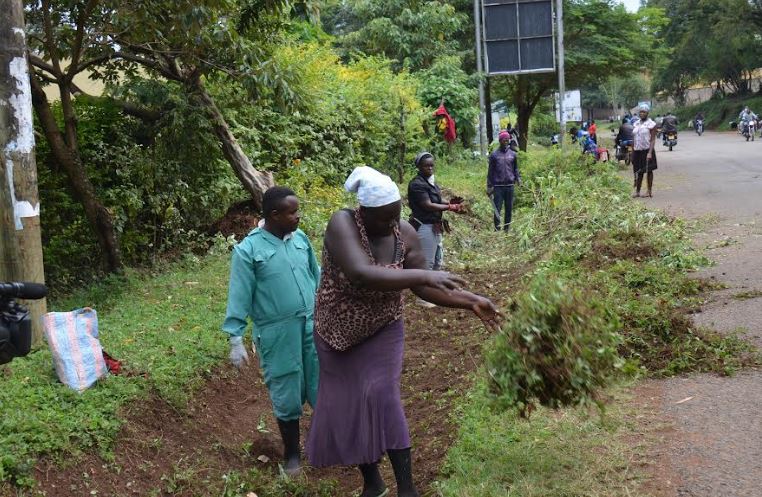
The first phase of Kazi Mtaani was launched in April 2020 as a pilot programme targeting informal settlements and vulnerable communities across the country. Participants were engaged in activities such as cleaning drainage systems, maintaining roads, collecting waste, and improving sanitation within public spaces and government institutions.
The programme also prioritized widows, orphaned youth, and unemployed young people in villages, with the government aiming to create temporary employment opportunities while improving the local environment.
Residents in Migori County said the programme left a lasting impact in many communities through wage earnings and environmental improvements witnessed in towns, markets, and public institutions.
Many public roads and market centres were cleaned and beautified, while families that previously struggled to afford meals or school fees managed to survive because of the wages earned from the initiative.
However, residents expressed disappointment that efforts by the current administration to introduce a similar programme under the name “Climate Workx” have not gained momentum in the county.
Peter Okeyo, an orphan from Anjego area in Uriri Constituency, said Kazi Mtaani helped him support his siblings after the death of his parents.
“I became the head of my family in 2022 when I was only 21 years old after losing both my parents. I had to take care of my four siblings without any stable source of income,” he explained.
Okeyo said he was recruited into the programme through the assistance of a local chief and earned about Sh7,000 every two weeks, which enabled him to provide food and other necessities for his younger siblings.
“Through the programme, I managed to keep my family going despite the many challenges we were facing,” he added.
The residents noted that unemployment, rising living costs, unpaid school fees, and limited opportunities continue to burden many vulnerable families across Migori County.
They urged the national government to strengthen and expand labour-based community programmes such as Kazi Mtaani and Climate Workx to cushion poor households from worsening economic hardships.
According to the residents, reviving the programme would not only create employment opportunities for young people and widows but would also improve sanitation and environmental conservation within towns and villages.
By Wendy Merryl and Faith Opar