As Kenya’s media industry reels from shrinking newsrooms, layoffs and the rapid shift to digital platforms, hundreds of young journalists and creatives are being forced to reinvent themselves outside traditional media houses.
In Kisumu, one organisation is quietly stepping into that gap — offering struggling storytellers not just workspace, but survival.
At the heart of the city’s growing creative scene, Baraza Media Lab has become a refuge for freelance journalists, podcasters, photographers, filmmakers and digital creators searching for tools, mentorship and audiences in an increasingly uncertain media space.
Speaking during an interview as the world marked World Press Freedom Day 2026, Events and Communications Officer at the organisation Ms Akinye Ogot said the hub was born out of the growing struggles faced by creatives and independent journalists outside mainstream media.
“Baraza Media Lab is a space for creatives and journalists. It is a place to come and explore, create and collaborate, basically giving creatives and storytellers an alternative home,” she said.
The organisation, Mr Ogot said was established after research revealed a widening need for accessible and collaborative working spaces for media practitioners and creatives in Kisumu, many of whom lacked equipment, production facilities and professional networks.
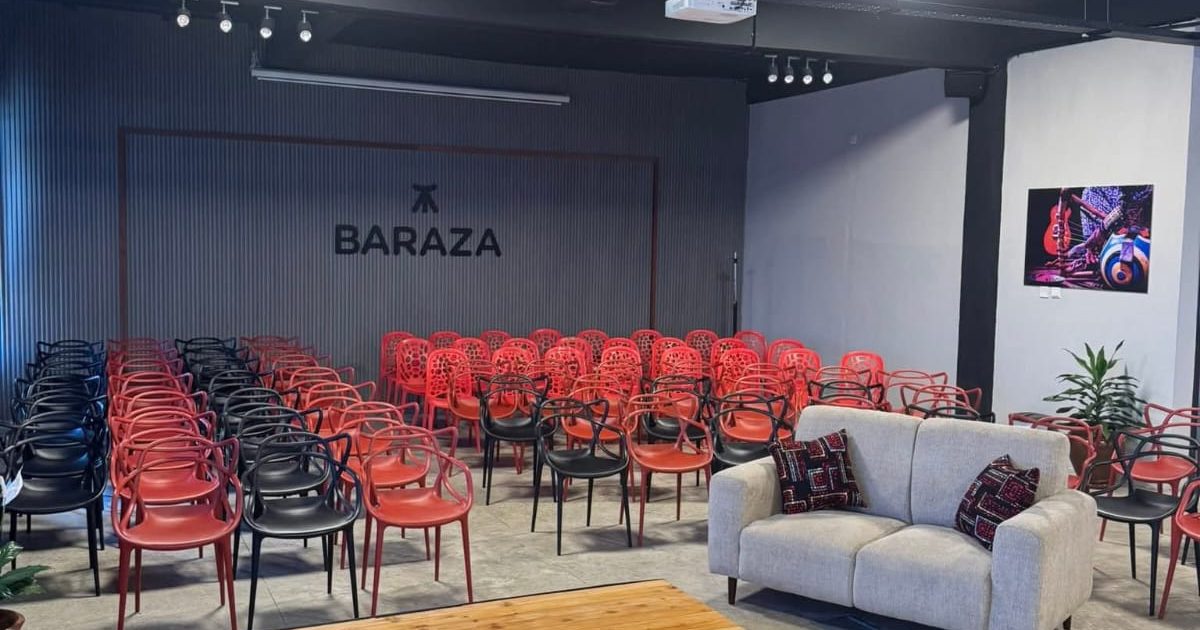
Today, the hub hosts podcast studios, content production spaces, and workshops and creative forums where storytellers can develop ideas, produce content and build partnerships.
“If you want to come and work from here, create content, shoot your content, record a podcast or even look for collaborations and partnerships, Baraza is open to that,” Ogot said.
But beyond offering space, the organisation is increasingly positioning itself as a defender of credible journalism at a time when misinformation and unregulated digital content are reshaping public discourse.
Ogot said the organisation believes press freedom must go hand in hand with accuracy, accountability and ethical storytelling.
“I would say Baraza Media Lab defines press freedom as accuracy, putting out the right information and also holding the government accountable,” she said.
Through its “Fumbua” programme, the Lab trains journalists and digital creators on fact-checking, verification and identifying misinformation, aspects that are becoming increasingly critical in the age of viral content and artificial intelligence-driven information sharing.
The hub is also redefining storytelling by blending journalism with art, photography, poetry, music and podcasting through programmes such as Civic Canvas, which uses creative expression to spark conversations around governance and social issues.
Inside the facility, walls covered with photography exhibitions and visual art pieces reflect the organisation’s broader mission of amplifying under-represented voices and alternative narratives.
Ogot said one of the biggest challenges facing young journalists today is breaking into a shrinking and highly competitive media industry. “That is where Baraza Media Lab comes in to provide a space where you are able to write your stories, document and talk about your stories,” she said.
Apart from content production, the organisation also hosts forums where journalists openly discuss challenges in the profession, including burnout, field pressures, financial instability and mental health struggles.
“We bring in journalists to share what they face in the field. They talk about that and get therapy,” she said.
Currently, the organisation operates five hubs across the country as it expands support for young storytellers adapting to the realities of digital media.
Ogot noted that the future of journalism now lies in embracing digital storytelling formats that resonate with younger audiences whose news consumption habits have shifted online.
“The future of journalism should incorporate the digital space so that we are able to move with the times and rope in the young generation,” she added.
She said that media labs are becoming critical spaces where journalism and content creation can converge without sacrificing accuracy and accountability.
“Our target audience is creatives, content creators and journalists, so there is an opportunity to merge these and come up with a direction that still holds content creators accountable in terms of accurate information,” she said.
Every year, thousands of graduates leave universities and colleges with journalism and media degrees only to enter an industry grappling with declining advertising revenues, newsroom downsizing and changing audience behaviour.
For many young storytellers, survival increasingly depends on digital skills, innovation and independent platforms beyond conventional newsrooms.
It is within this rapidly shifting media landscape that Baraza Media Lab is emerging not just as a creative hub but as a lifeline for a new generation of Kenyan storytellers struggling to find their place in the future of journalism.
by Pamella Dorothy