The government, civil society organizations and religious leaders in Nyeri County have pledged to work together in addressing the growing cases of suicide, Gender Based Violence (GBV) and alcoholism, which they described as major threats to social and economic development in the region.
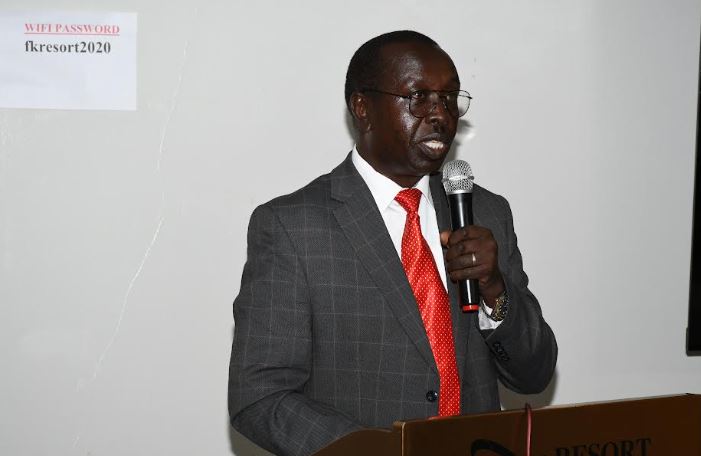
Speaking during a one-day sensitization workshop on GBV, illicit brews and mental health held at the FK Resort in Nyeri, County Commissioner (CC) Josephat Biwott called on all stakeholders to unite in confronting what he termed as “deep-rooted societal problems” affecting families and communities across the county.
Biwott said the county continues to record alarming cases of suicide, especially among young people and men battling alcoholism and depression.
He revealed that the county loses between eight and ten people to suicide every month, a trend he described as worrying and unacceptable.
“We are addressing serious issues affecting our county. One of them is suicide cases. We have a problem with what is really happening. Why are people taking their lives?,” he posed.
According to Biwott, from June 2025 to date, Nyeri County has lost a total of 107 people through suicide, including 81 men and 26 women.
He said the statistics point to an urgent need for intervention from both the Government and the society at large.
“We have an average of eight to ten people who are committing suicide every month in this county. That is something very risky,” he said.
The CC disclosed that the youngest suicide victim recorded in the county was an 11-year-old child, while the oldest victim was an elderly person in his eighties.
Biwott also revealed that an assistant chief in the county recently attempted to take his own life after struggling with alcoholism. The local administrator, who was reportedly a habitual drunkard, was rescued and later admitted to a rehabilitation facility in Kiambu County where he is currently recovering.
The administrator said the increasing cases of suicide should serve as a wake-up call to families, community leaders and religious institutions to strengthen mental health awareness and provide support systems to vulnerable individuals.
He emphasized that parents have a major role to play in guiding their children and instilling discipline and moral values at an early age.
“We must reverse this trend before it gets worse. Parents need to become more involved in the lives of their children. Many of the societal problems we are facing today are because parental responsibility is declining,” said Biwott.
The CC further expressed concern over rising cases of school dropout among teenage girls, many of whom are reportedly cohabiting with older men.
He disclosed that his office has handled several incidents involving girls as young as 16 years, who disappear from their homes only to be discovered later living with men in neighboring towns.
Biwott cited a recent case involving a student from Kenya High School who disappeared mysteriously after alighting from a public service vehicle at Skuta in April. The girl was later found in Thika under unclear circumstances after weeks of search.
He also condemned the increasing cases of truancy among school-going children, particularly boys who abandon education for criminal activities, alcoholism and drug abuse.
“Gender Based Violence is another rampant issue affecting our young generation and cuts across both the boy and the girl child. Recently we lost a nine-year-old girl after she was defiled, killed and later dumped in a pit latrine,” he said.
“Truancy is also on the rise among our children, especially boys who are running away from school to engage in activities that do not support their future. Special help is needed, including moral guidance from our religious leaders,” added Biwott.
Nyeri County Executive Committee Member in charge of Gender, Esther Ndung’u, also called for stronger collaboration among stakeholders in the fight against GBV and illicit brews.
Ndung’u said one of the major challenges in addressing GBV cases is the lack of timely sharing of information among institutions handling victims and suspects.
She noted that some perpetrators of GBV are close relatives or people known to the victims, making it difficult for cases to be reported or pursued to conclusion.
“It appears that some perpetrators of GBV are relatives and people known to the victims. It is also apparent that some of these people are being protected. All of us need to work as a team collectively because we cannot fight this menace alone,” she said.
The Gender Executive disclosed that defilement cases continue to top the list of GBV incidents reported in the county.
According to county records, Nyeri has recorded 349 GBV cases since 2024, out of which 154 were defilement cases.
Data from the Judiciary further indicates that courts handled 126 GBV-related cases, including 92 cases of defilement, while several others are still ongoing.
Ndung’u observed that there exists a huge gap between the number of GBV cases reported and those that eventually proceed to court, an indication that many victims fail to get justice.
She provided statistics showing a gradual increase in GBV cases over the years, with 335 cases reported in 2022, 361 in 2023, 371 in 2024 and 435 cases in 2025.
“But if you compare those numbers with the court cases, they are very low compared to what is reported. This is why all stakeholders must come together and work as one team to fight these vices,” emphasized Ndung’u.
Among the strategies being implemented by the county government is collaboration with organizations such as the Centre for Rights Education and Awareness (CREAW) to create awareness at the grassroots level and encourage victims to speak out.
Ndung’u said her department is also working closely with police officers and local administrators to ensure victims of GBV receive protection and support.
She noted that plans are underway to establish friendly GBV reporting desks in all police stations across the county to make it easier for victims to report cases and access assistance.
The county official further appealed to the national government to consider issuing free P3 forms to victims of GBV to reduce the financial and psychological burden associated with seeking justice.
“In 2021 we started a technical working group bringing together stakeholders from the national government and county government and came up with a Gender Policy addressing issues such as suicide and Gender Based Violence,” she said.
“We also have a Youth Policy addressing these challenges and we have continued to create awareness at the grassroots level. However, a lot still needs to be done,” added Ndung’u.
By Samuel Maina and Stephen Nderitu