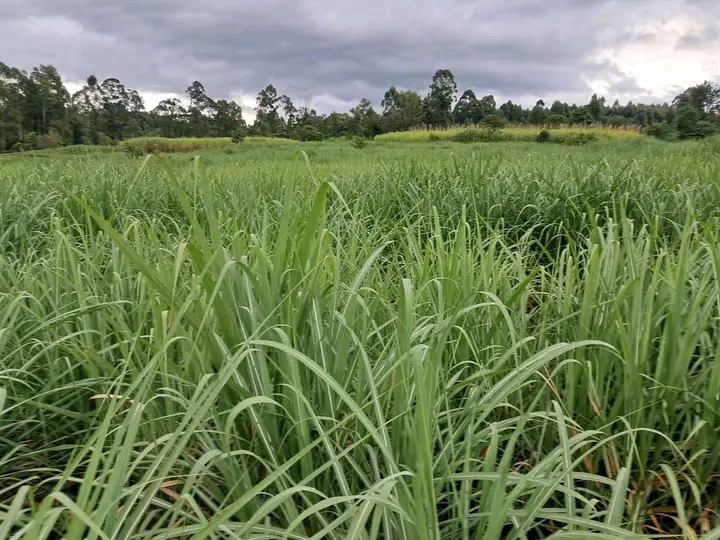
The rapid expansion of cash crops such as sugarcane and coffee in traditionally food-producing regions is increasingly raising concerns over the future of household and national food security.
In counties such as Nandi, where maize, beans, sweet potatoes and vegetables have for decades formed the backbone of food production, more farmers are now converting large portions of their land into sugarcane and coffee farms in pursuit of higher and more stable returns.
Agricultural economists say the attraction toward cash crops is understandable given the rising cost of farm inputs, fluctuating maize prices and the promise of guaranteed markets for sugarcane and coffee farmers.
Reports from the region indicate that sugarcane prices have improved significantly in recent years, while coffee reforms and value-addition initiatives are restoring confidence among growers.
Coffee farming is equally expanding rapidly following aggressive campaigns by the county government and cooperatives to increase production in both the northern and southern coffee belts.
The shift has been particularly evident in Tinderet Sub County, where sugarcane acreage has expanded steadily over the last decade while the county government simultaneously intensifies efforts to revive coffee farming through distribution of millions of seedlings and establishment of processing facilities.
However, experts warn that if the transition is not carefully managed, it could undermine food sufficiency in a county historically regarded as one of Kenya’s food baskets.
Agricultural economist Peter Langat says the danger lies in farmers abandoning diversified farming systems in favor of monoculture cash cropping.
“When households dedicate nearly all their land to cane or coffee, they become dependent on the market for food purchases. The problem comes when prices fluctuate, payments delay or drought affects production,” he said.
He noted that sugarcane, in particular, occupies land for long periods, reducing opportunities for seasonal food crop production.
“Unlike maize or beans which can be harvested within months, sugarcane ties up the land for over a year. If many households simultaneously reduce food crop acreage, local food shortages become inevitable,” he added.
Current estimates indicate that thousands of acres in Nandi are now under sugarcane cultivation, with Tinderet accounting for a substantial portion.
Dr. Kiplimo Lagat, the County Executive Committee Member for agriculture, said balancing commercial agriculture with food production remains critical.
“We support cash crop farming because it improves incomes, but we also encourage integrated farming systems where households maintain maize, beans, bananas, vegetables and livestock alongside cash crops,” he said.
He explained that the county has intensified farmer sensitization on intercropping, crop rotation and climate-smart farming to prevent overdependence on a single crop.
Food security analysts caution that once food production declines in major producing regions, the effects spread beyond individual households to national markets through rising food prices.
“In the past, counties such as Nandi supplied substantial maize volumes to other parts of the country. If more acreage shifts to coffee and sugarcane, Kenya could become increasingly reliant on food imports or emergency interventions,” said food policy researcher Jane Chebet.
She warned that the danger is worsened by climate change, which continues to disrupt agricultural production patterns across the country.
“When drought or floods strike, families depending solely on cash crops may struggle because they lack direct food reserves at home,” she added.
The issue has also generated debate among farmers themselves, with some supporting the transition, while others fear it may compromise long-term sustainability.
Farmer Daniel Kiprotich from Songhor-Soba said sugarcane has significantly improved his household income compared to maize farming.
“With cane, I can predict returns and even access loans. Maize had become unreliable because of poor prices and expensive fertilizer,” he said.
But he admitted that complete dependence on cash crops would be risky. “I still reserve part of my farm for maize and vegetables because you cannot buy every food item from the market all the time,” he said.
Coffee farmer Mary Jelagat said the revival of coffee farming had restored hope among many families after years of declining returns.
“Coffee is now bringing back money into households, especially with the reforms and better prices,” she said.
Nonetheless, she emphasized the importance of maintaining food crops. “Even if coffee is profitable, families must continue producing food for home consumption because market prices can change anytime,” she added.
Some agricultural experts argue that the solution is not discouraging cash crop farming, but ensuring diversification and modern land-use planning.
They recommend that county governments establish policies limiting excessive conversion of food-producing land into monoculture plantations, while strengthening extension services to educate farmers on balanced farming systems.
Extension officer Josephine Chepkemoi said farmers are increasingly being encouraged to adopt integrated farming models.
“We are advising them to combine sugarcane or coffee with short-season crops, dairy farming, poultry and horticulture so that they maintain both income and food security,” she said.
She added that irrigation, improved seed varieties and post-harvest storage could help increase food production even on smaller acreage.
Experts further recommend investment in value addition to ensure farmers earn more from smaller portions of land instead of endlessly expanding acreage.
“If farmers receive better prices through processing and branding, they do not need to convert every acre into cash crops to make profit,” Langat said.
Climate-smart agriculture has also emerged as a key recommendation in addressing the challenge.
Agronomists say adoption of drought-resistant food crops, agroforestry, soil conservation and efficient irrigation systems can help maintain food production while allowing farmers to participate in commercial agriculture.
Agricultural stakeholders maintain that achieving a balance between commercial farming and food production is the only sustainable path forward.
“Cash crops are important because they improve livelihoods and drive economic growth, but food security must never be sacrificed,” Chebet said.
As more farmers in regions such as Nandi embrace sugarcane and coffee farming, experts insist that careful planning, diversification and sustained government support will determine whether the shift becomes a blessing or a future food crisis.
By Sammy Mwibanda