The government is seeking to strengthen scientific investigation, improve administration of justice, enhance registration and licensing of forensic laboratories in the country, among other functions, through the proposed National Forensic Science Bill, 2026.
The Ministry of Interior and National Administration is therefore seeking public views on the draft Bill, aimed at strengthening scientific investigations and standardising forensic evidence collection.
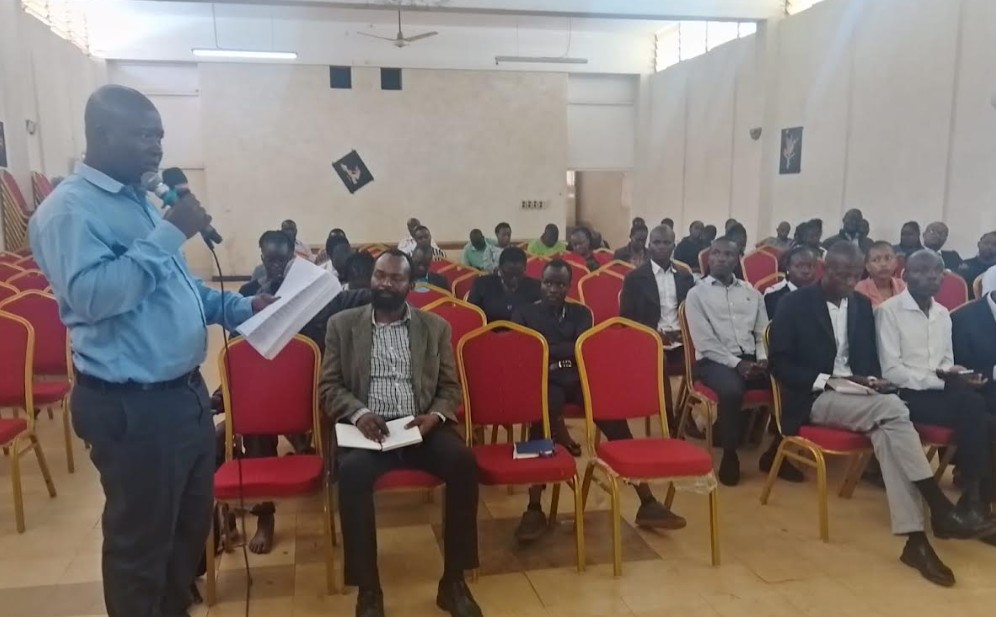
Speaking at the Western regional offices in Kakamega during a public participation forum, Deputy Government Chemist Stephen Matinde said the proposed legislation seeks to establish a State-of -the -Art National Forensic Laboratory, expand the mandate of the Government Chemist and also provide for the establishment of an Independent Regulatory Board, which will set standards to ensure forensic evidence is strong and reliable enough to stand in a court of law.
“The Bill seeks to upgrade laboratory facilities and standardise methods for collecting, handling and analysing evidence to ensure it is acceptable in the Court of law,” he added.
The proposed legislation also set high qualifications for forensic practitioners to ensure only qualified experts handle, report and testify on criminal forensic evidence and align Kenyan forensic practices with international standards.
Matinde explained that the Government Chemist is critical in criminal investigations, environmental protection, food safety, drug testing, and conducting scientific analysis of samples like blood and DNA and toxic substances like narcotics and industrial chemicals.
He said the Forensic Science Directorate has three specialities that include Forensic Biology, which focuses on crime scene DNA analysis, paternity cases and sexual offenses.
Forensic Toxicology which investigates crime scenes involving harmful substances or incapacitating drugs and Criminalistics, which conducts chemical analysis for firearms discharge residue testing, among others.
Pamela Okello, a DNA expert, explained that the Department of Criminal Investigations (DCI) will be overseeing the proposed national criminal DNA databank that will be used for profiling criminals and improving investigations.
During the forum, participants called on the government to decentralize Government Chemist services to various regions in order to safeguard the efficacy of samples collected.
Dennis Magero and Titus Muhambe, from Alupe University in Busia County, warned that if university laboratories were treated like forensic service providers, it would affect the research and teaching functions at the institutions.
They said universities carry out important scientific activities such as toxicological studies, water quality monitoring and food safety inspection and analysis that are beneficial to public health and policy formulation.
“Training and research could be impacted if the university laboratories are considered commercial forensic laboratories,” said Muhambe.
The stakeholders felt that the forensic laboratories used for criminal investigation should be separated from the academic and research laboratories and that their regulation should be different.
They also called on the lawmakers to acknowledge the training institutions as stakeholders in forensic science.
National Environment Management Authority (NEMA) officials called for the strengthening of forensic practices on environmental matters to improve the prosecution of environmental pollutants.
Cliff Akide, the Busia County NEMA Director, asked the government to guard against the issuance of multiple licenses to private practitioners, saying this may compromise the efficacy of results.
Kakamega County Director of Children Services Esther Wasige called for capacity building of staff of Children Services who handle sensitive cases of defilement.
The legislation and establishment of the National Forensic Laboratories are designed to solve the collapse of court cases due to poor evidence, expedite investigations and enhance public trust in law enforcement.
Matinde clarified that in cases where DNA is required for criminal cases, the government will continue to offer free services, but civil cases will be borne by interested parties.
“Forensic investigations for criminal cases brought forward by the National Police Service (NPS) will continue to be free,” he added.
By Crypton Esolio and Billy Nasiali