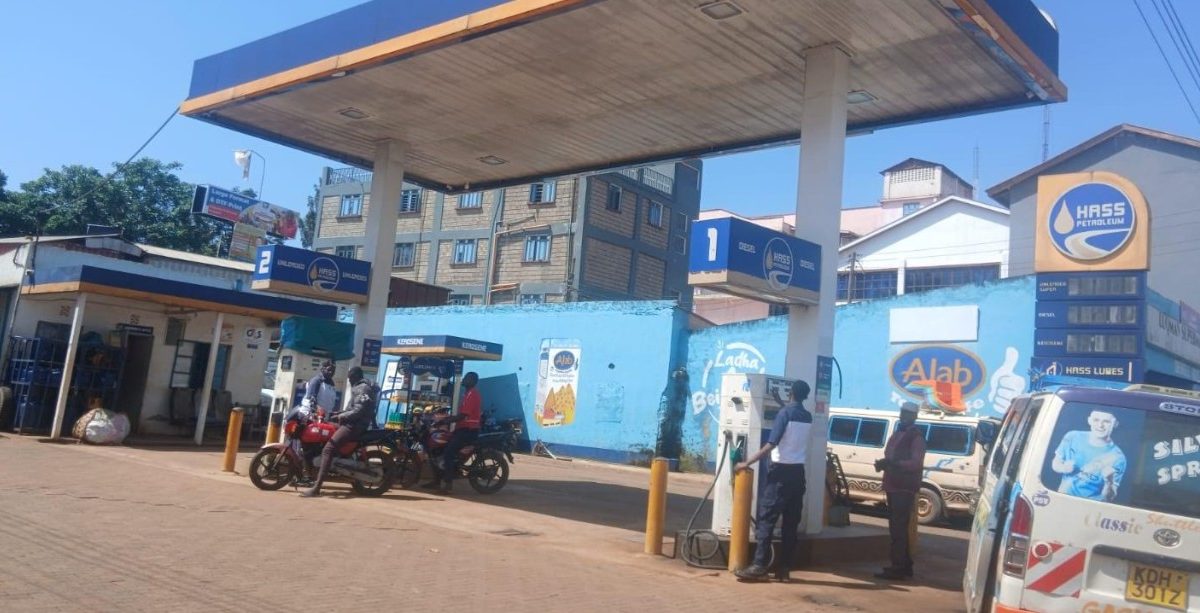
Residents of Vihiga County are already feeling the effects of the latest fuel price increase announced by the Energy and Petroleum Regulatory Authority (EPRA), with public transport fares rising sharply across several routes and sparking concern among commuters and transport operators alike.
EPRA on Thursday announced an increase in fuel prices, raising the cost of petrol by Sh16.65 and diesel by Sh46.29, a move that has sent shockwaves through the transport sector and households that rely heavily on public service vehicles.
By early Friday morning, many commuters in Vihiga County were caught off guard as matatu operators began charging higher fares, with some routes experiencing immediate fare hikes.
On the Luanda–Mbale route via Majengo, passengers who are accustomed to paying sh100 were instead asked to pay sh150, prompting confusion and frustration among travellers.
Several commuters at Ebusakami Junction expressed dissatisfaction, saying they had not anticipated such swift changes in transport charges.
Some passengers noted that they were unaware of the fuel price adjustment, while others said the abrupt increase had disrupted their daily budgets.
“It is becoming harder for ordinary citizens to cope. Everything is already expensive, and now transport costs are rising too,” said Onyango Barasa, waiting for a matatu at Ebusakami Junction.
Despite the fare increase, some conductors showed sympathy and allowed passengers to pay the usual amount, especially those who did not have extra cash. However, others remained firm, insisting on the revised charges and offering little room for negotiation.
Public transport operators, including drivers and conductors, defended the fare adjustments, citing the significant rise in fuel costs as an unavoidable burden on their business.
“If the government continues increasing fuel prices, we have no choice but to raise transport fares. We also have expenses to meet,” said one matatu conductor, Ian Nyangwara, operating along the Luanda–Mbale route.
Some residents also expressed concern over the unusually sharp increase in diesel prices, noting that it is rare to see diesel priced significantly higher than petrol.
“We have never witnessed such a big gap where diesel becomes much more expensive than petrol. The government should review these prices because the burden falls directly on the mwananchi,” another commuter remarked.
The latest adjustments are expected to have a ripple effect beyond transport, potentially driving up the cost of goods and essential services in the coming days.
As residents adapt to the sudden changes, many are now calling on the government to intervene and reconsider the fuel pricing measures to ease the growing pressure on Kenyan households.
By Kelly Barasa and Maureen Imbayi