The government has expressed concern over the rising cases of Gender-Based Violence (GBV), femicide and child abuse in the country, warning that the trend has become a national crisis requiring urgent and coordinated intervention.
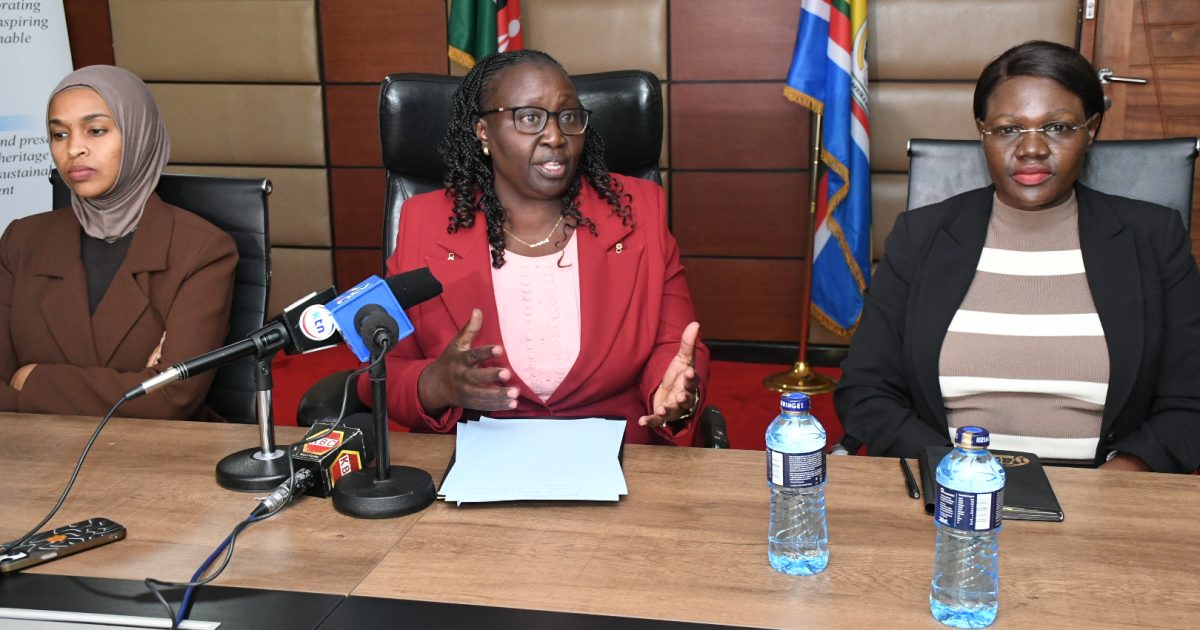
Ministry of Gender, Culture and Children’s Services Cabinet Secretary (CS) Hannah Cheptumo said recent incidents of violence against women and children underscore the urgent need for stronger protection systems and collective action from all sectors of society.
Cheptumo, accompanied by the Culture and Heritage PS, Ummi Bashir and her Children Welfare Services counterpart, Carren Achieng Ageng’o, reaffirmed the government’s commitment to safeguarding vulnerable persons and strengthening child protection mechanisms across the country.
“The Ministry has noted with deep concern the rising cases of gender-based violence and femicide across the country alongside increasing concerns regarding violence, abuse, neglect, exploitation, emotional harm and indignity against children,” said Cheptumo.
She cited several recent incidents, including the alleged killing of Rachel Wandeto, who was reportedly doused with petrol and set ablaze over political differences, the fatal stabbing of a 25-year-old woman in Kilimani and the death of a Form Three student in Nyamira allegedly attacked by her boyfriend, who later died by suicide.
“These are not isolated tragedies, but indicators of a growing national crisis that demands urgent, coordinated and sustained action from all sectors of our society,” she said.
The CS noted that the government remained firmly committed to protecting all persons from violence, abuse and exploitation in line with the Constitution of Kenya 2010, the Children’s Act 2022 and other existing laws and policies.
She emphasized that children remain the foundation of the nation and that their protection is both a legal obligation and a shared responsibility among families, institutions, leaders and communities.
“The protection of women, girls and all vulnerable persons from GBV and femicide remains a national priority requiring decisive and collective intervention,” she added.
Cheptumo said the Ministry was working closely with law enforcement agencies, county governments, development partners and community structures to strengthen prevention, reporting, rescue, rehabilitation and survivor support systems.
Among the measures being undertaken are fast-tracking prosecutions of perpetrators, strengthening enforcement mechanisms and enhancing penalties for offenders involved in femicide, acid attacks, trafficking and child abuse cases.
She further announced the expansion of safe houses, one-stop crisis centres, child rescue and rehabilitation services, as well as the strengthening of mandatory reporting protocols for health workers, pharmacists, teachers, media practitioners and community leaders.
The Ministry is also rolling out nationwide awareness campaigns, aimed at addressing harmful social norms and toxic masculinities while promoting responsible parenting and ethical media reporting.
Cheptumo called on the public to promptly report cases involving missing children, violence, abuse, trafficking, online exploitation and femicide through the National Child Helpline 116, the GBV toll-free line 1195, WhatsApp line 0722488444, police stations and children’s offices located in every sub-county.
“Timely reporting is critical to enable swift intervention, investigations, rescue operations, rehabilitation and access to justice for affected persons,” she said.
According to data from the Child Protection Information System, a total of 10,581 child-related cases were reported between January 1, 2025 and March 31, 2026. Of these, 6,820 were abandonment cases, 1,952 involved abduction while 1,638 were reported through Helpline 116.
Cheptumo said 295 of the reported cases had been resolved through reintegration of rescued children back to their families, while 173 trafficking cases had also been recorded.
Citing Article 53(2) of the Constitution and Section 22 of the Children’s Act 2022, the CS stressed that the best interests of the child must remain paramount in all matters affecting children.
She urged leaders, parents, institutions, media practitioners and digital platform users to uphold safeguarding principles and avoid circulating unverified information that could compromise investigations or expose victims to further trauma.
The Ministry also appealed to the National Police Service and the Directorate of Criminal Investigations to expedite investigations into all reported cases of GBV and femicide, while urging the Judiciary to ensure survivor-centered hearings.
County governments were challenged to allocate adequate resources towards GBV prevention and child protection programmes, while the private sector was encouraged to establish workplace safeguarding policies.
“No child should be subjected to violence, humiliation, exploitation, abandonment or fear. Similarly, no person should live in fear of violence, abuse or discrimination,” Cheptumo said.
She reiterated that the government would continue strengthening institutional coordination, survivor protection systems and justice mechanisms to ensure every Kenyan lives in a safe and dignified environment.
The CS also advised members of the public who find lost children to take them to the nearest police station or children’s office to facilitate tracing and reunification with their families.
She disclosed that the government currently operates 30 child protection institutions across the country to provide temporary shelter and care for vulnerable children, while some children have been placed under adoption programmes and charitable institutions.
Cheptumo underscored the importance of family-based care, saying children thrive best under the guidance of parents or guardians in safe and nurturing environments.
“We are carrying out positive parenting trainings so that parents understand the importance of taking care of their children and creating safe environments for them to grow and thrive,” she said.
By Celestine Lomolijah