

Health officials in Homa Bay County have sounded alarm over the rising burden of Non-Communicable Diseases(NCDs), which now account for nearly half of hospital admissions and deaths across the county.
The concerns were raised during a multi-sectoral stakeholders’ meeting, where leaders called for urgent collaboration among government agencies, development partners, civil society organizations, faith-based institutions, and local communities to combat the crisis.
The forum brought together both state and non-state actors to deliberate on strategies, aimed at strengthening awareness, prevention, screening, and treatment of NCDs across the county.
Speaking during the forum, Dr. Michael Ochola, County NCDs Coordinator at the Department of Health, said the situation was alarming, noting that NCDs including cancer, hypertension, diabetes, epilepsy and sickle cell account for 50 percent of hospital admissions and 45 percent of deaths in the county.
“These are very scary statistics. We are, therefore, called on to hold hands in combating these illnesses,” said Ochola.
Ochola highlighted several interventions already rolled out by the county government to address the growing health challenge. Among them is a recently launched countywide screening program for sickle cell disease targeting children aged between zero and five years.
The exercise, supported by PATH, is being conducted in maternity units, maternal and child health clinics, and outpatient departments.
The initiative seeks to improve early diagnosis while addressing stigma and misconceptions surrounding sickle cell disease.
“Our people still do not understand that sickle cell disease is an inherited genetic illness. We want to demystify the issue and ensure early diagnosis because NCDs are a major cause of mortality and morbidity in the county,” he said.
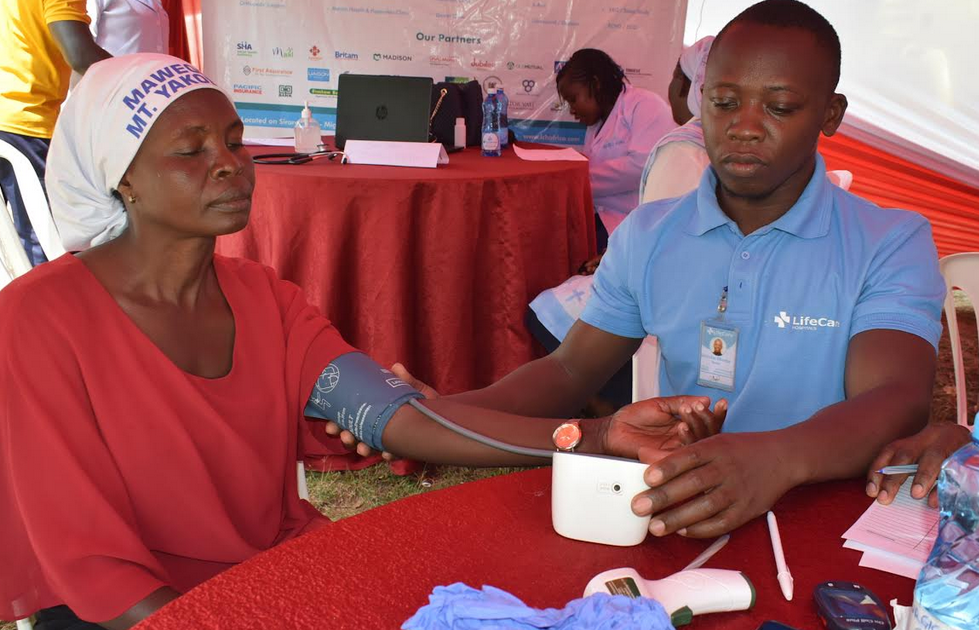
At the same time, Homa Bay town and Ndhiwa sub-counties have launched a five-day community screening campaign for diabetes and hypertension with support from the World Diabetes Foundation and implemented by the Diabetes Management Information Centre (DMI).
Under the initiative, community health promoters are conducting household and church-based screenings to establish the prevalence of the diseases and refer affected residents for treatment.
Ochola further revealed that the county government has partnered with organizations including Clinical and Biomedical Resources (CBR) International to establish a centre of excellence for sickle cell disease management in Homa Bay.
The partnership is expected to enhance diagnostic services through the provision of HB electrophoresis testing machines across all nine sub-counties following the signing of a Memorandum of Understanding with the county government.
County NCD Chapter Chairperson, Pastor Ken Ouma, said residents at the grassroots continue to face significant challenges in accessing testing, medication, and support services.
“Fifty percent is just too much. Our people at the grassroots have not been tested and are lagging behind. We came together to look at what we can do collectively to lobby for the establishment of a Homa Bay County NCDs policy,” said Ouma.
According to Ouma, the proposed policy would help unlock more county resources for medication and support services for patients living with NCDs.
He also criticized the limited support currently available through the Social Health Authority (SHA), saying many patients continue to struggle to access affordable treatment.
“We are petitioning the National Assembly, so that SHA can consider reallocating more resources to support medication for diabetes patients. We are also petitioning the Homa Bay County Assembly to allocate resources for drugs such as hydroxyurea for sickle cell patients,” he added.
Ouma challenged churches, political leaders, and aspiring candidates to prioritize NCDs awareness and prevention in their development agendas and political manifestos.
On the other hand, Homa Bay County Head of Finance in the Department of Health, Catherine Okeyo, acknowledged that budgetary constraints remain a major obstacle to implementing adequate NCDs programs.
She explained that although the county health budget stands at Sh3.6 billion, nearly 65 percent is spent on payroll, leaving limited funds for healthcare development and disease management programs.
“For this financial year, we had a ceiling of Sh270 million for health programs and only Sh2 million for capacity building related to NCDs. It is not enough based on the population we serve,” said Okeyo.
She appealed to the county assembly and the governor to increase budgetary allocations for NCD interventions, warning that failure to act could lead to more preventable deaths.
“If we continue this way because of the ceiling effect, we are going to lose many citizens of Homa Bay,” she warned.
Patients living with NCDs also voiced concerns over the shortage of essential drugs in public hospitals across the county.
Thomas Mboya, a patient and the County NCD Patients Organization Secretary General urged both the county government and the county assembly to prioritize funding for insulin and other essential medicines.
“We would like insulin to be available in all first-level health facilities in this county and even across Kenya. We are also appealing for support for hydroxyurea and other commodities in health facilities,” he said.
Terry Odero, a sickle cell patient, said the shortage has forced her to seek medication from Moi Teaching and Referral Hospital in Eldoret, a situation she said places many patients at risk.
The patients appealed to the county government to allocate adequate funds for the purchase and consistent supply of NCDs drugs in public health facilities.
By Sitna Omar


