The public transport and storage sector contributes an average of eight to nine per cent of Kenya’s Gross Domestic Product (GDP), making it a vital pillar of the economy. It is a vibrant sub-sector within the broader services industry and operates primarily through road, rail, air, and pipeline transport systems.
According to data from the Kenya Bureau of Statistics (KBS), the sector generates between Sh200 billion and Sh400 billion annually. Among these, road transport remains the most widely used mode for the movement of people and goods across the country.
Common forms of road transport in Kenya include matatus, which dominate public commuting, the rapidly expanding boda boda sector, and more recently, tuktuks.
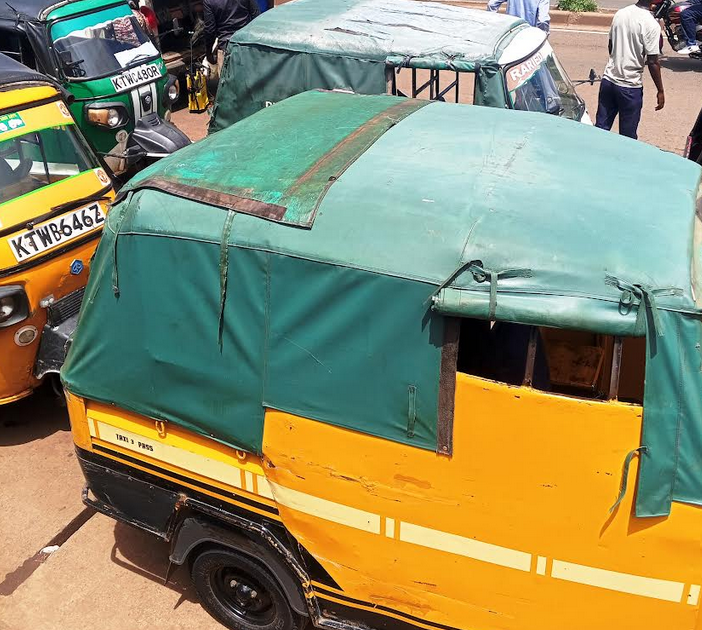
Tuktuks are three-wheeled vehicles with open sides and a canvas-covered roof. They are mainly used as taxis and for transporting small quantities of goods over short distances. Affordable, compact, and versatile, they have become a common sight in many Kenyan towns.
Tuktuks, also known as auto-rickshaws, trace their origins to early 20th-century Japan, where they began as motorized delivery tricycles. By the 1930s, they had evolved into a practical mode of transport.
The name “tuktuk” is derived from the distinctive sputtering sound made by their early engines. Following World War II, these vehicles gained global popularity as they were exported to different parts of the world to support post-war recovery efforts.
In the 1960s, Thailand imported the three-wheelers from Japan and modified them into passenger taxis. Their open-air design quickly replaced traditional rickshaws, becoming a defining feature of urban transport in cities like Bangkok. Similar designs, such as Italy’s Piaggio Ape, also emerged during this period.
Tuktuks were introduced in Kenya around 1990, initially gaining popularity in coastal towns, particularly Mombasa. By the early 2000s, their use had spread to other major urban centres across the country.
Today, there are approximately 15,000 to 17,000 registered tuktuks operating in Mombasa and other parts of Kenya, according to the Ministry of Transport.
For investors, the business presents a modest but steady income opportunity. Owners who lease out petrol-powered tuktuks can earn a net monthly profit of between Sh20,000 and Sh30,000. Those who opt for electric models or operate the vehicles themselves can earn upwards of Sh50,000 due to lower fuel costs and reduced operational expenses.
For Vincent Otieno, a long-time resident of Kisumu, the three-wheeled vehicle is more than just a means of transport—it is a livelihood. Having operated in the lakeside city for over a decade, Vincent describes his work as both a dependable source of income and a personal passion.
“This business has been my primary source of income and employment. On a good day, I take home more than Sh2,500 after deducting fuel costs,” he says. “It is also something I enjoy doing.”
However, Vincent notes that the industry has become increasingly challenging. A combination of global economic pressures and local market dynamics has significantly reduced profit margins.
One of the biggest challenges facing operators in Kisumu is the rising cost of fuel. For a sector that relies heavily on affordability, increases in fuel prices directly reduce daily earnings.
“The way we used to work has changed,” Vincent explains. “We can no longer make the kind of income we used to. At the same time, competition has intensified due to the growth of the boda boda sector.”
The effects of the COVID-19 pandemic continue to linger, having disrupted travel patterns and economic activity. Additionally, the rising cost of spare parts and maintenance has placed further strain on operators.
In light of these challenges, Vincent advises aspiring entrepreneurs to prioritize ownership over borrowing.
“I encourage anyone entering this business to own their tuktuk outright. Taking loans can be risky because the current income levels may not sustain both repayment and daily operations,” he says.
Despite these difficulties, tuktuks remain an essential part of Kisumu’s transport system. Their continued relevance is largely due to their unique advantages within the Central Business District and surrounding residential areas.
One key factor is affordability. Tuktuks generally charge lower fares compared to conventional taxis, making them accessible to a wider segment of the population.
They are also capable of carrying more goods than motorcycles, making them suitable for small-scale traders and short-distance deliveries.
In addition, their compact size allows them to navigate narrow streets and congested areas that are inaccessible to larger vehicles such as buses and matatus. This flexibility makes them particularly useful in densely populated urban settings.
Even with rising operational costs, tuktuks remain relatively fuel-efficient for short-distance trips, further enhancing their appeal.
As economic pressures persist, operators like Vincent continue to adapt, demonstrating resilience in the face of adversity. Their ability to navigate both physical roads and economic challenges highlights the importance of the sector in sustaining livelihoods and supporting urban mobility.
Looking ahead, Vincent remains optimistic. His long-term goal is to expand his business by acquiring more tuktuks and employing other operators. Ultimately, he hopes to venture into long-distance transport by investing in lorries.
By Mabel Keya – Shikuku and Nathan Kimwetich