As we climbed up to the third floor of the HORDYK Wing at Kiambu National Polytechnic (KINAP), we met several young women carrying toddlers in their arms. At first, it seemed unusual: students attending classes with children in tow.
However, when we walked past two classrooms, the picture became clearer.
Some mothers sat outside soothing crying babies during lunch break. Others breastfed quietly in class as fellow learners finished up lunch. A few expectant mothers slowly walked back to class, holding notebooks in one hand.
Inside the classrooms, another story was unfolding. One of second chances, resilience, and a government-backed attempt to tackle youth unemployment through skills development and entrepreneurship.
These are beneficiaries of the National Youth Opportunities Towards Advancement (NYOTA) programme, a multi-billion-shilling initiative funded by the Government of Kenya and the World Bank aimed at supporting vulnerable youth through training, certification, mentorship, and business grants.
In Kiambu sub-county, about 130 learners are currently undergoing a four-week Social Emotional Skills Development training under the programme. Each class holds about 20 learners. Similar centres have also been established in other sub-counties, including Lari.
According to Centre Coordinator Hagai Osodo, the programme intentionally targets youth from diverse backgrounds, including school dropouts, struggling young mothers, informal workers, recovering drug addicts, and persons with disabilities.
“Some of them have had to leave their hustles and come here. Others negotiate with employers on how they will balance work and training,” he explains.
The NYOTA programme was officially launched in July 2025 in Nairobi by Youth Affairs Cabinet Secretary Salim Mvurya alongside Principal Secretary Fikirini Jacobs. It seeks to empower more than 820,000 unemployed youth across the country through entrepreneurship support, apprenticeships, digital skills, and business financing.
Osodo says flexibility and inclusivity are central to the training model.
“The mothers are given additional allowance to cater for the children they have left at home, or even if they come with them here,” he says.
Beneficiaries attending the training receive daily transport stipends, breakfast, and lunch. Young mothers receive an extra Sh250 daily to support childcare needs.
“We really try to give them grace. Sometimes their children become distracted in class, and the mother has to step out. We are not very rigid with them,” he adds.
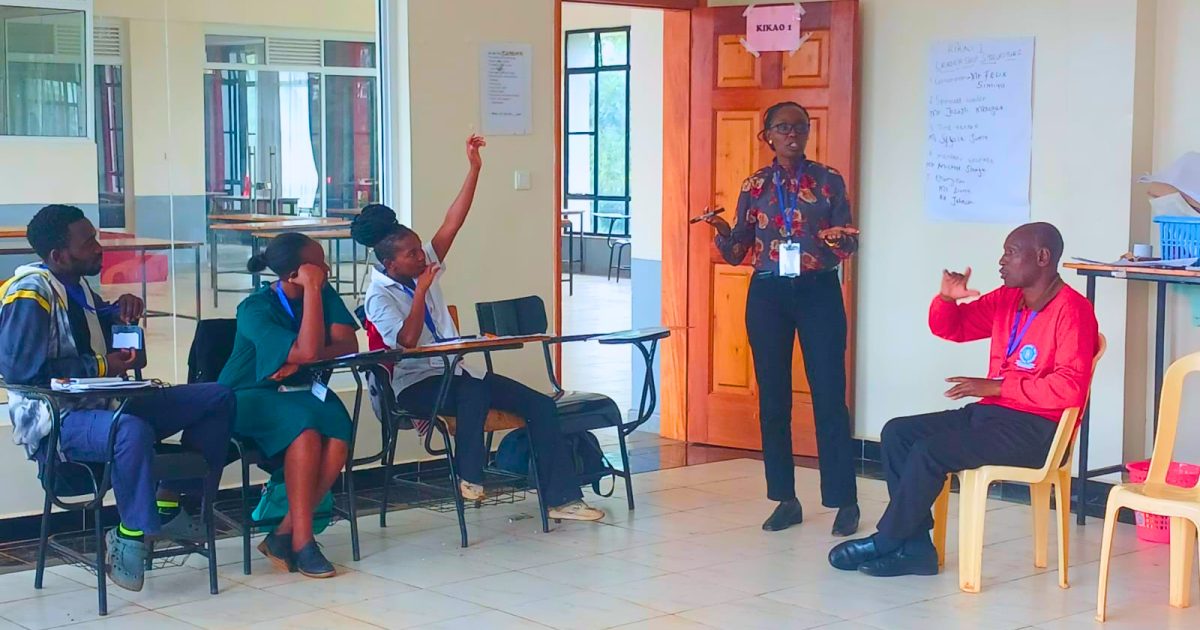
Inside one classroom, a sign language interpreter stood beside the trainer, translating lessons for a deaf learner.
“We are including everybody in this programme. Even if it is only one deaf student, we bring in an interpreter,” Osodo says.
The programme also recognizes youth who already possess practical skills but lack formal certification.
“You find some people already have skills. What they do not have is a certificate. So NITA comes in, assesses them, and gives them certification, which they can even use to seek jobs abroad,” he explains.
For those interested in entrepreneurship, beneficiaries undergo business training before being attached to mentors. They later receive startup grants amounting to Sh50,000 issued in phases.
Others are linked to technical courses depending on their interests and education levels.
“You can be a class three dropout or a Form Four graduate. We teach everyone,” Osodo says.
The programme further includes counseling services for youth struggling psychologically or socially.
“Some come here deeply wounded emotionally and have never had anyone to talk to. We have group counseling and even one-on-one sessions,” he explains.
For Naaman Mungai, one of the beneficiaries, the opportunity has been transformative despite the challenges.
“We joined on May 4 after applying between January and February,” he says.
The trainees report to class every weekday from 8 am to 4:30 pm.
However, transport costs remain a major concern.
“Sometimes the fare becomes higher than the Sh300 we are given, especially now that it is raining,” Naaman says.
Some learners with children also say the long hours make parenting difficult.
“We were hoping maybe we could be released a bit earlier so children are not stranded at home,” he adds.
Under the broader NYOTA framework, beneficiaries are also enrolled into the National Social Security Fund (NSSF), allowing them to build savings and eventually access credit or housing programmes such as Boma Yangu.
The initiative also partners with businesses offering on-the-job experience placements where youth receive practical training before being supported with startup equipment such as welding machines, salon kits, and other tools.
The State Department for Youth Affairs says the programme is designed to build both technical and interpersonal skills among vulnerable youth.
“The Social Emotional Skills Development programme under the NYOTA Project aims to equip young Kenyans with the personal and interpersonal skills that support success in the workplace and in life. “The content is structured to be accessible to all youth, including persons with disabilities and young mothers,” Principal Secretary (PS) Fikirini Jacobs said.
President William Ruto is expected to officially launch the Kiambu NYOTA cohort later this month, as rollout of the programme intensifies nationwide.
By Rose Muthoni