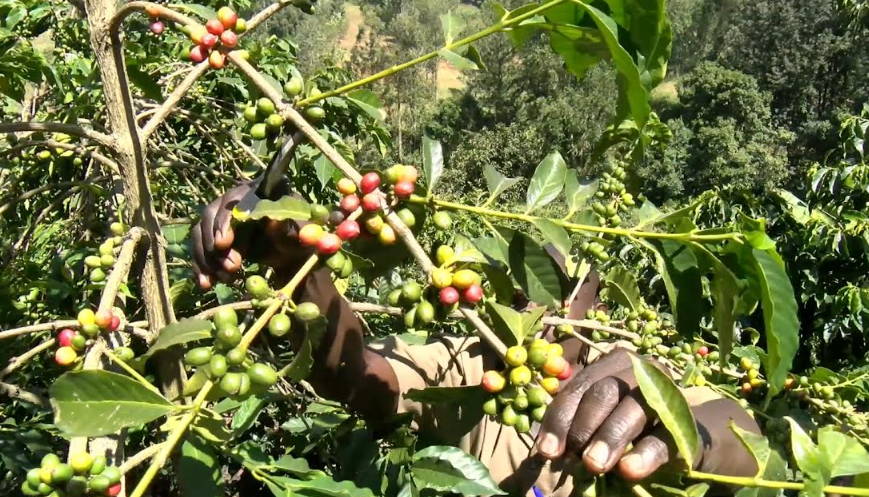
Coffee farmers in the country have been urged to embrace proper management practices for their coffee bushes in order to maximize yields and benefit from the improving global coffee market.
This comes at a time when many farmers in coffee-growing regions are steadily returning to the crop, following improved prices and better payouts witnessed over the last three years.
Notably, some farmers who had abandoned coffee farming in favour of alternative sources of livelihood are now replanting and nurturing new bushes as confidence in the sector continues to grow.
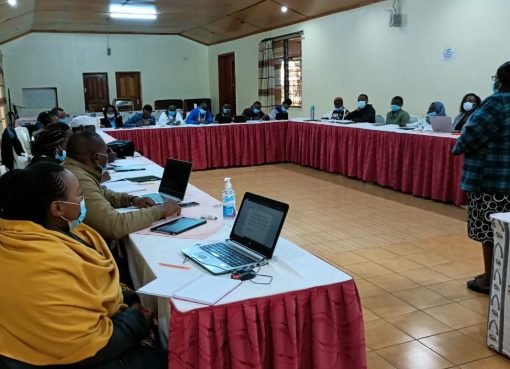
The remarks were made during a farmers’ training session held at Kioru Farmers Coffee Cooperative Society in Kandara Constituency, where farmers engaged county agricultural extension officers and representatives from the Women in Climate Change Organization (WICCO).
Speaking during the training, the Agricultural Extension Officer, Lawrence Njuguna, said proper management of coffee bushes throughout the year is key to increasing production and improving earnings.
“You are supposed to take care of your coffee bushes throughout the year. We currently have several varieties doing well in this region, including Batian, Ruiru grafted and ungrafted, and SL28, while K7 performs best in dry regions,” he said.
Njuguna emphasized the importance of carrying out soil testing before planting coffee bushes in order to determine soil pH levels and identify missing nutrients.
He noted that spacing and planting methods vary depending on the variety.
“Some varieties require spacing of six by six feet, while Batian requires seven by eight feet. Farmers should also ensure the planting holes are properly prepared and mixed with well-composed animal manure before planting,” he explained.
He advised farmers to conduct soil analysis every two years, preferably in January, and outlined the recommended annual management calendar for coffee farming.
“In January farmers should apply agricultural lime, followed by manure application in February and March. In April and May, apply CAN fertilizer at 150 grams separately,” he said.
Njuguna further advised farmers to apply zinc and boron foliar sprays between June and August to prevent flower abortion.
“In October, farmers should apply manure and NPK 17:17:17 before the rains and later embark on berry harvesting in November and December,” he added.
He also underscored the importance of canopy management, noting that each coffee bush should maintain about 40 primary branches and five secondary branches for maximum production.
Kioru Farmers Coffee Cooperative Society Chairperson Charles Waweru Kibe said the cooperative currently has 500 members, with 214 actively delivering coffee.
“We have faced challenges with coffee delivery over the years, but currently the number of farmers is increasing because the prices have improved,” he said.
According to Kibe, the cooperative paid farmers Sh105 per kilogramme of delivered berries last year, compared to Sh95 the previous year.
“This season we are projecting up to 80 tonnes of delivered berries,” he noted.
He called on the government to support struggling coffee societies in addition to those already performing well.
“We have seen more focus being directed to societies that are already doing well. The government should also consider supporting weaker societies so they can improve,” he said.
Kibe also urged farmers to embrace proper crop management practices.
“You do not need a large farm to produce more. With proper farming practices, a farmer can harvest up to 10 kilogrammes per tree,” he added.
On her part, Women in Climate Change Organization CEO and Murang’a County Assembly Environment Committee Chairperson Diana Muthoni said farmer training plays a major role in improving yields and strengthening livelihoods.
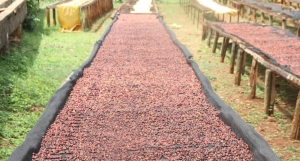
The farmers also received Batian coffee seedlings and a drying bed to help address post-harvest challenges.
“Agriculture is the backbone of our nation. Through this training and provision of seedlings, we are not only improving production but also supporting livelihoods and environmental conservation,” she said.
She urged more organizations to support farmers through training and distribution of quality seedlings.
One of the beneficiaries, Bernard Kamande, who has been a coffee farmer since 1990, welcomed the initiative, saying the training would help him improve production.
“Through coffee farming, I have educated my children, and I always strive to maintain proper crop management. With this training, I believe I will harvest more from my bushes,” he said.
Kamande also appealed to the government to strengthen agricultural extension services, by ensuring officers regularly visit farmers and offer technical support.
By Florence Kinyua