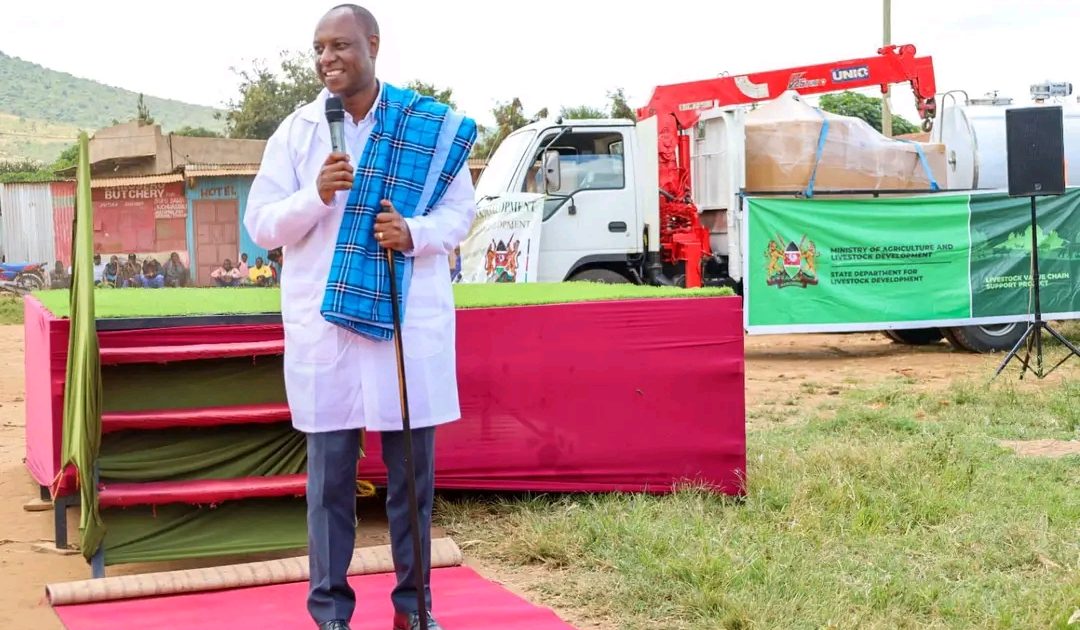
The government through the State Department for Livestock Development has distributed four milk coolers to dairy farmers’ cooperatives in Kajiado County under the Livestock Value Chain Support Project.
Speaking during the handover ceremony, the Principal Secretary for Livestock Development, Jonathan Mueke, said the coolers will help reduce post-harvest milk losses, improve milk aggregation and enhance milk quality.
Mueke said more than 2,000 farmers are expected to benefit from the project, with the equipment valued at Sh28 million.
He remarked the department will also train farmers on quality milk production to enable them earn better returns, adding that the government plans to provide testing machines to measure protein, butter fat and bacteria content in milk to help farmers improve quality and profitability.
Kajiado woman representative Leah Sankaire welcomed the initiative, adding that the coolers will enhance milk storage and support women engaged in dairy farming across the county.
She said the four cooperatives were selected after a thorough assessment to ensure fair distribution across Kajiado County.
The beneficiary cooperatives are Emparnat, Enchipai, Nasiru and Lenkism Dairy Farmers Cooperatives.
Sankaire said her office will continue supporting dairy cooperatives through milk production, marketing and value addition initiatives aimed at improving livelihoods and promoting economic growth.
One of the beneficiaries, Jane Nanoyia, said the coolers will help farmers minimize milk spoilage caused by poor storage facilities.
She said farmers are also looking forward to value-addition training to enable them produce products such as yoghurt and butter for additional income.
The Livestock Value Chain Support Project is a government initiative under the Bottom-Up Economic Transformation Agenda (BETA) aimed at strengthening the dairy value chain and improving livelihoods.
By Diana Meneto