The National Drought Management Authority (NDMA) is conducting an impact assessment exercise on the recent long rains which was largely inadequate in most parts of Marsabit County.
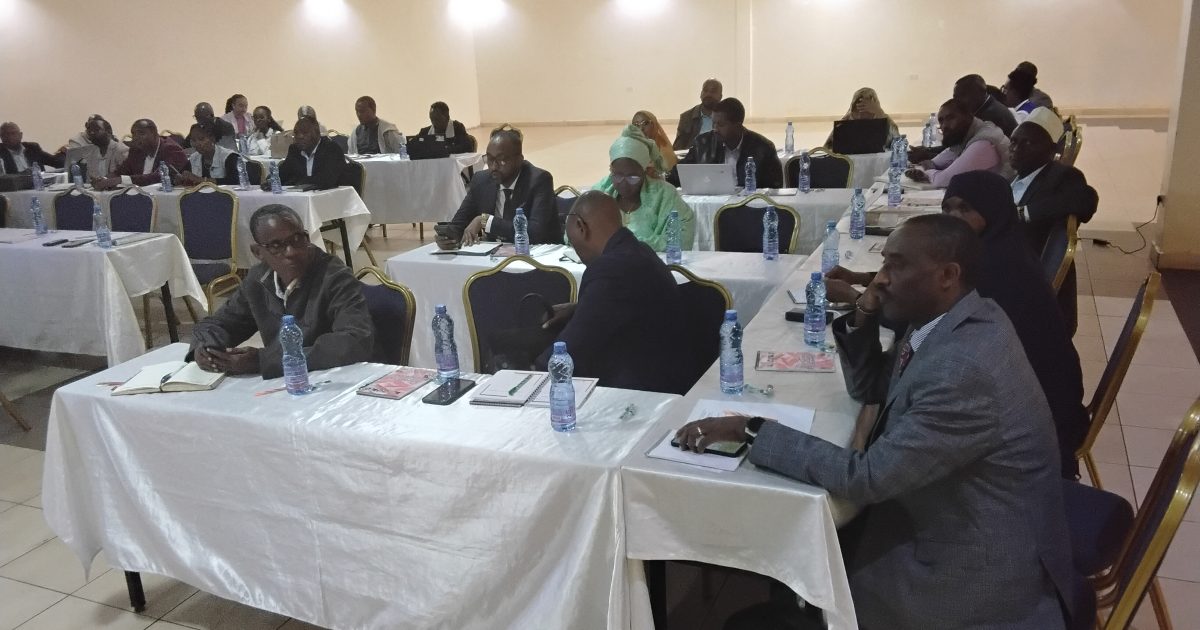
The assessment follows a review meeting on the effect of the March-May rain season on food, nutrition and security by the county steering group (CSG.
NDMA County Coordinator Guyo Golicha pointed out that checklists presented by the various technical departments that include agriculture, education, health, livestock, security and water save for peace and security had painted a picture of inadequacy because the rains were not sufficient.
Golicha said the exercise which is normally conducted after every rain season in ASAL regions by the authority was aimed at providing the actual picture on the ground in terms of food and nutrition, availability of grazing resources and whether the situation poses any threat to peace.
Apart from the agro-pastoralist areas of Moyale and Saku sub-counties which received some considerable amount of rainfall, the rest of the county remained dry.
The County Coordinator added that the information gathered by the two teams that will cover all the 20 wards in the county will help in assessing the impact that the March-April- May rains had on livelihoods of local pastoralist communities.
“We want to know what impact the rains we received have had on our people and their livelihoods and how it affected the different sectors,” he said.
Golicha pointed out that the evaluation that will take five days will in particular pay attention to livestock and pasture which are critical to the local economy and the survival of almost all households.
He said approximately 82.3 per cent of the population depends on livestock for their livelihood, making the sector a key pointer to the county’s recovery from drought with the assessment teams focusing more on milk production and performance of livestock markets.
The body condition of livestock, the availability of pasture and the status of water sources like dams, pans, boreholes, the availability of food stuffs and their prices will also be assessed.
The drought coordinator added that the distance communities travel to access water and migration of livestock would also be of interest to the evaluators because long distances often affect the health of both humans and livestock as well as productivity.
“When livestock travel long distances to access water their body conditions deteriorate. The closer the water is, the better it is for the animals, “he said.
The outcome of the assessment would enable the government and other stakeholders to plan for interventions to ensure that the necessary assistance to those afflicted by drought is available on time.
“Water is one of the major areas of concern in Marsabit County. We want to establish the current levels of water so that we can focus our efforts on zones that need support most,” Golicha said
The exercise is also set to come up with recommendations on how to prepare the county for the El-Nino which is anticipated later in the year.
Golicha observed that while enhanced rains have positive gains for communities and their economic mainstay- livestock, excessive water could wreak havoc and generate health challenges if not properly managed.
He said the exercise would rely on a checklist provided by the various technical departments in collecting data that would inform on the appropriate mitigation measures against the climate shocks.
By Sebastian Miriti and Anthony Melly