The County Government of Kakamega and the Kenya Environmental Health and Public Health Practitioners Union (KEHPHPU) have intensified Ebola preparedness measures, following the county’s classification as a high-risk area for Ebola Virus Disease.
The County government and partners have consequently set two quarantine centers along major transit corridors frequented by long-distance truck drivers and was working closely with national authorities, to strengthen preparedness mechanisms.
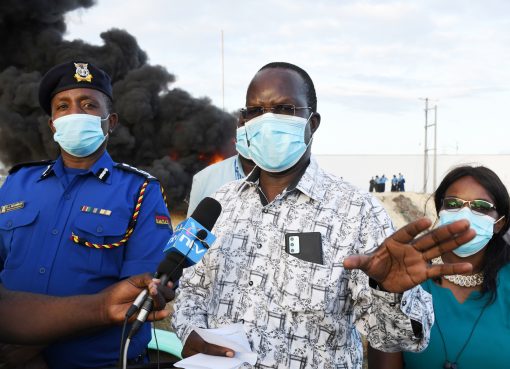
Speaking during a joint media briefing at the Kakamega County Headquarters, Friday, the County leaders and public health practitioners outlined a comprehensive preparedness framework into disease prevention efforts that includes; deployment of additional public health officers, establishment of quarantine facilities, strengthening of border surveillance and integration of environmental conservation initiatives.
This comes in the backdrop of the strategic location of Kakamega County, as it lies along regional transport corridors connecting Kenya to neighboring countries of Uganda and the Democratic Republic of Congo (DRC), where cases have previously been reported.
Deputy Governor, Ayub Savula, called for collective support of government interventions aimed at preventing possible disease outbreaks, cautioning against politicizing public health measures.
“We are working to operationalize two quarantine centers along major transit corridors frequented by long-distance truck drivers and collaborating with national authorities, to strengthen preparedness mechanisms”, he said
The officials noted that Kakamega’s position along the busy Busia-Bungoma highway and its proximity to international transit routes, expose the County to a higher risk of disease importation.
They further observed that the World Health Organization (WHO), has identified Kenya among countries requiring heightened vigilance, due to continued movement of goods and people through regional trade corridors linked to affected countries.
Savula said Kakamega requires additional support from the National government, to establish a fully equipped quarantine facility capable of handling emergencies, due to its strategic position as a transportation hub serving western Kenya and neighboring countries.
“Enhanced surveillance and rapid response systems would be critical in protecting residents, should an outbreak occur since mapping has been done in the following high-risk areas; Kaburengu, Matungu, Khwisero, Chavakali, Chepsonoi area and the whole stretch from River Nzioa up to Eldoret..
The County Administration has also endorsed calls by public health practitioners for immediate deployment of additional public health officers to high-risk areas.
According to the officials, public health personnel, remain central to disease surveillance, community sensitization, screening and enforcement of health protocols during emergencies.
KEHPHPU National Secretary-General and Chief Executive Officer, Brown Ashira, said adequate staffing of public health officers, was necessary to strengthen preparedness efforts in Kakamega, Busia and Bungoma counties.
He noted that the counties have been identified among areas requiring enhanced monitoring.
“There is need for strict adherence to screening procedures and International Health Regulations (IHR) 2005 at all border entry points and transit routes,” he added.
Ashira said the government had assured health stakeholders that healthcare workers stationed at border points and health facilities had been supplied with the necessary protective equipment to support surveillance and response activities.
He further urged the Ministry of Health to expedite Permanent and Pensionable terms for Universal Health Coverage (UHC) officers currently serving on contract, arguing that a stable workforce was essential in responding effectively, to public health emergencies.
Union’s Western Region Branch Secretary, Anthony Ngaira, echoed the sentiments, noting that disease outbreaks are most effectively managed through prevention and early containment.
He said quarantine stations and screening centers being established across strategic locations would significantly enhance the country’s capacity to detect and contain Ebola before community transmission occurs.
Health experts said that quarantine facilities form part of internationally recognized public health practices used to monitor individuals who may have been exposed to infectious diseases during incubation periods.
The experts noted that Ebola has an incubation period ranging from two to 21 days, making observation facilities critical for early detection and intervention.
The officials emphasized that quarantine centers are designed to protect communities and should not be viewed as discriminatory measures.
They reiterated that preparedness remains the most effective defense against outbreaks and called upon residents to cooperate with health authorities in observing all preventive protocols.
By Godfrey Wang’anya and Erick Mutua