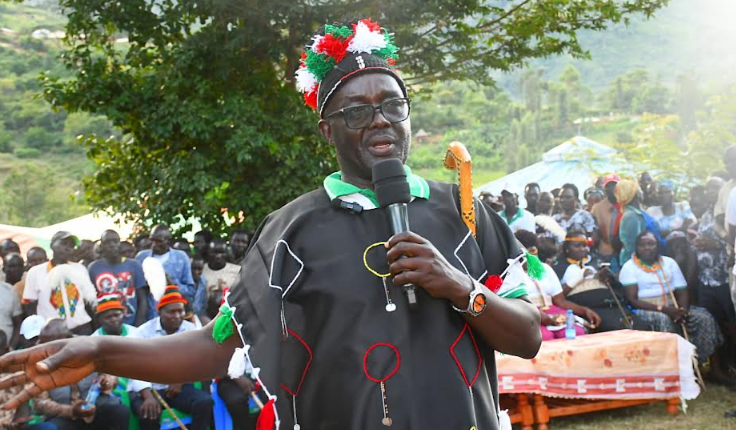
Hundreds of residents, cultural leaders, elders, and government officials gathered at Muino-Tamkal in Weiwei Ward, Pokot Central Sub-County, to celebrate the annual Sintagh Cultural Festival, a significant cultural event that marks the Pokot New Year and serves as a symbol of identity, unity, and community renewal.
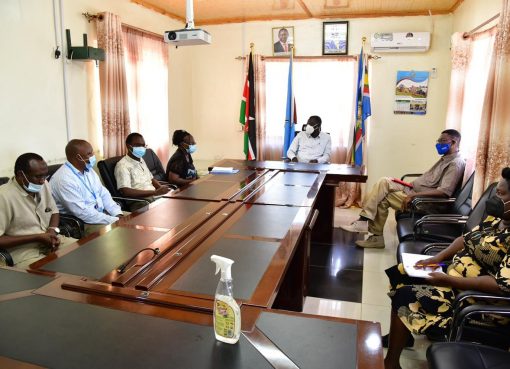
The festival was graced by West Pokot Governor Simon Kachapin, accompanied by county leaders, senior government officials, and members of the local administration.
The colorful event brought together members of the Pokot community from across the county to celebrate their rich cultural heritage through traditional songs, dances, cultural exhibitions, prayers, and community bonhomie.
Speaking during the celebrations, Governor Kachapin underscored the importance of preserving cultural values and traditions as a foundation for social cohesion and sustainable development.
“Preserving our cultural values and traditions is essential for community unity and sustainable development. Cultural festivals such as Sintagh play a vital role in promoting social cohesion, strengthening identity, and passing indigenous knowledge to future generations,” said Governor Kachapin.
The governor commended the community for its unwavering commitment to safeguarding and promoting Pokot culture through annual celebrations that continue to inspire pride among younger generations.
Sintagh Cultural Festival holds deep cultural significance among the Pokot people. Traditionally observed during the planting season, the festival serves as a period of thanksgiving and prayer, where offerings are made to seek divine intervention for favorable rains and a successful harvest season.
According to Steven Tamugh, Chairman of the Sintagh Cultural Festival, the event reflects the community’s long-standing relationship with nature, agriculture, and faith.
“The significance of the event is that during the planting season, offerings are given to a higher power by burning fresh twigs to portray that famine has engulfed the region and that some intervention is needed for the rains to fall,” Tamugh said.
He further explained the symbolic nature of the ritual, drawing parallels with biblical traditions.
“It is compared to the biblical Israelites, who did the same, and when the smoke rose, it signified that their prayers were heard,” he noted.
Tamugh emphasized the importance of preserving the festival as an integral part of Pokot heritage.
“I urge the whole community to embrace the festival to preserve the culture, which has been carried out by our forefathers since time immemorial,” he said.
He added that the celebrations are traditionally held between February and mid-June, coinciding with the agricultural season.
The event also highlighted the role of culture in promoting social development and positive societal values. Residents were encouraged to foster peaceful coexistence among themselves and with neighboring communities as a pathway to stability and development.
West Pokot County Executive Committee Member for Culture, Tourism, Sports, Youth Affairs, and Social Services, Lucky Litole, described the festival as an annual occasion dedicated to offering gratitude, reflection, and community bonding.
“The event is marked annually and helps give thanks to God for the gift of life throughout the year while also asking Him for rains and, in turn, bumper harvests later,” said Litole.
She noted that the Muino area, where the celebrations take place, is known for its agricultural productivity.
“In this region where the celebrations take place, there is a variety of crops planted ranging from maize, vegetables, fruits, sorghum, and bananas, as well as enough pasture for livestock,” she explained.
Litole said the festival provides a platform for showcasing Pokot traditions through cultural attire, traditional cuisine, music, and prayer.
“Normally, participants dress traditionally, traditional foods are cooked, songs are sung, and traditional prayers are offered,” she said.
She added that beyond celebration, the festival is also used as an avenue for community education and advocacy.
“During the event, harmful traditional practices such as FGM and gender-based violence are strongly castigated,” Litole stated.
As traditional melodies echoed across the hills of Muino-Tamkal and cultural performances captivated attendees, the festival once again demonstrated its enduring role in preserving Pokot identity while promoting peace, development, and social transformation.
For many residents, Sintagh is more than a cultural celebration, and it is a living expression of heritage, faith, resilience, and hope for future generations.
By Parklea Ivor