The Centre for Mathematics, Science and Technology Education in Africa (CEMASTEA) has trained junior school county trainers on the use of virtual laboratories in a move aimed at strengthening Science, Technology, Engineering and Mathematics (STEM) education and supporting the implementation of Competency-Based Education (CBE).
The initiative seeks to address the shortage of science learning resources in Kenyan junior schools, particularly in remote and underserved areas where many institutions lack adequate laboratory facilities and equipment.
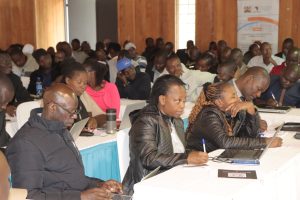
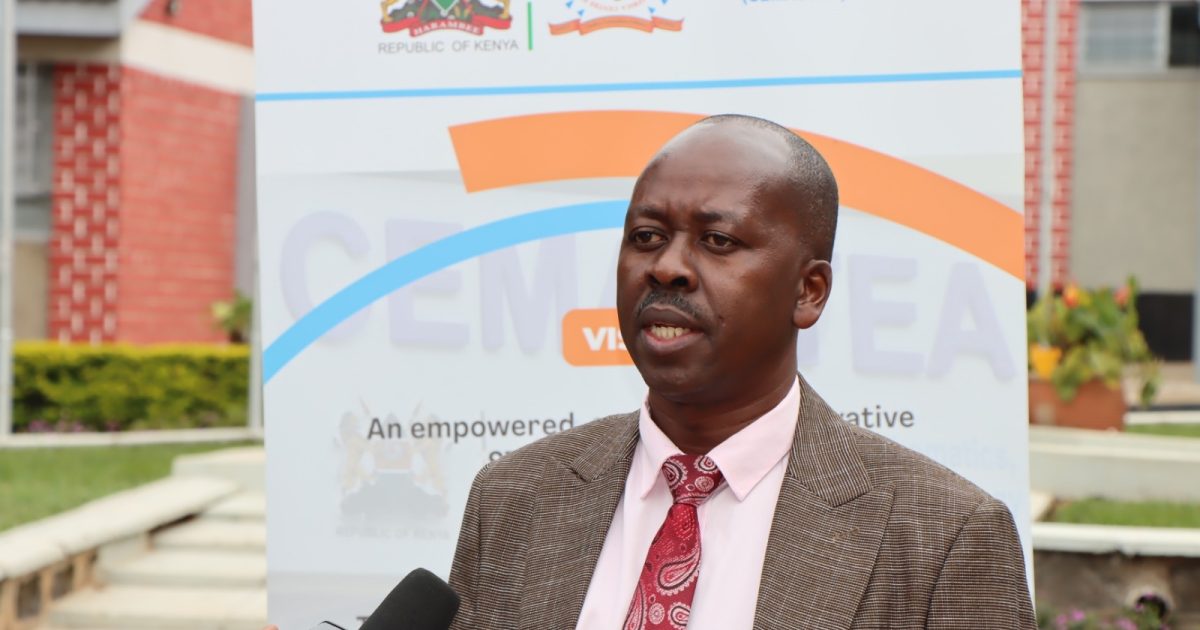
Speaking during the training programme held at CEMASTEA in Karen, Nairobi, Senior School and Junior School Programme Coordinator Philip Maate said the virtual laboratories were developed to bridge the gap in access to practical science learning.
He said the rollout followed research conducted between 2023 and 2025, which revealed that a significant number of schools still lack functional laboratories despite the ongoing implementation of the Competency-Based Education curriculum.
“The Ministry of Education is committed to ensuring that every learner has an equal opportunity to pursue STEM pathways, particularly as the country transitions to senior school where at least 60 per cent of learners are expected to enrol in STEM-related tracks,” Maate said.
He added that the virtual laboratories are designed to provide learners with practical, hands-on experiences that enable them to develop science skills even in schools without physical laboratories.
According to Maate, the digital platforms focus mainly on Integrated Science and Mathematics and have been aligned with the Competency-Based Curriculum to ensure relevance and effectiveness in teaching and learning.
“The content and activities have been designed to complement what is outlined in the curriculum, making them practical and effective teaching tools,” he said.
The virtual laboratories can be accessed both online and offline, allowing teachers and learners to download and use them on mobile phones, tablets, and computers even in areas with limited or no internet connectivity.
“This ensures that connectivity challenges do not hinder learning, especially in remote areas,” Maate noted.
He said the innovation allows learners to conduct simulated experiments, observe scientific processes, and undertake practical activities that would otherwise be impossible due to lack of laboratory equipment.
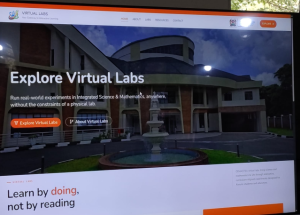
“The platform enables learners to access simulations and perform practical activities both at school and at home, helping them develop essential science skills,” he added.
Maate said the initiative promotes equity in education by ensuring learners in underserved regions are not disadvantaged compared to those in better-resourced schools.
To support nationwide implementation, CEMASTEA will train 240 County Trainers drawn from all 47 counties. The trainers will then cascade the training to approximately 7,000 junior school Mathematics and Integrated Science teachers across the country.
The programme is expected to reach more than 21,000 teachers through peer-to-peer knowledge sharing within schools, significantly expanding access to practical STEM instruction.
Maate encouraged schools to embrace the virtual laboratories, noting that they are available through the CEMASTEA website and are designed to complement classroom teaching.
One of the county trainers, Ali Mahat from Wajir County, welcomed the initiative, saying it would help address long-standing challenges in science education, especially in schools without laboratories.
He noted that Integrated Science requires practical work, yet many junior schools lack the necessary infrastructure.
“This training is equipping us with skills to use online interactive tools where teachers can utilise virtual laboratories and simulations to teach learners without physical apparatus,” he said.
Mahat added that the programme would enhance learners’ understanding of scientific concepts by making abstract ideas more interactive and easier to grasp.
CEMASTEA officials said the adoption of virtual laboratories marks a significant step in modernising science education in Kenya and aligns with national efforts to integrate technology into teaching and learning.
The programme is also expected to support the government’s broader education agenda under the Competency-Based Curriculum, which emphasizes practical skills, creativity, and application of knowledge.
By introducing digital simulations and offline-accessible tools, the initiative is expected to reduce disparities in learning outcomes between well-equipped urban schools and under-resourced rural institutions.
Education stakeholders present at the training noted that technology-driven solutions such as virtual laboratories will play a key role in preparing learners for STEM careers in a rapidly evolving global economy.
By Ian Chepkuto