By R, KNA
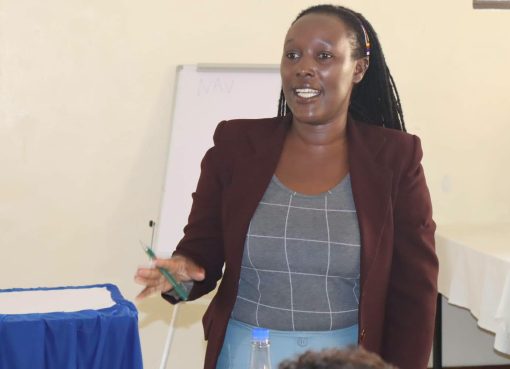
In the serene environs of Nandi Hills, where mist lingers on the rolling hills and velvet monkeys play in nearby forests, a different kind of dedication fills the classrooms of Nandi Hills Township Primary School. Here, one teacher’s passion for special needs education is shaping the lives of children who require extra care and support.
Bilha Chumba, who heads the Special Needs Education (SNE) unit at the school, was once a regular class teacher. However, her growing passion for nurturing differently abled children inspired her to shift focus to special education. She wanted to ensure that learners with disabilities had the same privilege of accessing education as their peers.
Walking into her classroom, one is struck by the joy on the faces of her pupils. Their bright expressions testify to her dedication and love, which parents confirm continues to inspire their children even at home.
Chumba’s journey in special education began in 2010 when she graduated with a diploma in Special Education from the Kenya Institute of Special Education (KISE). Guided by the belief that every child deserves a chance to learn and shine despite their challenges, she began teaching special needs learners at Nandi Hills Township Primary seven years ago.
“Teaching children with special needs is not just a job but a calling. You have to be motherly, friendly, loving, caring, persevering, dedicated, and understanding—with a good heart to truly help them learn,” Chumba explains with a warm smile.
While teaching regular learners, Chumba recognized the urgent need for a dedicated special unit. She presented the idea to the school management, which agreed to establish the unit in 2018. The first cohort consisted of only five learners—three boys and two girls. With her determination, the school officially registered the SNE unit with the Ministry of Education in 2023.
Through community sensitisation, Chumba encouraged parents to bring their special needs children to school, helping reduce stigma. As a result, the unit has grown to 30 learners. She now encourages enrolled parents to reach out to others still hesitant.
“Most parents with SNE children fear taking them to school, but with continued sensitization we’ve shown them that the children are safer in school than at home, where they sometimes face neglect or abuse. At school, we monitor them closely and ensure they are cared for,” she says.
Despite inadequate teaching materials and limited infrastructure, Chumba celebrates every milestone achieved by her pupils—from learning new skills to making friends. She believes that even small victories have lasting impacts on their confidence and independence.
Her passion extends beyond the classroom. She founded the Tumaini Women Group, which brings together vulnerable parents of both regular and SNE learners to empower them socially and economically. This initiative has also played a role in curbing the spread of HIV in the community by creating awareness and support networks.
While she appreciates the support of well-wishers who have provided learning aids and furniture, Chumba insists that more resources are needed. “Special needs learners require more materials to ensure smooth learning compared to pupils in regular classes,” she notes.
She also highlights the financial burden of transport for parents whose children travel long distances to access the unit. “There are many children who can’t attend because their parents can’t afford the daily transport. With enough infrastructure, we hope to establish a boarding section to accommodate learners from far away,” she adds.
To Chumba, every child—regardless of their challenges—has something unique to contribute. She stresses that there are vital lessons special needs children can learn at school that cannot be taught at home. While challenges persist, she remains optimistic about the potential for growth, support, and transformation in special education.
“It is up to us to create a world where every child, regardless of their condition, is given a chance to shine,” she concludes.