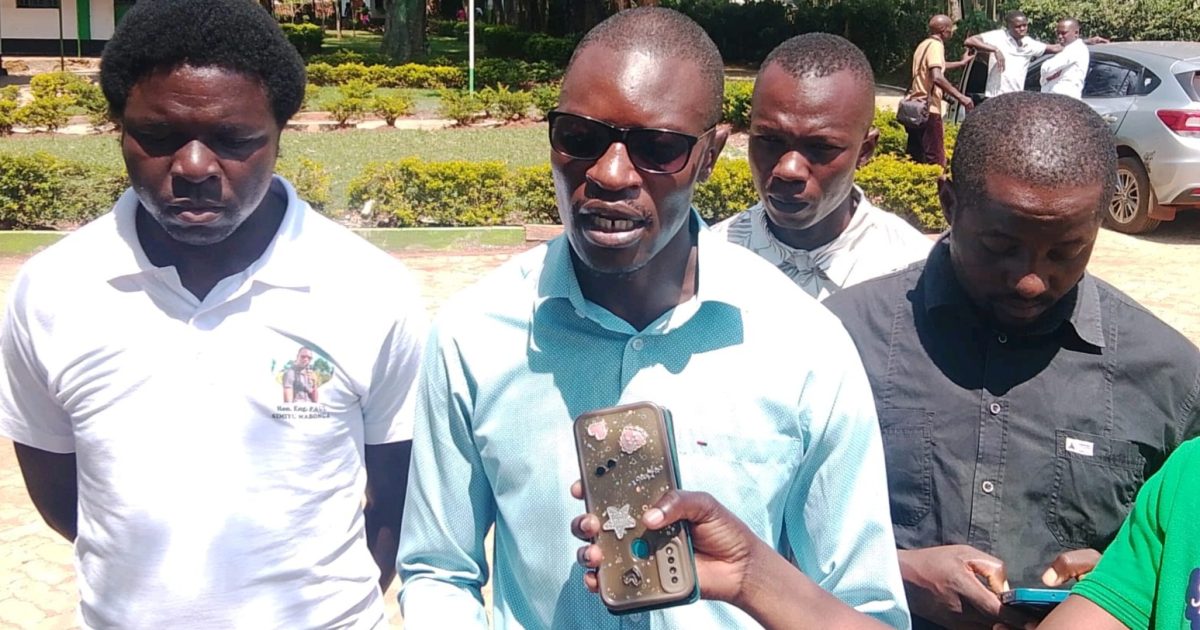
Kimilili Parliamentary aspirant Eng. Paul Simiyu Mabonga has called on the government to first seal loopholes in education data before merging agencies responsible for funding students in tertiary institutions.
Mabonga said the proposed merger will not end ghost beneficiaries unless the government addresses integrity gaps in the management of learners’ data from primary school to university.
Addressing the media at Maeni Girls Senior School in Kimilili Constituency, the aspirant said the state already has sufficient data to track a learner from enrolment to tertiary level which must be scrutinised ahead of the rollout of the new funding model.
Mabonga argued that with continuous assessment records and national examinations, it should be easy to establish genuine beneficiaries, noting that the emergence of ghost students points to either system weakness or deliberate manipulation.
“We know the number of students sitting KCSE and other programmes this year. We have tracked their performance from the time they entered school,” he said adding, while merging funding bodies may improve administrative efficiency and help government plan its allocations, it will not cure fraud if data handlers lack integrity.
“In my opinion, merging is okay, but I don’t think it will solve the problem of eliminating ghost students if the people who are managing our data are not handling that data with integrity,” he said.
The engineer-turned-politician also decried challenges facing students applying for government funding, citing unreliable online portals, poor infrastructure and low internet connectivity in parts of the country.
He warned that deserving students, particularly those in remote areas, risk being locked out of funding due to digital barriers.
“The government should ensure that digital infrastructure keeps pace with its education reforms,” he said, adding that reforms must focus on how learner information is collected, verified and protected.
At the same time, Mabonga condemned rising political intolerance and what he termed as a growing culture of goonism in campaigns.
He accused some aspirants of abandoning issue-based politics to fund groups that disrupt rivals’ meetings, destroy property and intimidate opponents.
“We appeal to our people to vet aspirants based on value, agenda, track record and professionalism to deliver on their manifestos,” he said.
The Engineer urged voters to tolerate divergent views and called on security agencies to investigate and bar from vying, politicians found to be financing violence.
“A leader who has been identified to be funding and fanning goonism and violence should be barred from contesting,” Mabonga said.
He further asked the Directorate of Criminal Investigations (DCI) and the National Cohesion and Integration Commission (NCIC) to act firmly against hate speech, tribalism and gender discrimination in political campaigns.
Mabonga cautioned religious and community leaders against allowing political money to deepen divisions and appealed to President William Ruto to promote national unity.
“Goonism, violence and inflammatory remarks that border on tribalism and hate speech should not find space in our community,” he said.
By Chris Mahandara