Government is stepping up efforts to strengthen digital literacy in schools, as part of reforms aimed at improving competency-based Science, Technology, Engineering and Mathematics (STEM) education.
The approach seeks to shift classroom learning from teacher-centred instruction to practical, learner-centred learning, which promotes critical thinking, innovation and problem-solving.
The initiative is intended to equip teachers with practical digital skills that they can effectively cascade to learners, enabling them to become conversant with digital technologies.

According to Dr Elyas Abdi Jilla, the Director-General (DG), State Department for Basic Education, the government continues to invest in STEM education through elaborate infrastructure development, laboratories, learning resources, curriculum reforms and teacher capacity development, to enhance competencies among learners.
“These investments are important because Kenya needs young people who can participate meaningfully in the digital economy, develop innovative solutions, and contribute to national development,” said DG.
He, however, warned that investment must address inequality, particularly in marginalised and underserved areas.
“We must ensure that learners in marginalised and underserved areas are not left behind,” he said, warning against a two-tier education system, where others access modern technologies while others are excluded.
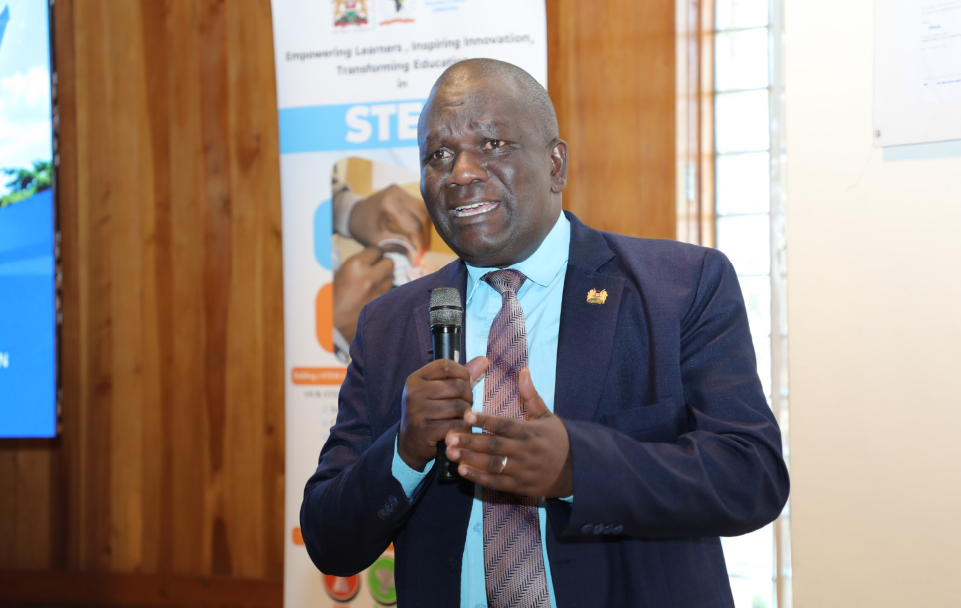
Dr. Elyas made the remarks in a speech read on his behalf by the Education Secretary in the Ministry of Education, Nelson Sifuna, during the opening ceremony of a workshop on Advancing Digital Literacy for Competency-Based STEM Education.
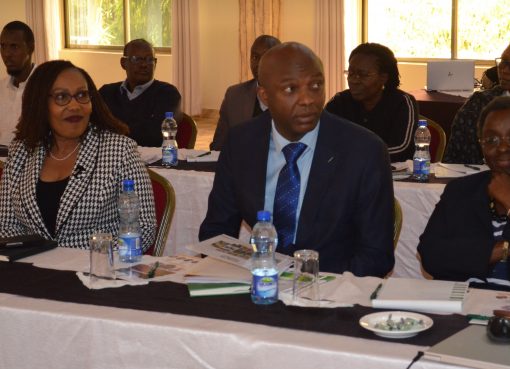
The event that took place at the Centre for Mathematics, Science and Technology Education in Africa (CEMASTEA) in Nairobi, aims to strengthen the digital literacy and teaching competencies of Kenyan Junior and Senior School teachers, by enhancing their understanding of Artificial Intelligence and its application in teaching, learning and assessment.
The two-day workshop, running from September 3–4, brought together policymakers, teachers, academics, STEM specialists and international partners to examine digital literacy, innovation, Artificial Intelligence (AI) and practical classroom applications in competency-based STEM education.
“The Competency-Based education approach, therefore, calls for a shift from teacher-centred transmission of knowledge towards learning that develops communication, collaboration, critical thinking, creativity, problem-solving, self-efficacy, learning to learn and digital literacy,” Dr. Jilla said.
He said the shift was particularly critical in STEM education, where learners need opportunities to investigate, design, create, experiment, test and improve solutions to real-world problems.
DG said digital tools must support curriculum and improve learning, calling for classrooms that give learners opportunities to engage in practical and authentic problem-solving.
“This is why technology must serve pedagogy and learning outcomes. Technology is not an end in itself,” Dr. Jilla said.
He challenged education stakeholders to assess whether technology is improving teaching and deepening learners’ understanding.
“The real question is whether technology is enabling teachers to teach better and learners to demonstrate deeper understanding and stronger competencies,” he said.
Education Boss said STEM education is a strategic foundation of innovation and productivity, which will spur industrialisation and scientific advancement in Kenya.
With the advent of digital media and literacy, Dr. Jilla called for the responsible use of technology among learners to enhance their ability to solve problems effectively.
He at the same time urged teachers to use appropriate technology tools aligned with curriculum outcomes to facilitate inquiry, support digital content development, and enhance assessment and feedback.
He challenged scholars to examine how emerging technologies can improve the education sector, particularly teacher professional development, while promoting responsible use.
“As Artificial Intelligence and other emerging technologies become increasingly available, we must also ensure that they are adopted responsibly, ethically and in ways that strengthen, not replace, the professional role of the teacher,” he stressed.
He further said professional development should provide sustained, practice-oriented support through peer learning, coaching, experimentation and reflection.
Dr. Jilla said Kenya needed teachers who were not simply technology users but “designers of learning experiences, facilitators of inquiry, users of evidence and responsible adopters of emerging technologies”.
For successful implementation, he urged teachers to embrace practical classroom application by focusing on affordable, adaptable and locally relevant digital solutions, which aligned with the Kenyan curriculum to address classroom needs.
“The goal is to create learning-rich classrooms, where technology makes learning more engaging, meaningful and effective,” he said.
The DG highlighted the need to address gaps in connectivity, electricity, devices, technical support, digital content and teacher capacity, particularly for learners with special needs and those in marginalised areas.
He urged partners to continue boosting research, innovation, digital content, mentorship and evidence generation to improve classroom learning.
Dr. Jilla urged teachers to embrace continuous learning, adding,
“This workshop should not be viewed as a stand-alone event,” he said, noting “It should become a starting point for continued teacher development, research, innovation and collaboration.”
He said investment in STEM was ultimately an investment in problem-solvers, innovators, researchers, entrepreneurs, engineers, scientists and responsible citizens.
“Let us move from access to meaningful learning, from technology to purposeful application, and from innovation to measurable impact,” Dr. Jilla said.
by Ian Chepkuto