Growing concern has emerged in Nyanza over plans to establish a nuclear power plant in Siaya County, with a section of citizens and academics opposing the proposed project and calling for comprehensive public participation and independent environmental and safety assessments.
The multi-billion-shilling project, which would be Kenya’s first nuclear power plant, is proposed for Lihundu Beach in Bondo Sub-County, Siaya County, with construction expected to begin next year.
The group has raised concerns over potential environmental, health and social risks to communities around Lake Victoria and called for a review of the proposed site before implementation of the project.
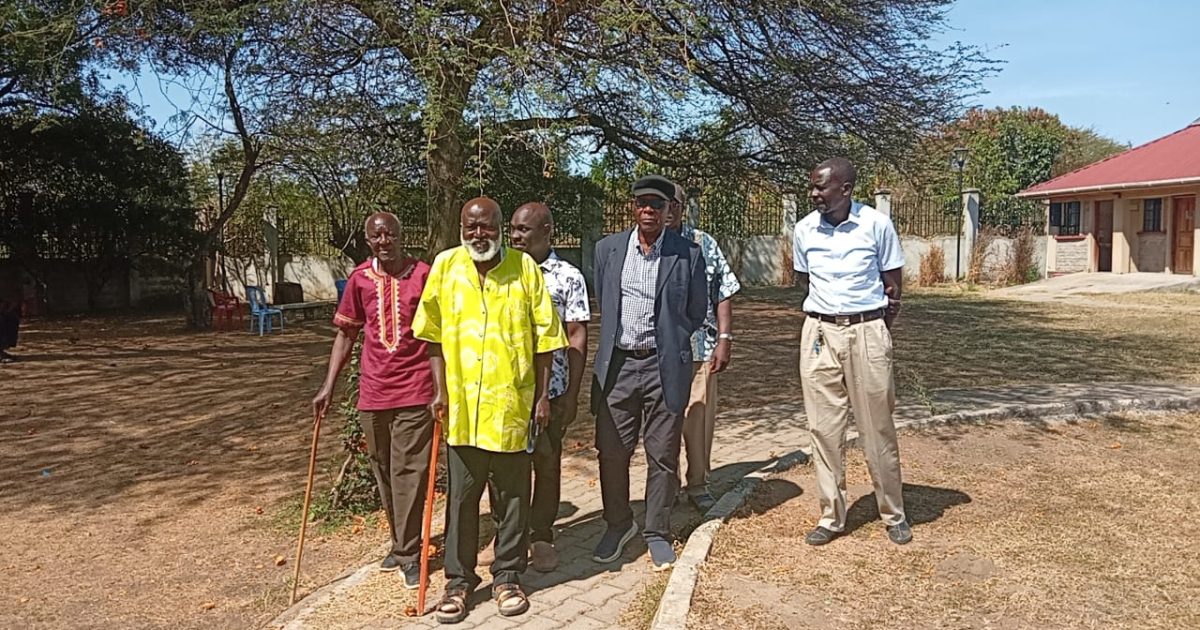
Speaking at Rusinga Island in Suba North Sub-County, Professor Medo Misama, an international law scholar, said communities in the Lake Victoria region had legitimate concerns about a project that could have far-reaching implications for their livelihoods.
Misama, who was accompanied by Professor Pius Wawa Acholla, human rights activist Oloo Gor and other residents, said the government must take into account the large population living around the proposed site and assess how the project could affect settlements, livelihoods and economic activities.
“We are concerned as citizens of Kenya, particularly people coming from this lake region, Nyanza,” he said.
Misama expressed particular concern about the potential impact of nuclear-related activities on Lake Victoria, which supports millions of people through fishing, transport, agriculture and other economic activities.
He warned that any contamination of the lake could have serious consequences for people, livestock, fisheries and the wider ecosystem.
“Such a plant requires a lot of water usage, and the lake is our lifeblood. We are drinking water from Lake Victoria, and if there was a nuclear plant at the shores of the lake, the likelihood of that affecting our lives, our community, our livestock and even the environment is horrendous,” he said.
He also raised concerns over the potential impact on the region’s fishing industry, arguing that even the perception that fish from Lake Victoria could be exposed to nuclear contamination could undermine consumer confidence and hurt Kenya’s fish trade.
The professor further questioned whether residents living around the proposed site had been adequately consulted, saying communities must be properly informed and involved before major decisions are made.
“There was no public participation which involved people living within the radius of 50 kilometres to the proposed site. Therefore, such planning is irregular,” he said.
Professor Acholla, a sociologist, questioned the suitability of Nyanza as a location for the facility, citing the region’s high population density.
He argued that population density should be a key consideration when determining the location of a nuclear power plant and suggested that if Kenya proceeds with nuclear power development, less densely populated areas could be considered.
“Luo Nyanza is densely populated,” he said, citing parts of Baringo and Turkana as possible areas for further assessment.
Acholla also raised concerns over the management of nuclear waste, saying it presents a long-term challenge that requires specialised handling and stringent safety measures.
“Nuclear waste, in other words, the byproduct of generating nuclear energy, is very difficult to handle because it is not biodegradable and cannot just disappear. If you bury it in the earth, it will eventually seep into water points,” he said.
He cautioned against portraying the nuclear project as automatically beneficial simply because it is associated with industrialisation, saying development projects should demonstrate clear and long-term benefits to host communities while taking into account their social and environmental costs.
He also questioned whether Kenya has sufficient technical capacity, infrastructure and regulatory safeguards to safely construct, operate and manage a nuclear power plant.
Instead, he called for increased investment in alternative and environmentally friendly sources of energy, saying the country should pursue options that protect communities and natural resources.
The group called on the government to halt further steps until comprehensive public participation and independent environmental, health and safety assessments are undertaken.
By Sitna Omar