Hundreds of women in Kilifi County are earning income through environmental conservation, turning tree planting and forest restoration into sustainable livelihood opportunities as efforts to combat climate change intensify.
The women, organised into community conservation groups, participate in planting trees, protecting mangroves and restoring community forests. They also raise and sell seedlings to organisations implementing reforestation programmes and engage in other income-generating activities, including beekeeping.
Their growing involvement has been supported by environmental organisations recognising women as important partners in protecting natural ecosystems while improving household incomes.
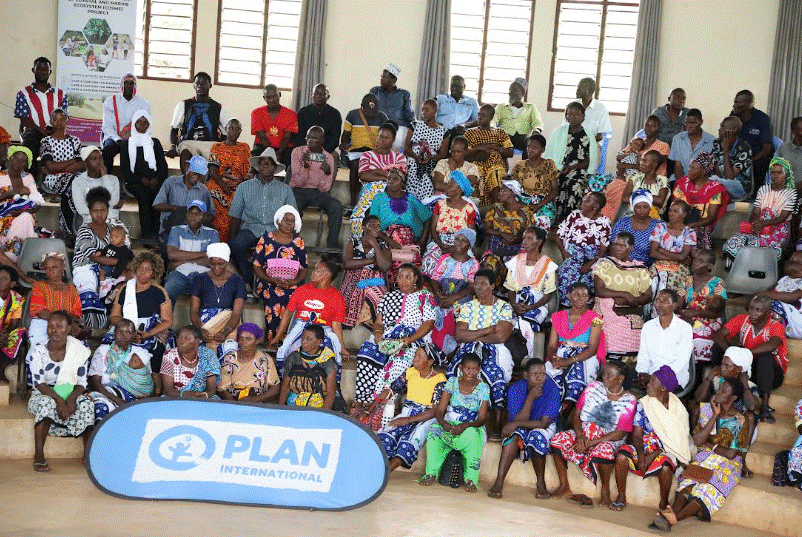
One such initiative is the Conservation and Sustainable Management of Coastal and Marine Ecosystems (COSME) project, implemented by Plan International in Kilifi and Kwale counties to promote forest restoration and climate adaptation.
The project works with Community Forest Associations (CFAs) whose membership exceeds 3,700 people, with women accounting for approximately 80 per cent.
Plan International Project Lead Beryl Oduor said the initiative had generated economic benefits for participating communities while supporting the restoration of degraded forests.
She said the project had purchased thousands of seedlings from local groups, providing women with income to support their families.
“Our strategy for Chonyi was rehabilitation of degraded sites. We have been able to plant approximately 20,000 seedlings. We bought these seedlings from the community groups, injecting around Sh4 million within the 15 groups that we are working with,” Oduor said.
“This is their livelihood, so it means that they have been able to earn and improve their way of living,” she added.
The income has enabled women to meet household expenses, pay school fees and strengthen their financial independence, while encouraging continued participation in conservation activities.
Zuleha Abdalla, an official of the Mtakimau CFA group in Takaungu, said her group had earned more than Sh500,000 from two seedling sales.
“The money we are getting is supporting us with our families. We are able to pay school fees and our children are settled in schools. Many women were very needy, but now we support each other,” Abdalla said.
She noted that the earnings had strengthened cooperation among members and helped them improve their families’ living conditions.
Caroline Kiti, chairperson of the Tumaini Ondoni CFA group in Chonyi, said conservation had also transformed her personal life.
Kiti said she had experienced difficult living conditions before joining tree-planting activities aimed at restoring her community forest.
Through her involvement, she has become better able to support her family. She also said participating in conservation activities and gender-roles training had helped her reconcile with her husband, with the couple now working together in conservation efforts.
by Jackson Msanzu