The Affordable Housing Program is increasingly revitalizing the manufacturing sector, with demand for construction materials rising sharply as investments in housing expand across the country.
According to Principal Secretary for Investment Promotion at the Ministry of Investment, Trade and Industry, Hassan Abubakar, manufacturers are ramping up output to meet the growing need for building products such as cement, steel, and iron roofing sheets.
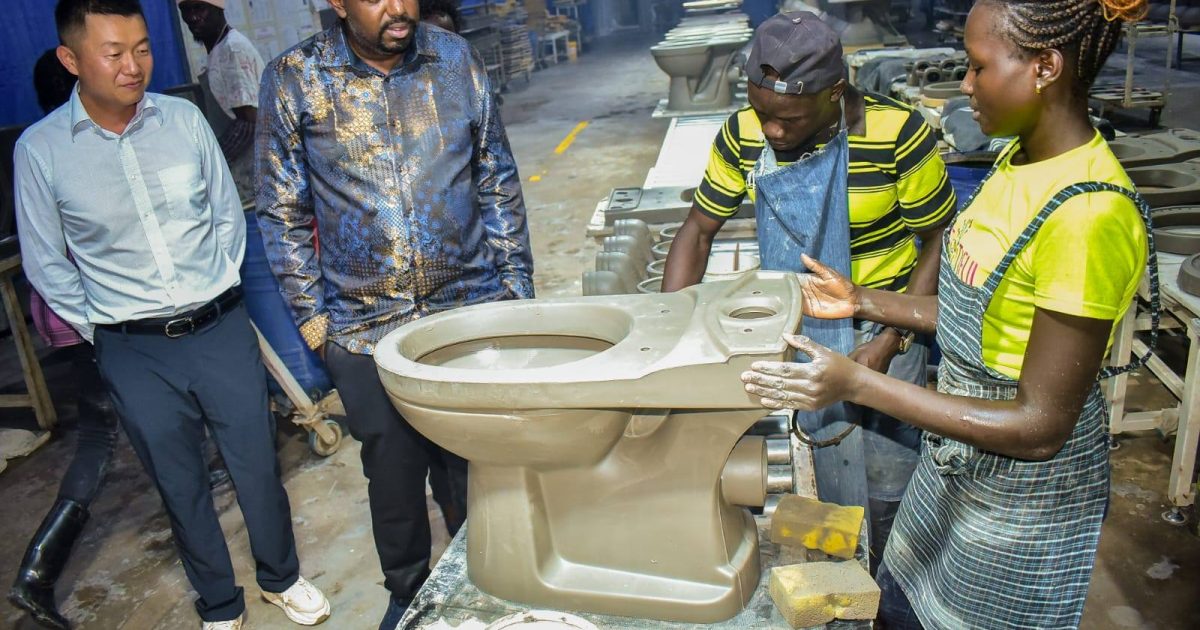
During a visit to KEDA Ceramics Factory in Miwani, Muhoroni Sub-County in Kisumu County, Abubakar noted that the program is not only addressing the housing shortage but also generating significant socio-economic benefits.
“The affordable housing program is not only providing decent homes and creating jobs for youth but also creates industrial demand and increases the level of manufacturing of building material,” the PS emphasized.
The program, Abubakar observed, has also stimulated private sector investment in industries such as steel, cement, timber, and other construction-related products, contributing to broader economic growth.
“The push to deliver adequate, decent, affordable, and sustainable housing nationwide has spurred the establishment of new factories producing various construction materials such as KEDA Ceramics,” he observed.
In Kisumu County, Keda Ceramics stands out as one of the key players, producing ceramic tiles and sanitary ware for both the local and regional markets.
The plant, established on 150 acres at a cost of Sh16 billion, has the capacity to produce 4,000 units daily and provides direct employment to 600 people, alongside an additional 3,000 indirect jobs.
It manufactures semi-porcelain tiles, wall tiles, and porcelain floor tiles under the Twyford brand, as well as sanitary ware used in affordable housing units.
In line with government policy, all materials used in the affordable housing program are required to be sourced locally or produced by local artisans.
Kenya currently faces a housing deficit of approximately two million units, with demand rising by 200,000 units annually. Through the Affordable Housing Program, the government aims to construct at least 250,000 homes each year to bridge the housing gap.
By Robert Ojwang’