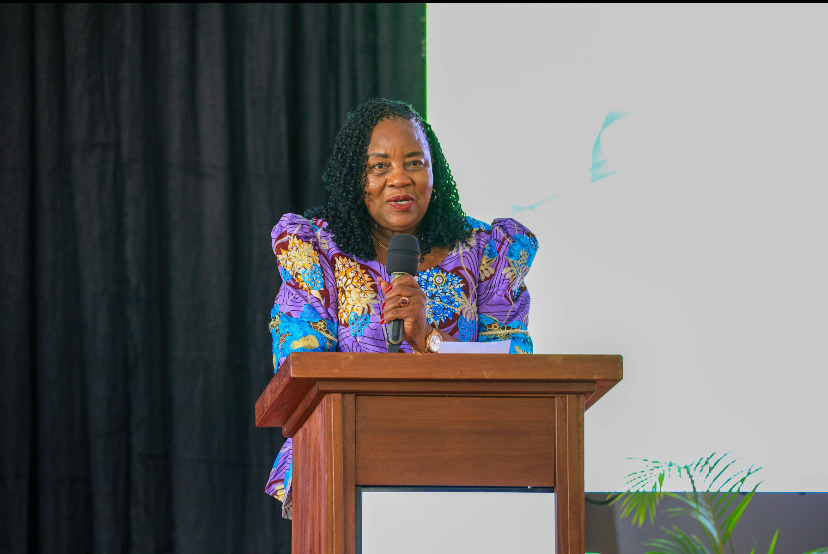
Stakeholders across government, the private sector, development partners, and professional bodies have been called upon to open doors for women in leadership, invest in women-owned enterprises, strengthen inclusive policy frameworks, and build systems that track and sustain progress.
Speaking in Mombasa during the opening of the third Women in Procurement and Supply Chain Management Conference, Kenya’s Ambassador and Permanent Representative to the United Nations Environment Programme (UNEP), Ida Odinga, emphasised that the future of procurement and supply chain leadership must be inclusive, innovative, and sustainable.
“That future must be shaped by women who are empowered, prepared, and intentionally positioned to lead,” said Amb. Odinga.
She described the Conference, organised by the Kenya Institute of Supplies Management (KISM) under the theme “Give to Gain: Empowering Kenya’s Women Leaders in Procurement and Supply Chains,” as a timely and strategic platform that continues to elevate the role of women in shaping economic and governance systems.
“My view is that when we empower women, we build stronger institutions. When we invest in women, we do not lose; we gain stronger institutions, more resilient systems, and more inclusive economies,” she said.
Amb. Odinga further emphasised the need to translate inclusion into influence by preparing women to take up space in boardrooms, policy tables, and executive leadership.
“It is not enough for women to participate; they must shape the decisions that define our institutions and economies,” she said.
The Ambassador urged KISM to go beyond creating opportunities and ensure meaningful access by strengthening market linkages, expanding supplier diversity, and enabling women-owned enterprises to compete and thrive in high-value procurement spaces.
She also underscored the need to institutionalize mentorship and sponsorship frameworks, ensuring leadership development is intentional, structured, and sustained.
“Every woman rising must have a hand guiding her and a system supporting her. We must move from conversation to transformation,” said Amb. Odinga.
Women were further urged to embrace innovation, digital technologies, and sustainable practices that will define the future of procurement and supply chain leadership.
“As we confront global challenges from climate change to supply chain disruptions. Women must be at the forefront of designing resilient, ethical, and sustainable systems,” stated Amb. Odinga.
Principal Secretary (PS) for Public Investments and Assets Management, Cyrell Wagunda, painted a stark picture of gender disparity in the sector, noting that while women make-up over 50 per cent of the procurement workforce, less than 20 per cent hold executive or boardroom positions.
“This disparity is not only a social inequity, but also an economic inefficiency that limits innovation, governance quality, and institutional resilience,” said Wagunda.
He noted that empowering women to rise into leadership roles catalyzes systemic transformation.
The PS stated that by embracing women’s leadership, organisations unlock diverse perspectives and collaborative approaches that enhance strategic decision-making and build resilient, adaptive supply chains capable of navigating today’s complex global environment.
The PS also reaffirmed the government’s commitment to entrenching gender-responsive procurement policies that dismantle structural barriers and promote equitable access for women-owned enterprises to high-value contracts.
“This requires not only robust policy frameworks, but also the development of enabling ecosystems comprising mentorship, capacity building, financial inclusion, and strategic partnerships that empower women entrepreneurs to compete and thrive,” he said.
KISM CEO, Kenneth Matiba, emphasised the importance of mentoring young women to build trust, influence, impact, and legacy in a world that often celebrates accumulation and competition.
“Giving to gain calls us to lead with intention, to serve beyond self, and to uplift others, not as an obligation, but as a responsibility. It challenges us to see supply chains not just as systems of efficiency, but as networks of people with aspirations, responsibilities, and dignity,” said Matiba.
by Sadik Hassan