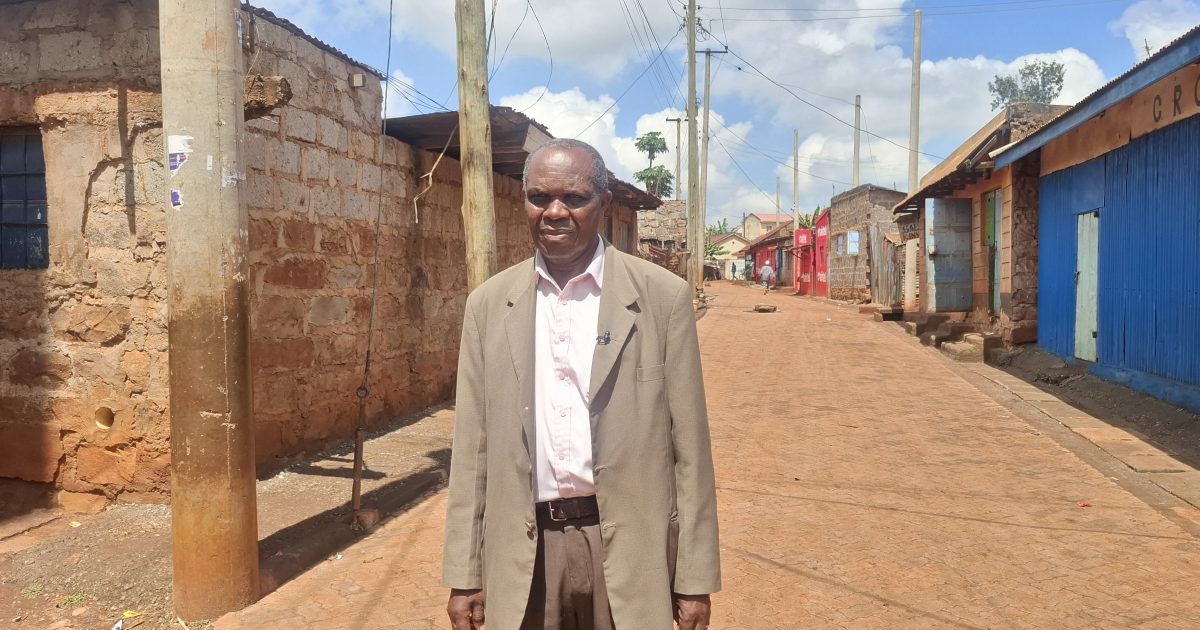
Property prices in informal settlements across the country have recorded sharp increases following government efforts to formalize land ownership through title deed issuance and provision of critical infrastructure.
The interventions are being implemented under the Ksh 27.8 billion Kenya Informal Settlements Improvement Project Phase Two (KISIP 2), a programme jointly funded by the Government of Kenya and development partners.
The project aims to improve living conditions in informal settlements through infrastructure development, enhanced land tenure security, installation of street lighting, and provision of water, sewerage, and drainage systems.
A total of 38 selected informal settlement schemes are currently benefiting from the programme.
During a recent media visit, land values in several informal settlements in Embu, Kirinyaga, Nyeri, and Kiambu counties have increased significantly, with prices rising by between 87 percent and 1,200 percent over the last 16 years.
In Fort Jesus informal settlement scheme in Kiambu County, for instance, the price of a 50×100 plot has risen from Ksh1 million in 2016 to Ksh13 million in 2026, representing an increase of nearly 1,200 percent.
Residents and local leaders who spoke to KNA attributed the price increase to improved infrastructure and greater security of land tenure.
Kiambu County KISIP Coordinator Julius Mwololo said that the provision of critical services has opened avenues for new investors, a situation that has triggered an increase in land value and emergence of new businesses, thus creating employment opportunities for many young people.”
Speaking at the Fort Jesus informal settlement in Gitambaya, Ruiru, he noted that improved roads, street lighting, water, and sewerage systems have transformed once-neglected settlements into attractive investment destinations.
“ Fort Jesus, also known as Matopeni, nearly 1.8 kilometres of roads have been upgraded to bitumen standards, with 35 solar street lights already installed and preparations underway for an additional 100 lights. These upgrades have further significantly improved mobility and safety for residents, including school-going children who can now access better roads.
In Kiangombe village on the outskirts of Thika town, property prices have also increased by between 200 and 400 percent since 2018, with more than 1.8 kilometers of roads upgraded and over 170 solar-powered street lights being installed.
Mwololo further said Kiambu County has developed a 10-year Slum Upgrading and Prevention Strategy covering 2025 to 2035 to address rapid urbanization and guide future growth, and the strategy seeks to address causes of informal settlements, prevent the emergence of new slums, and improve existing settlements.
In the Umoja settlement scheme in Kiambu County, Settlement Executive Committee Chairman Philip Thenge said title deed issuance had pushed up plot prices by between 87 and 150 percent.
“The title deeds have attracted new investors, with some members already selling parcels to interested buyers,” said Thenge.
Njoroge Maigwa. A community member from Matopeni who was born and raised in the settlement said the road project has transformed what was once a muddy and inaccessible area into a thriving neighborhood attracting new residents and investors.
He noted that the newly constructed road has increased land and rental prices, leading to rapid development, including the construction of high-rise buildings as more people relocate to the area.
“The impact has been both social and economic. The village is now accessible, rents have gone up, land prices have increased, and we are seeing more development,” said Maigwa.
However, he said that the settlement, which has about 100,000 households, with 70,000 expected to benefit directly from the current road project, is still inadequate and appealed for an extension of the tarmac to reach more households.
“These roads have already reduced crime, improved access for emergency services, enhanced drainage, and eased access to nearby health facilities, including a Level Four hospital. We now urge both the County and National Governments to continue investing in roads and feeder infrastructure in informal settlements, saying the long-term benefits far outweigh temporary construction challenges.
Similarly, in Ithare Village, one of the colonial settlement schemes in Kirinyaga County, land values have risen following infrastructure upgrades, even as plans to issue title deeds to residents continue.
In Kiawara Village in Mweiga, Nyeri County, the price of a 50×100 plot has increased by 200 percent since 2010, according to a local landlord, Mark Thuo.
“We have in recent years encountered investors scouting for opportunities in our area, including those interested in setting up shopping malls, schools, and other businesses,” said Thuo.
He added that although residents have not widely started selling their parcels, improved roads, street lights, water, and sewer systems have enhanced the area’s appeal and accelerated urban renewal.
Jane Wachu, a trader in Kiawara village, Nyeri County, said improved infrastructure had significantly boosted business operations.
“Before these amenities were provided, we used to close our shops before 6 pm due to insecurity. Now, with street lights, better roads, and title deeds, we open as early as 5 am and close at midnight,” she said.
Residents in all the settlements expressed hope that ongoing improvements under the programme will continue to uplift the settlement and improve livelihoods for future generations.
The Ksh 27.8 billion programme is financed by the Government of Kenya with USD 15 million, the World Bank with USD 142 million, the French Development Agency (AFD) with EUR 45 million, and a EUR 4.45 million grant from the European Union.
The project is domiciled under the State Department for Housing and Urban Development in the Ministry of Lands, Public Works, Housing, and Urban Development.
By Wangari Ndirangu