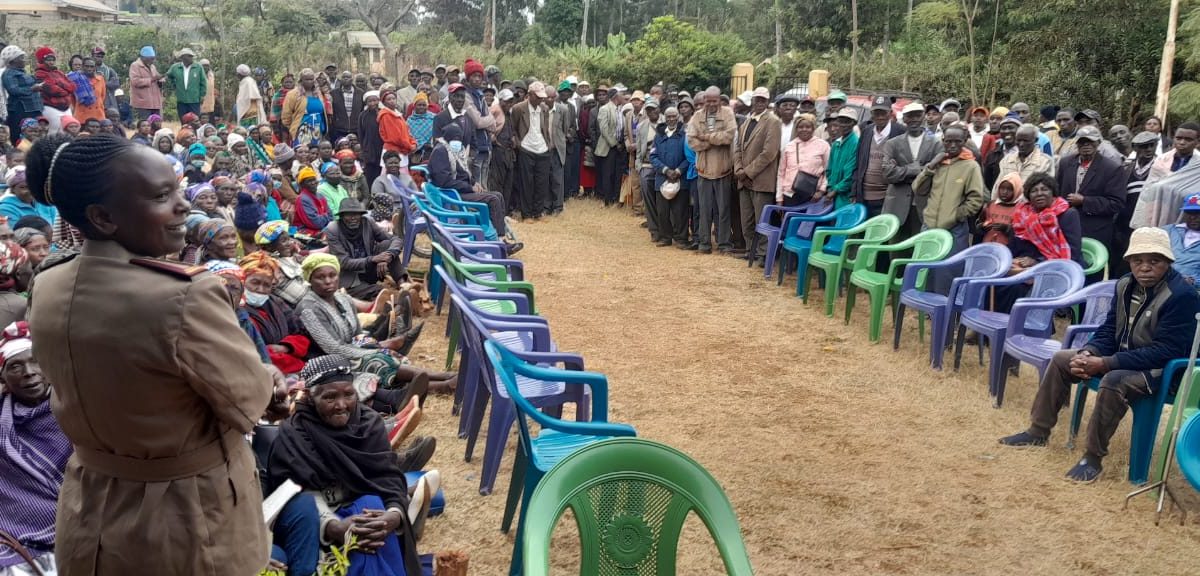
The Older Persons Bill, 2024 targets County Governments to be at the forefront in devising programs geared towards addressing challenges facing older persons.
According to the proposed legislation, such interventions will include activities that enhance their personal development and Capacity to generate income.
Article 57 of the Constitution mandates the State to put in place measures that ensure older persons fully participate in the affairs of the society, pursue their personal development and live in dignity devoid from abuse.
An ‘older person’ is anyone who has attained the age of 60 years.
“Subject to the provisions of (Article 14), community-based programs shall entail home based programmes that ensure that older members of society residing in the county who suffer from any form of mental or physical infirmity and are unable to provide for themselves receive care through comprehensive range of integrated services.
County-based programmes shall integrate community care and development systems for older persons, include the delivery of spiritual, medical, civic, cultural and other social services to older persons within the county,” reads Article 14(2), (3) of the Bill.
According to the Bill, the objective of the proposal is to ensure older persons not only lead fulfilling lives in their sunset years but also live independently and with dignity.
This will include protecting such persons against any form of abuse or discrimination.
And to monitor the management of care facilities for older persons, both the national and county government shall be required to establish a database and a management information system to help track the provision of services.
In addition, both levels of government shall be required to partner in development of infrastructure for the care, rehabilitation and provision of basic services to older persons.
“The national government shall promote periodic research, data collection, analysis and the sharing and dissemination of information on the welfare of older persons and conduct public sensitization programmes and promote access to information on the care and management of older persons.
The county government shall, subject to their mandate under the constitution, develop a county registry for older persons and establish or accredit residential care centers, social centres and other facilities for care of older persons within the county in accordance with this Act and monitor and supervise institutions and, organizations and other persons involved in the delivery of social services,” adds Article 15 (sub section 2 ,3) of the act.
To empower senior citizens in contributing to the social-economic development of the country, county and national government will be required to recognize the social, cultural and economic contribution of older persons and prevent their exploitation from any quarter.
In addition, residential institutions hosting older persons must address the needs of such persons within the different levels of their dependency.
“Every residential institution of care for older persons shall adopt a person-centered approach that recognizes the older person’s rights and the centrality of interpersonal relationships, provision of medical care and nursing care to retain optimal physical and mental health in order to maintain the highest level of independence, equal treatment of older persons regardless of their age, sex, race, ethnic origin, cognitive level, marital or family status and beliefs. An older person living in a residential institution of care has the right to participate in social, religious and community activities of his or her choice.” notes Article 23 subsection (2).
“Any conduct or lack of appropriate action, occurring within any relationship where there is an expectation of trust, which causes harm or distress or is likely to cause harm or distress to an older person constitutes an abuse of an older person,”.
Any individual who contravenes this Act by abusing an older person is liable to conviction before a court of law.
Article 23 subsection (5) notes that if a court having convicted a person of any crime or offence finds that the convict has abused an older person, it shall be regarded as an aggravating circumstance for sentencing purposes.
Upon conviction, such a person shall be liable to a fine not exceeding Sh1 million or to an imprisonment term not exceeding 3 years, or both.
Article 6 also obligates the State to ensure prompt payment of pension and other forms of social security for older persons to enable them to lead comfortable and dignified lives in their sunset years.
Such social safety nets include Older Persons Cash Transfer (OP-CT) for persons who have attained the age of 70 years and have no source of income to sustain themselves.
“Every older person is entitled to receive timely payment of(non-taxable) pension from their employment and other forms of social security, be provided with income security for those older persons who did not have the opportunity to contribute to any social security provisions and lean processes and procedures that are decentralized, simple and dignified in accessing their pensions.
The purpose of the cash transfer program for older persons is to provide social assistance to older persons through regular and predictable cash transfer to enable them to live with dignity and exploit their human potential.” articulate article 25 subsection (2) of the Bill.
However, according to article 29 subsection (1) anyone above 70 years who is receiving pension that is higher than the stipulated cash transfer stipend shall not be eligible for OP-CT.
The OP-CT program was established in September 2013 to uplift the lives of vulnerable older members in the society in bid to enable them meet their most basic needs.
As of August, last year, there were 1,215,343 beneficiaries under this program.
By Samuel Maina