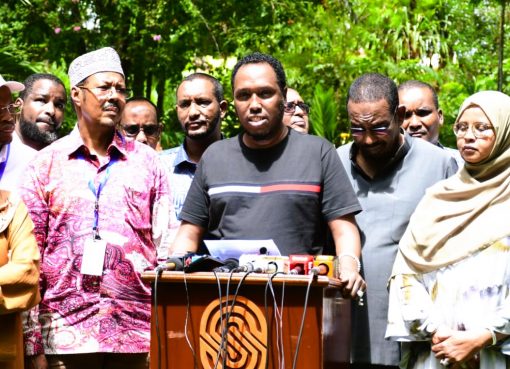
The Kenya National Bureau of Statistics (KNBS) pitched tent in Embu Town on Friday to gather views from Eastern Region on the proposed Statistics Bill, 2026.
Residents gave mixed reactions of support and criticism of the Bill that is poised to replace the Statistics Act of 2006, to align data collection with the 2010 Constitution and International Standards.
The Bill proposal to introduce biometric data was welcomed by many participants as a tool for modernising data infrastructure to ensure accuracy, integrity and data manipulation.
Peter Kamau, who is a Statistician at the University of Embu, said that the incorporation of biometrics in national population censuses and surveys was a significant milestone in attainment of data protection and security.
“The push for biometric integration will ensure that the 2029 National Population Census will be a major step of ensuring the results will be more reliable and sort out the long-standing dispute over data credibility,” he noted.
He said credible data was crucial for national planning, especially with regard to resources allocation to ensure equity in distribution of public funds depending on unique needs of different regions.
Kamau also threw his weight behind the proposal for the formation of a Statistics Fund that will give KNBS financial autonomy.
He said the shift from reliance on the National Treasury or donor funding to full financial autonomy will give KNBS financial independence to consistently run its programmes without external or political interference.
The statistician, however, expressed concern over the possibility of misappropriation of funds for unintended purposes, saying proper regulatory safeguards need to be put in place.
Sospeter Gitonga, Convener of Civil Society Organizations (CSOs) in Embu County, expressed concern that the Bill proposal for creation of a new body to issue research permits could create conflict of interest with other bodies that has been doing the same work such as National Commission for Science, Technology and Innovation (NACOSTI).
He said creation of another licensing body besides NACOSTI that has been the sole body mandated to regulate and license scientific research in the County could force researchers to seek two separate permits for the same project.
Gitonga argued that the Bill should come out clear on the role of each body to curb duplication of roles and double licensing.
He also criticized the proposal for the formation of County Statistics Offices, arguing that the proposed new administrative units could lead to duplication of roles between counties and the national KNBS office.
“These units might end up performing the same duties as the national office, leading to wastage of resources,” he noted, adding that clarity also needs to be made whether they will be domiciled in the County Government or the National Government.
Anthony Matumo from the County Government of Tharaka Nithi said the clause on the formation of County Statistics Offices should be relooked and refined to explicitly define the mandate, roles and responsibilities of the offices to avoid conflict of interest.
Linda Olweny representing KNBS, appreciated the feedback they had received from the public, saying it is crucial for the refinement of the bill to ensure it is robust, inclusive and responsive to the needs of all Kenyans.
by Samuel Waititu