The Centre for Mathematics, Science and Technology Education in Africa (CEMASTEA) is actively aligning senior school teachers with Artificial Intelligence (AI) to enhance pedagogy.
CEMASTEA is equipping teachers in public schools with essential skills in leveraging AI tools and digital skills for education.
CEMASTEA is moving steadily towards a future where science, technology and innovation are driving forces for socio-economic development.
Michael Terer, principal ICT officer with CEMASTEA, says the nationwide training seeks to bridge the digital and pedagogical gaps besides supporting the implementation of the new Competency-Based Education (CBE) system.
Terer says the initiative in senior schools is upscaling the CBE system by creating AI curriculum-aligned resources that promote safe, ethical and practical AI adoption.
He says CEMASTEA is actively integrating AI into teacher training, focusing on lesson planning, digital literacy, and tool utilization like ChatGPT to improve learning outcomes.
The senior ICT official said CEMASTEA is going around the 47 counties to train senior school teachers on AI and digital pedagogy to improve classroom learning outcomes and align education with the CBE and the global tech trends.
Terer says CEMASTEA is out to integrate AI into teacher education to enhance the new competency-based curriculum delivery.
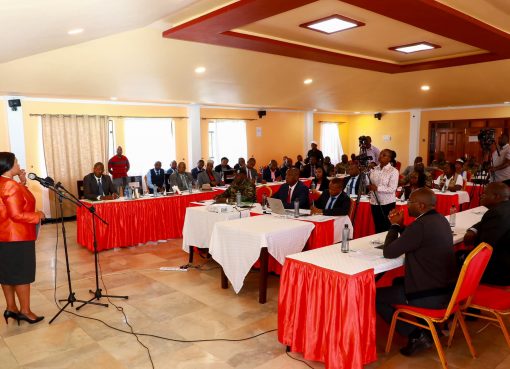
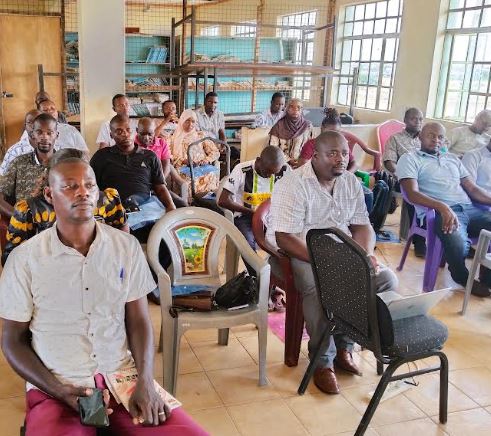
He was speaking at the Hola Boys senior school in Tana River County, where CEMASTEA concluded training for more than 40 senior school teachers drawn from across the county in artificial intelligence skills.
“The CEMASTEA training is focused on teacher-student-centered AI that is secure, appropriate and adapted to the Kenyan education context,” he said during an interview.
He said the teachers have received hands-on training in AI to enhance teaching and learning outcomes in the classrooms.
Terer says the training programme is part of the much-needed shift in the way Kenya approaches Science, Technology, Engineering and Mathematics education and nurtures a generation that sees innovation as a means of solving real world problems.
“The introduction of AI-focused training is timely because the education sector is rapidly evolving due to technological advancements,” he noted.
Terer says CEMASTEA is supporting the efforts by the government to boost the quality of education and strengthen digital literacy that is a core competency in the CBE system.
He said CEMASTEA expects the teachers who have undergone training on up-to-date technological advancements to in turn equip their learners with digital skills to survive in today’s evolving learning environment.
The sessions focused on practical AI applications for lesson planning, scheme of work, resource development and assessments.
“The teachers are taking the lead in bringing AI tools to the classrooms,” he said, adding that the move will in the long run close the gap between what academia teaches and what the labour market demands.
Key thematic areas of the training include familiarizing and navigating the CEMASTEA portal portal.cemastea.ac.ke, understanding the foundation of AI, developing hands-on activities with AI tools for educators, enhancing AI learner-centered pedagogy in CBE lessons and enhancing responsible AI use and teacher preparedness.

Teachers in Tana River are increasingly welcoming AI training to modernize and improve the quality of education and boost productivity.
The teachers interviewed by KNA expressed optimism, noting that the digital training will bring transformation in teaching and learning outcomes.
They said they will in turn equip learners with the skills needed to thrive in a rapidly evolving digital world.
Mwanamisi Mohamed, a chemistry and biology teacher, noted that the training has enabled the tutors to improve their adaptation of AI technologies in the classrooms.
“AI in education is a step in the right direction and it’s already shaping how subjects are taught in the classrooms and how students practice it,” she said, adding that they are ready for the shift in technology.
She said the training is an eye-opener and is designed to arm them with a better understanding of AI tools like ChatGPT, Google Gemini and Microsoft Copilot, help them plan better and improve student engagement in class.
She said educators are actively embracing AI training and integration to revolutionize education through reduced workload and enhanced digital skills.
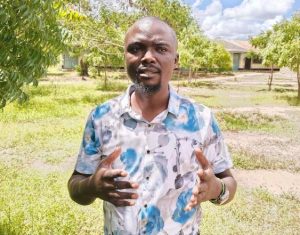
Enock Kaunda, a mathematics and physics teacher with 14 years of teaching experience, said they are cognizant of the fact that for AI to be successfully inculcated in teaching and learning, it’s important that educators be well trained.
Kaunda says those trained will become tech ambassadors and inspire teachers and learners for a future shaped by digital possibilities.
“For educators to prioritize the usage of AI tools and resources effectively and enhance pedagogical and practical nuances, we need continuous training, especially for teachers in resource-constrained schools,” he said.
Another school teacher, Kazungu Gona, said the training will boost their pedagogical skills and enable them to modernize teaching methods.
Gona said the training aims to improve lesson planning, assessment, and student engagement using AI tools and prepare learners for the demands of a digital world.
By Hussein Abdullahi