Smallholder farmers in Nakuru County are increasingly turning to indigenous knowledge, traditional seeds and agroecological practices to cope with unpredictable weather patterns and improve food security amid growing climate change challenges.
Experts say preserving indigenous seeds and traditional farming methods is no longer just a cultural practice but a critical strategy for building resilient food systems, conserving biodiversity and reducing farmers’ dependence on expensive agricultural inputs.
Speaking during an agroecology symposium organized by the Nakuru County Government in collaboration with the Agricultural Society of Kenya, Seed Savers Network Communications and Advocacy Officer Tabby Munyiri said indigenous knowledge plays a crucial role in helping communities adapt to changing climatic conditions.
Munyiri said conserving indigenous seeds and traditional foods is essential for strengthening climate resilience and ensuring that farmers have access to locally adapted varieties that can withstand harsh weather conditions.
She noted that the Kenya National Agroecology Strategy for Food System Transformation 2024-2033 recognizes the importance of farming practices that improve soil health, conserve water, enhance biodiversity and reduce reliance on harmful chemical inputs.
“The preservation of indigenous seeds and traditional foods is not merely a cultural responsibility. It is a strategic necessity for food security, climate resilience and social equity,” said Munyiri.
She, however, identified several challenges affecting indigenous seed systems, including legal restrictions on the exchange and sale of uncertified seeds, inadequate support for community seed banks and limited public awareness on the value of traditional varieties.
Munyiri called for a change in mindset and policies that support farmer-managed seed systems, arguing that farmers should not be restricted from sharing and preserving seeds that have sustained communities for generations.
She added that digital platforms could help strengthen indigenous seed conservation by providing farmers with information on seed saving, organic farming and agroecological practices through communication programmes, radio shows, publications and databases.
Seed Savers Network Marketing Executive Stella Murugi said promoting indigenous seed sharing and exchange would help protect Kenya’s food sovereignty while preserving biodiversity.
Murugi warned that continued dependence on conventional seeds that are less adapted to local conditions could increase food import costs and expose farmers to production losses, especially during drought periods.
She explained that indigenous seeds possess unique characteristics, including resistance to pests and diseases, and are better suited to local climatic conditions.
“The exchange and sharing of seeds is cost-effective because farmers can access planting materials without having to purchase expensive certified seeds every season,” said Murugi.
She urged the government to prioritize the establishment of indigenous seed banks through budgetary allocations to encourage conservation, multiplication and wider adoption of traditional varieties.
For 38-year-old Martha Waithera Njenga, an indigenous seed multiplier from Kiptangwany village in Gilgil Sub-County, traditional crops provide a practical solution to climate-related agricultural challenges.
Njenga specializes in multiplying different indigenous seed varieties in controlled environments to prevent contamination after collecting them from elderly farmers who have preserved the seeds over many years.
She said indigenous crops mature faster, require less rainfall and are naturally resistant to some pests, making them suitable for areas facing unreliable weather patterns.
“Our grandparents were often food-secure because they preserved their preferred seeds in gourds and granaries. We have exposed ourselves to climate challenges by abandoning some of those practices,” said Njenga.
She explained that her involvement with Seed Savers Network has helped transform her farming practices while encouraging other farmers in her community to conserve traditional varieties.
Njenga also welcomed a November 2025 High Court decision that declared some provisions of the Seed and Plant Varieties Act, 2012 unconstitutional, saying it had created room for farmers to save, share and multiply indigenous seeds.
She noted that the ruling affirmed the importance of Farmer-Managed Seed Systems (FMSS), which allow communities to preserve and exchange seeds that are critical to their livelihoods.
According to Njenga, Article 11 of the Constitution recognizes the importance of indigenous knowledge and requires legislation that supports the use of indigenous seeds by local communities.
She said policy makers should integrate traditional farming practices with modern agricultural systems to develop strategies that help farmers adapt to changing weather patterns.
The court decision followed a petition filed by the Biodiversity and Biosafety Association of Kenya, GreenPeace Africa and Seed Savers Network challenging sections of the Seed and Plant Varieties Act, which had restricted the sale, exchange and distribution of uncertified seeds.
Before the ruling, the law imposed penalties for unauthorized handling of uncertified seeds, including fines of up to Sh1 million, imprisonment of up to two years, or both.
The organizations argued that the restrictions undermined traditional seed systems and contributed to increased dependence on imported seeds.
Njenga said both formal seed systems and farmer-managed seed systems have a role to play in strengthening Kenya’s agricultural sector and should complement each other rather than operate separately.
She emphasized the need for clear guidelines to support farmer-managed seed systems while maintaining quality standards within the formal seed sector.
Meanwhile, Munyiri called for increased public awareness on the importance of indigenous seeds, saying many communities risk losing valuable agricultural knowledge if conservation efforts are not strengthened.
She noted that agroecology offers farmers an opportunity to combine traditional knowledge with scientific approaches to improve soil fertility, conserve natural resources and increase productivity.
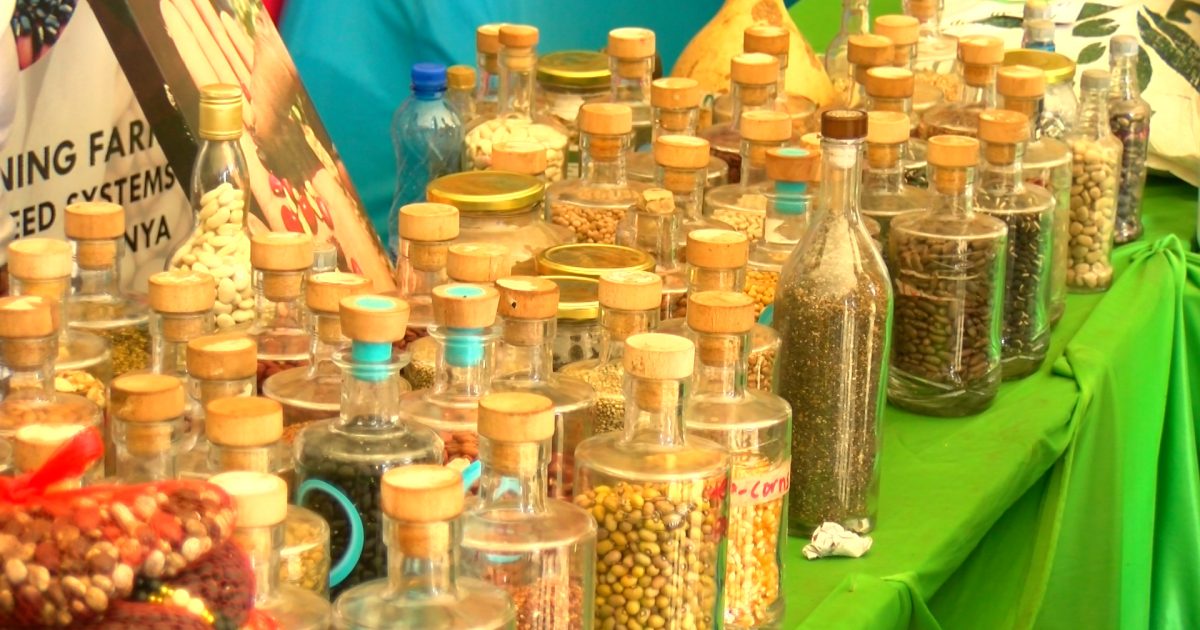
Farmers attending the symposium displayed various indigenous seeds and shared experiences on how traditional practices have helped them cope with drought, declining soil fertility and rising production costs.
Stakeholders at the forum agreed that supporting indigenous knowledge and sustainable farming methods would be key in building resilient food systems capable of withstanding the effects of climate change.
By Esther Mwangi/Dennis Rasto