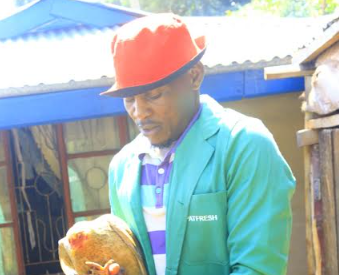
What started as a small poultry venture has grown into a promising agribusiness enterprise for Patrick Bungei of Soko Huru, Soliat Ward, Soin Sigowet Constituency, who is now expanding into goose keeping as he seeks to create more income opportunities from farming.
Bungei completed his Form Four education before venturing into farming, where he has since gained practical skills in poultry keeping and other agribusiness activities.
He says farming has become an important source of livelihood for his family, with members of his household also supporting him in various activities on the farm.
He started poultry farming more than two years ago with a small number of birds and gradually expanded the enterprise as he gained experience in poultry management and understood the market.
He now keeps different varieties of chicken, including layers, broilers, and improved Kienyeji chicken, with both egg and meat production contributing to his earnings. “Starting small gave me an opportunity to learn how to manage the birds before expanding the enterprise,” Bungei says.
The farmer says poultry keeping requires commitment and proper management, particularly in feeding, disease prevention, hygiene, and providing adequate housing. He notes that farmers must closely monitor their birds because poor feeding, disease outbreaks, and unhygienic conditions can affect production and increase costs.
Despite the opportunities presented by poultry farming, Bungei says rising feed costs remain one of the biggest challenges facing farmers. Diseases and fluctuations in market prices also affect profit, making it important for farmers to control production costs while seeking reliable buyers for their birds, eggs, and other poultry products.
To reduce his reliance on poultry alone, Bungei has recently ventured into goose keeping, an enterprise he considers relatively new but with potential for growth. He currently maintains a small flock and plans to increase the number gradually after gaining more experience in their management and identifying a dependable market.
“Geese are still new to me, so I started with a small number. I want to learn more about them before increasing the flock,” he says. The farmer believes taking time to understand a new enterprise before investing heavily can help minimise losses and give farmers a better understanding of the market.
Beside poultry and geese, Bungei engages in other agribusiness activities, which he says complement his farming enterprise and provide additional opportunities for income. He believes diversification can help farmers spread risks, particularly when one agricultural activity is affected by high input costs, diseases, or poor market prices.
The farmer also encourages young people interested in agriculture to approach it as a business rather than simply a means of subsistence. He says success does not necessarily require large capital at the beginning but instead calls for patience, knowledge, proper planning, and a willingness to reinvest profits into the enterprise.
“You do not have to start with a large amount of money. Start with a small investment, learn, and reinvest as the business grows,” Bungei says, urging aspiring farmers to make use of the resources available to them and gradually build their enterprises.
As he continues to expand his poultry venture and experiment with goose rearing, Bungei hopes to develop his farm into a larger commercial agribusiness enterprise. His journey demonstrates how farmers can begin with limited resources, gain practical experience, and gradually diversify their activities as they pursue sustainable livelihoods from agriculture.
By Faith Chelang’at