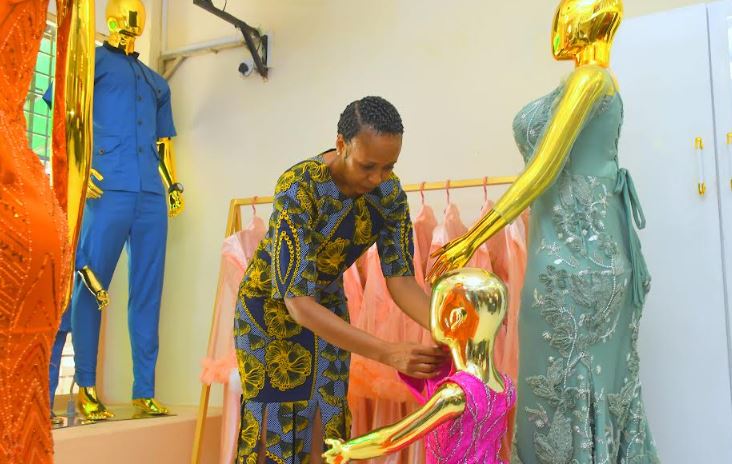
In a modest workshop on the ground floor of Mombasa’s Jiwaji Building, a woman’s quiet determination has grown into a source of livelihood for a small but steadily expanding team of young tailors.
What began in 2020 with one sewing machine and a single tailor is now African Brides, also known as Label of Choice, a bridal and fashion workshop built from the ground up by Judith Makau.
Makau, a trained journalist, says fashion was a passion she carried since childhood but only turned into a livelihood after the COVID-19 pandemic forced many Kenyans to rethink how they earned a living.
With limited capital, she started small: one tailor, one machine, in a modest space. Within three years, she had brought in two tailors from Tanzania, housing them herself, before growing her team to the six tailors she now employs.
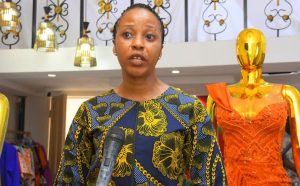
For Makau, the business has become as much about dignifying a trade often looked down upon as it is about garments.
“People see tailoring like a very low job,” she says, describing her drive to change that perception by creating a workspace where both her staff and her clients feel valued.
That commitment to people is perhaps best captured in the story of Ali Mrabu, who joined the workshop as a cleaner and was trained by Makau into a skilled tailor.
“I came here as a cleaner; with time I became interested in sewing and became perfect at it. I urge the youth to work hard and not compare jobs. Any honest work that puts food on the table is worth doing,” said Mrabu.
Makau’s ambitions extend beyond Mombasa; she has travelled as far as China to research gown designs and fabrics, but she remains candid about the obstacles facing local designers, pointing to the collapse of many local textile companies as a major barrier to sourcing quality fabric.
She is calling on the government to revive the country’s textile industry to give Kenyan designers a stronger local supply chain to build on.
Bishop Simon Muteti, a long-time customer, praised the professionalism of Makau’s workshop and used the moment to urge young people to look beyond chasing formal “big” jobs. “Learn a skill, work hard, and support the country instead of remaining idle,” he said.
Other clients and entrepreneurs who have worked with the workshop, including Catherine Kiluva and Adama Rismuaka of Fab’s Collection, pointed to the consistency and quality of the work coming out of African Brides as a reflection of the standards Makau has instilled in her growing team.
Makau’s journey stands as a reminder that job creation does not always begin with big capital or formal employment structures; sometimes it begins with one woman, one machine, and a willingness to train and uplift the people around her.
By Vanessa Sariman