Kenya churns over one millions youths into the labour market every year, where the government only absorbs a mere 200,000.
The country is a youthful nation with more than 16 million people not in any form of employment, spiking up poverty levels.
Data from World Bank shows over 3.4million young people below the age of 35, are not engaged in any form of employment, as our institutions of higher learning churn out over a million youths to the job market every year.
Data from the International Labour Organization (ILO) shows that unemployment rate in Kenya decreased to 5.40 percent in 2024 from 5.60 percent in 2023.
The Kenyan government has however repeatedly emphasized its commitment to stemming unemployment through initiatives like the Hustler Fund, youth enterprise loans, and improved policies for small traders.
These interventions, the government says, are meant to uplift ordinary citizens striving to make a living through informal businesses.
The Hustler Fund is a digital financial inclusion initiative designed to improve financial access to responsible finance for personal, micro, small, and medium-sized enterprises (MSMEs) in Kenya.
This loan is designed to help hustlers and small business owners to access money, when they need it most. Whether it’s stocking up your shop, fixing your motorbike, or handling an emergency, this loan gives you quick cash without collateral or long approval processes.
More recently, the government came up with the National Youth Opportunities towards Advancement (NYOTA) programme.
This is a national youth program targeting young people across Kenya to promote employment, entrepreneurship, income generation and youth savings and financial security.
Data from the Ministry of Treasury shows that of early February 2026, the NYOTA programme has disbursed over Sh2.5 billion to more than 101,000 young entrepreneurs nationwide.
As of May 2026, data from Cooperatives and Micro, Small and Medium Enterprises (MSMEs) Development Ministry shows over Sh83 billion has been disbursed through the Hustler Fund, since its inception in November 2022, according to reports released by in March 2026.
NYOTA programme, a partnership between the government and the World Bank, aims to empower 820,000 vulnerable youth with business start-up capitalThe project has four key components: Improving Youth Employability. Expanding Employment Opportunities.
NYOTA is an initiative aimed at boosting employment and incomes for vulnerable youth by providing skills development, entrepreneurship support, mentorship, and access to enterprise equipment and funding.
The project distributes equipment like sewing machines, posho mills, and welding machines to groups in various sectors to promote innovation and formalize businesses.
Its objective is to increase employment, income, and savings among targeted vulnerable youth in Kenya and targets vulnerable youth aged 18-29, and up to 35 for Persons with Disabilities, including refugees in specific counties.
At the same time, the government’s Affordable Housing Programme has created temporary and long-term job opportunities for many young people involved in construction, transport, supply and small businesses around project sites.
In Kisumu, some youth have benefited from these opportunities, while others continue to build livelihoods through independent hustles in the informal economy.
Despite these efforts, many youth continue to yarn for more efforts and policies that can uplift their standards of living.
As unemployment continues to rise among Kenyan youth, many young people in Kisumu are turning to the informal sector to eke out a living, build businesses and support their families.
From boda boda transport to mitumba trade and street vending, thousands of youths across estates such as Kondele, Manyatta and Nyalenda are increasingly relying on small-scale hustles as a source of income in an economy shaped by resilience, creativity and self-reliance.
To this end, many young people have embraced entrepreneurship and informal businesses as an alternative means of survival.
Among the most visible sectors is the boda boda industry, which has grown into one of Kenya’s largest informal economic activities.
The business originated in the 1990s around border towns, where bicycles were used to transport people and goods across borders.
As demand increased, motorcycles gradually replaced bicycles because of their speed and efficiency. Today, the boda boda sector contributes billions of shillings to the economy annually and provides employment to more than two million Kenyans directly and indirectly.
As of February 2018, the National Transport and Safety Authority (NTSA) reported nearly 1.4 million registered motorcycles, a figure which has grown significantly since. More recent data estimates that suggest around 2.5 million motorcycles are registered in total, with 1.8 million actively in use.
The sector is a major employer, providing livelihoods for over one million people and contributing approximately 3.4 per cent of the country`s Gross Domestic Product (GDP).
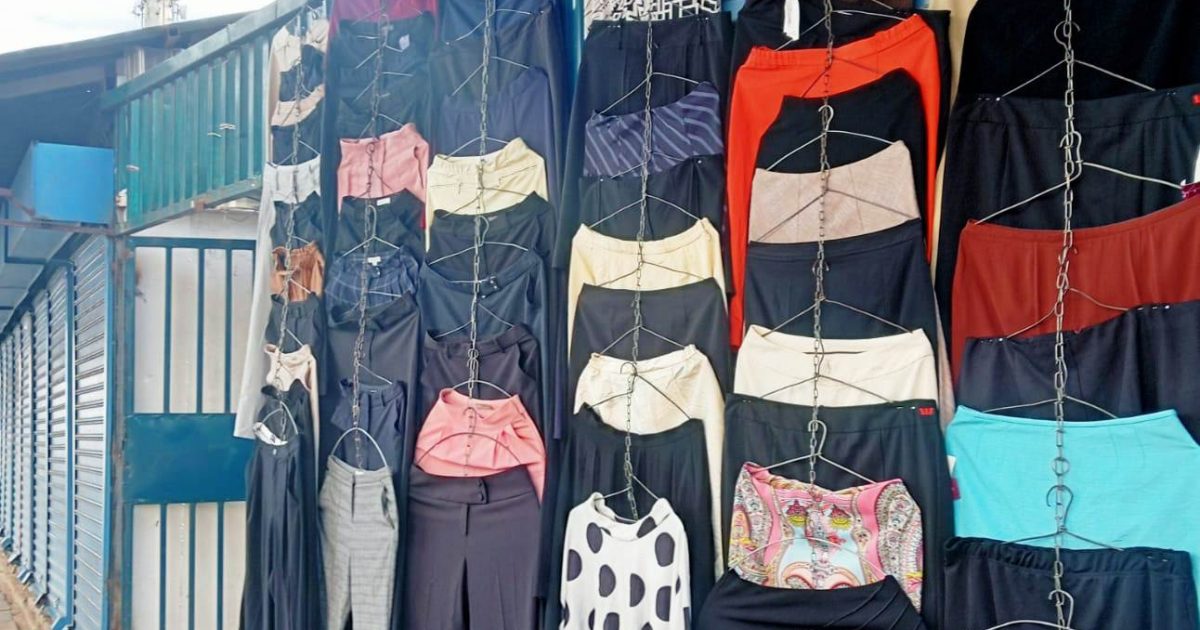
Similarly, the mitumba business, which loosely means selling secondhand clothes, bags and shoes among other items has expanded rapidly due to the growing demand for affordable second-hand items mainly imported from Europe, America and Asia.
The low startup capital required has attracted many young traders seeking financial independence and flexible income opportunities.
The second-hand clothing trade in Kenya, known locally as mitumba, is a massive economic sector, employing over 2 million people and contributing roughly Sh12–28 billion annually in taxes.
It serves over 90 per cent of households, who buy affordable, imported used clothing, making it a crucial source of income and clothing access, despite concerns over waste.
Across Kisumu’s busy streets and estates, young entrepreneurs continue to shape the local economy through these informal ventures.
Every morning, motorbikes roar through crowded roads as traders arrange clothes, vegetables and household items along roadside stalls while customers move between markets in search of affordable goods and services.
For Kennedy Ndinya, a 31-year-old boda boda rider, the journey began with a simple bicycle before he eventually acquired a motorcycle through savings and support from friends.
“I started small because that is what I could afford at the time. With consistency and support from friends, I was able to grow,” he said.
Ndinya says the business has enabled him to earn a living and become financially independent. “Being able to earn something every day gives you motivation. You feel in control of your life,” he adds.
On good days, he earns up to Sh3,000, while slower days bring in about Sh1, 000 depending on customer demand.
However, he says rising fuel prices, stiff competition and unstable income remain major challenges. “Some days are good, others are not. You have to be patient and disciplined to keep going,” he said.
Similarly, Gregory Ochieng, a 24-year-old mitumba trader operating near the University of Nairobi, Kisumu campus in the Central Business District (CBD), says the business has helped him build confidence and purpose.
“I chose this path because I wanted to build something of my own and be self-reliant,” he said.
Ochieng, who has worked in the mitumba business for four years, sells clothes mainly to students and nearby residents. According to him, understanding customer preferences and keeping up with fashion trends is key to survival in the business.
“You have to know what people want and adjust. Fashion keeps changing, so you must stay updated,” he explained.
However, inflation and rising stock prices continue to affect profits and customer purchasing power.
“Prices have gone up, but customers still expect affordable clothes. It becomes difficult, but we adjust,” he says.
Like many other young entrepreneurs, Ochieng believes access to affordable loans and capital would help expand his business. “If I had enough capital, I would open a bigger shop and increase my stock, because this business is putting food on my table” he adds.
Despite the challenges associated with the hustle economy, including unpredictable income, competition and limited financial support, many young people in Kisumu remain hopeful about the future.
For some, hustling is a temporary stepping stone, while for others it has become a long-term career capable of transforming lives and supporting families.
As evening falls across the city and businesses begin to close, Kisumu’s youth continue to push forward through determination and hard work.
In every boda boda ride, mitumba sale and roadside business lies a story of ambition, resilience and survival in a rapidly changing urban economy.
by Mabel Keya- Shikuku and Tony Brian