Residents of Kajiado North have been urged to stand-up against Sexual and Gender-Based Violence (SGBV) and participate actively in supporting survivors in pursuing justice.
Officials from the police, judiciary, health, Children’s Department, and probation services made the call today during a public engagement forum organized by the Wangu Kanja Foundation, under its Justice for Survivors project.
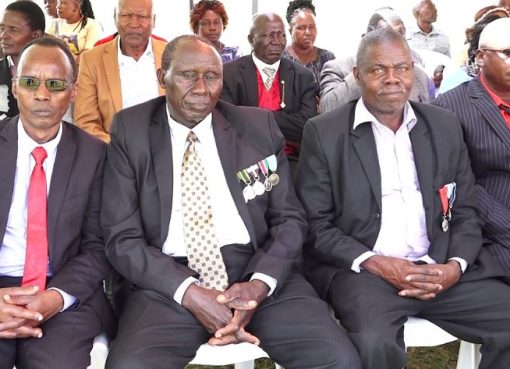
Community elders were particularly urged to stop shielding suspected perpetrators through customary arrangements, which officials and participants said undermine justice and perpetuate sexual violence.
James Kichumba, an elder from Oloolua Ward, said communities should allow the law to take its course regardless of the relationship between the survivor and the alleged perpetrator.
“Our people should let justice take place even if it’s a relative, and chiefs should get out of the way or support cases to be reported,” he said.
Kichumba said some elders protect young men accused of defiling women by attempting to resolve the cases through customary mechanisms.
“There are cases where young men are reported to defile women, and elders stand to protect them in the name of handling the issues in customary ways,” he added.
Judith Ogor, the probation and aftercare officer for Kajiado North and West, identified stigma as one of the biggest barriers preventing survivors from reporting SGBV cases.
“As a practitioner, what I have observed as a barrier is the stigma from society. Not many people like to be seen as one who has been defiled,” she said.
Ogor said survivors also face victim-blaming, fear of perpetrators who are often relatives, and financial challenges in pursuing justice.
Police officers at the forum assured residents that SGBV complaints would be handled professionally, with statements taken from survivors and witnesses before files are forwarded to the Office of the Director of Public Prosecutions.
“We want to assure the members of the community that as the police, we are up to the task and we are going to perform our duty without any fear or intimidation from anyone,” said Amos Gori of Ngong Police Station.
At the courts, officials said measures are in place to protect survivors’ identities, including the use of initials instead of names throughout the proceedings.
A Ngong Law Courts official said separate files are opened for victims and accused persons in cases involving minors on both sides.
Tracy Katua, a Public Health Officer in Kajiado North, said SGBV-related medical and counselling services at government facilities are provided free of charge.
She urged residents to help survivors access treatment promptly and preserve evidence that could support prosecution.
Cynthia Mbongo, the Kajiado Children’s Officer, said the Department conducts risk assessments and home visits after SGBV cases involving children are referred to it.
“Where a child’s safety is at risk, we have rescue centres where we take them for some time before reintegrating them back into the community,” she said.
Anne Waiguru, a community volunteer and SGBV survivor, called for greater recognition and protection of volunteers who accompany survivors to report cases.
She said volunteers can play a critical role, particularly where family members may be unwilling to support survivors or are sympathetic to alleged perpetrators.
Daisy Ouko, a programme officer at the Wangu Kanja Foundation, said the Organization supports survivors throughout the care and justice process.
“We support survivors of sexual violence in the continuum of care: supporting them to go to hospital, supporting them in legal matters, and also in matters of shelters,” she said.
According to the 2022 Kenya Demographic and Health Survey, 36 per cent of women aged 15-49 in Kajiado County have experienced physical violence since age 15, compared with a national average of 34 per cent. Nine per cent have experienced sexual violence, against a national figure of seven per cent.
The forum is part of the Wangu Kanja Foundation’s ongoing efforts to reduce impunity for sexual violence in Nairobi, Kajiado, Machakos, and Kiambu counties.
By Byron Ouma/Angeline Otieno