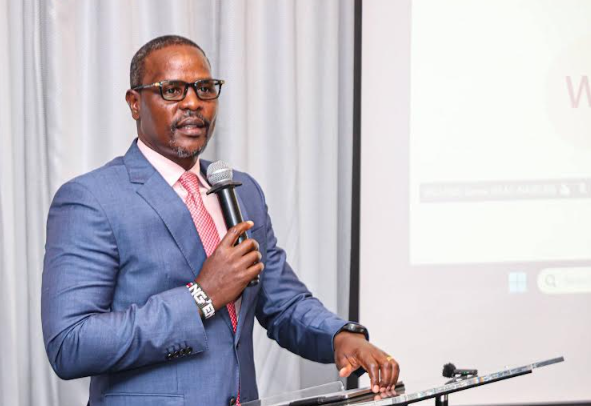
The State Department for Environment and Climate Change and the United Nations Development Programme (UNDP) have launched the Dynamic Nairobi Metropolis Field Mission to Accelerate Kenya’s Circular Economy Transition.
The Joint Rapid Assessment Mission, spearheaded by the State Department for Environment and Climate Change and UNDP, has officially hit the ground, launching its initial phase across Nairobi’s bustling metropolis.
The assessment mission commenced on Tuesday, 15th September 2026, targeting key stakeholder engagements across Nairobi, Kiambu, Machakos, and Kajiado counties, which are the key epicenters of Kenya’s economic vitality.
As the core economic and demographic hub of the country, the metropolitan zone generates a substantial proportion of Kenya’s municipal and industrial waste, positioning it as the critical nucleus for shaping the upcoming National Circular Economy Investment Programme (NACIP).
Importantly, the mission’s expert teams are engaging in high-impact dialogues with county officials, innovative private sector players, recycling plant operators, and industrial stakeholders.
Their focus includes assessing waste generation dynamics, mapping existing recovery infrastructure, identifying regulatory and financial bottlenecks, and spotting high-potential green value chains primed for scaling.
Insights gathered from this immersive assessment will serve as the blueprint for a robust, bankable national investment framework, designed to close critical financing gaps, catalyze private-sector participation, and propel Kenya toward a sustainable, circular resource economy.
As field visits roll on this week, the mission’s reach will expand, reaffirming Kenya’s unwavering commitment to transforming waste from an environmental challenge into a catalyst for green economic prosperity. This bold initiative signals a transformative shift, where waste becomes wealth, and sustainability drives Kenya’s future prosperity.
Earlier, the State Department for Environment and Climate Change held the 10th Session of the Environment, Climate Change, and Forestry Joint Sector Working Group (JSWG) meeting in Nairobi, with Principal Secretary (PS) Dr. Eng. Festus Ng’eno presiding over the event.
The meeting brought together government, development partners, and private sector stakeholders to strengthen coordination and align development support with Kenya’s environmental and climate priorities.
The PS highlighted key milestones achieved since the last session, including the enactment of the Kenya Meteorology Act, 2026, which establishes the Kenya Meteorological Service Authority and strengthens the country’s capacity for multi-hazard early warning and actionable climate intelligence.
He also highlighted ongoing reforms in environmental governance, including the review of the 2013 National Environment Policy, alongside progress in carbon markets and the development of Kenya’s Guide to Strategic Engagement in Carbon Markets.
Dr. Ng’eno further underscored Kenya’s leadership in global environmental action, including hosting the 11th Our Ocean Conference and the global observance of World Desertification and Drought Day 2026.
With the country facing urgent environmental challenges, including the continued swelling of Rift Valley lakes and the anticipated El Niño conditions during the October–December rainy season, the PS called for stronger investment in early warning systems, disaster risk reduction, catchment protection, flood mitigation, and anticipatory action.
He urged development partners to align their support with national priorities and work with the government to deliver clear, measurable outcomes in climate action and environmental protection.
By Michael Omondi