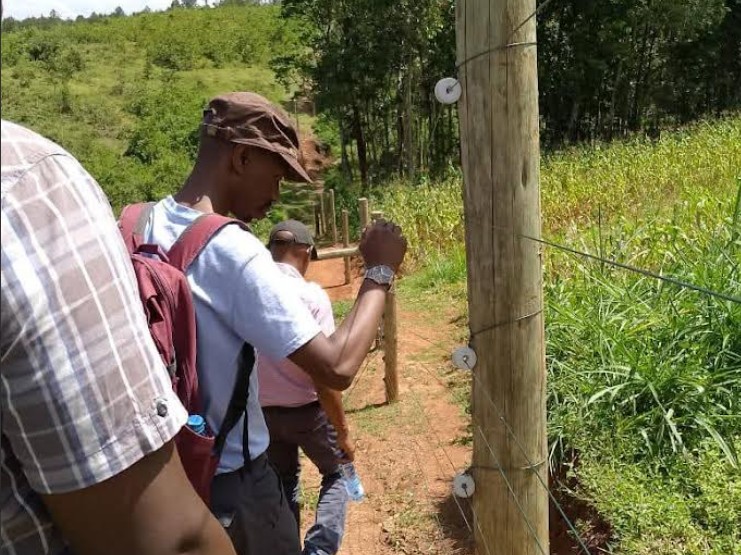
Efforts to conserve Kibiri Forest in Vihiga County have received a major boost following the successful rollout of a comprehensive fencing project.
The initiative also includes reforestation measures aimed at curbing illegal encroachment and safeguarding the forest’s rich biodiversity.
The initiative is being spearheaded by the Department of Environment, Water, Energy, Natural Resources and Climate Change in collaboration with Kenya Wildlife Service (KWS), Rhino Ark Charitable Trust, the National Environment Trust Fund (NETFUND), M-Pesa Foundation, and the County Government of Kakamega.
According to Vihiga County Chief Officer for Environment, Dr Richard Boiyo, 25 kilometres of electric fencing have already been completed around the forest, with an additional 35 kilometres planned in the next phase.
“This fencing is not just a barrier—it defines a protected space where ecosystems can regenerate without disruption. Our goal is to restore and preserve approximately 100 hectares of forest under this initiative,” Dr Boiyo stated.
He noted that the county remains committed to its broader target of planting 23 million trees by 2032. So far in 2025, over 860,000 seedlings have been planted countywide, including 8,400 seedlings across 8.4 hectares within Kibiri Forest as part of the ecological restoration programme.
Outside Kibiri, notable progress has been made in the Maragoli Hills, where 60 hectares have been restored, achieving an 85% seedling survival rate. An additional 20 hectares are scheduled for restoration before the end of the year.
The forest protection project is being implemented in phases, supported by monthly consultative meetings among stakeholders to monitor progress, align logistics, and ensure accountability. Technical teams from partner organisations continue to conduct joint inspections to maintain quality and adherence to conservation standards.
In addition to fencing and tree planting, the project encompasses the protection of 10 critical wetlands covering 75 hectares, community sensitisation campaigns, eco-tourism promotion, and the strengthening of local Community Forest Associations (CFAs).
Kibiri Forest, part of the greater Kakamega Forest ecosystem, plays a vital role in water catchment, biodiversity conservation, and regulating microclimates across western Kenya.
Dr Boiyo emphasised the long-term vision of the initiative: “This is a legacy project. We are combining science, policy, and grassroots action to secure these forest ecosystems for generations to come,” Boiyo said.
Stakeholders remain optimistic that this collaborative, multi-pronged approach will significantly reduce deforestation, prevent further encroachment, and reinforce sustainable environmental stewardship across the region.
By Joy Aviliar and Rose Wasike