When Wendy Waswala’s daughter was diagnosed with autism at the age of three, her world shifted in ways she neither expected nor understood. “I didn’t have any knowledge about autism,” she recalls, adding, “I only came to learn about it after the diagnosis.”
That moment, she says, quietly redefined her life, from how she parented to how she planned her finances and even how she related to the world around her.
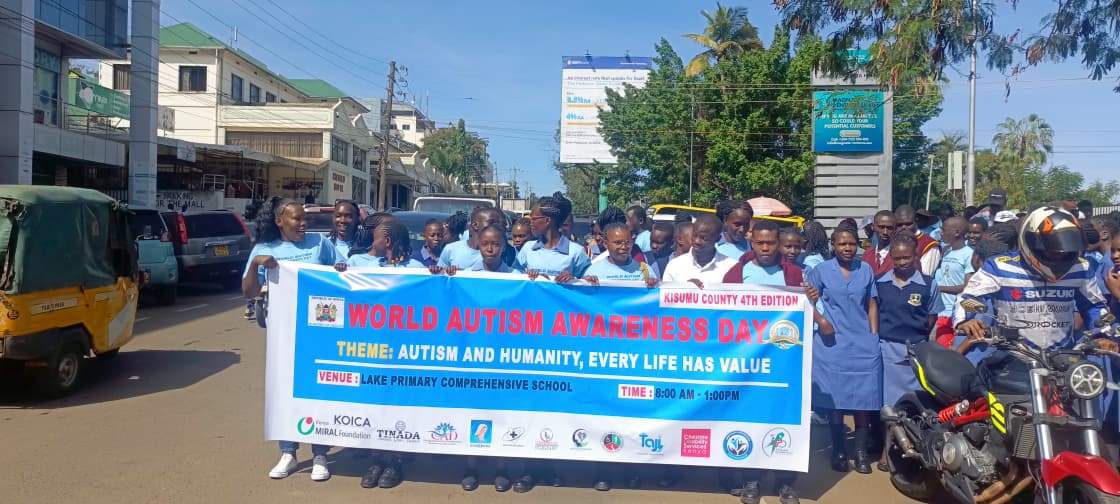
Every April, Autism Awareness Month brings renewed focus on acceptance and inclusion.
This year’s theme, “Autism and Humanity – Every Life Has Value,” calls for greater recognition of neurodiversity. But beyond the awareness campaigns, families in Kisumu say they are grappling with the high cost of care, limited access to therapy, and persistent stigma.
For Waswala, care revolves around routine, a delicate balance between home and school. Her daughter attends a special needs institution where occupational therapy is available, but speech therapy comes at an extra cost.
“One session is about Sh. 2,500. It is expensive. Sometimes you have to choose what is possible and what is not,” she says.
Like many parents, she has had to make difficult compromises, opting to support her child’s progress at a pace she can sustain.
Yet beyond the financial strain lies another burden—navigating public perception.
“You need a thick skin,” she says. “People will talk. But at the end of the day, it’s you and your child.”
Across Kisumu, Grace Mbara’s journey reflects similar struggles, though hers began with confusion and emotional distress.
She first noticed a problem when her son could not speak at the age of three. Multiple assessments later confirmed he was autistic.
“I couldn’t accept it at first. I fell into depression. There were times I didn’t even want to relate to him,” she says.
Counseling, she says, became a turning point. “It helped me stabilise so I could support my child.”
Finding a suitable school proved difficult until she enrolled him in a special needs institution, where he has made steady progress.
“When he started, he couldn’t hold a cup or use the toilet on his own. Now he can eat, go to the toilet independently, sing and dance,” she says.
For many parents, such milestones, however small, mark significant progress.
According to the World Health Organization (WHO), autism affects about one in every 100 children globally, highlighting the need for early diagnosis and intervention.
In Kenya, however, autism remains under-documented, with no comprehensive national data.
Delayed diagnosis is attributed to limited awareness and a shortage of specialists, often locking children out of early support.
“Early screening and intervention are critical because they significantly improve developmental outcomes, but access to these services remains limited, and the cost is prohibitive for many families,” says Mercy Anyango, a Kisumu-based occupational therapist.
Therapies, specialised education and medical care, she adds, continue to place a heavy financial burden on caregivers, many of whom navigate the system with minimal institutional support.
Stigma also persists, with parents reporting social isolation and misunderstanding in their communities.
“People need to know that these children are not mad,” Mbara says. “They are different, and they need support.”
Government interventions fall under broader disability inclusion policies aimed at improving access to education, healthcare, and social protection.
The National Council for Persons with Disabilities has initiated programmes, including national mapping and partnerships, to enhance support for persons with developmental disorders.
However, implementation remains uneven across counties, and many families say the impact has yet been felt fully.
In Kisumu, access to specialists remains limited, while the cost of therapy continues to push essential services out of reach.
For Waswala and Mbara, awareness alone is not enough. What they seek is practical support — early diagnosis, affordable therapy, and inclusive systems that respond to the needs of children with autism.
Until then, families say they will continue to shoulder much of the burden on their own, navigating a demanding journey defined by love, sacrifice, and endurance.
And in that journey, every small victory counts.
By Dorothy Pamella and Valery Nyagaka