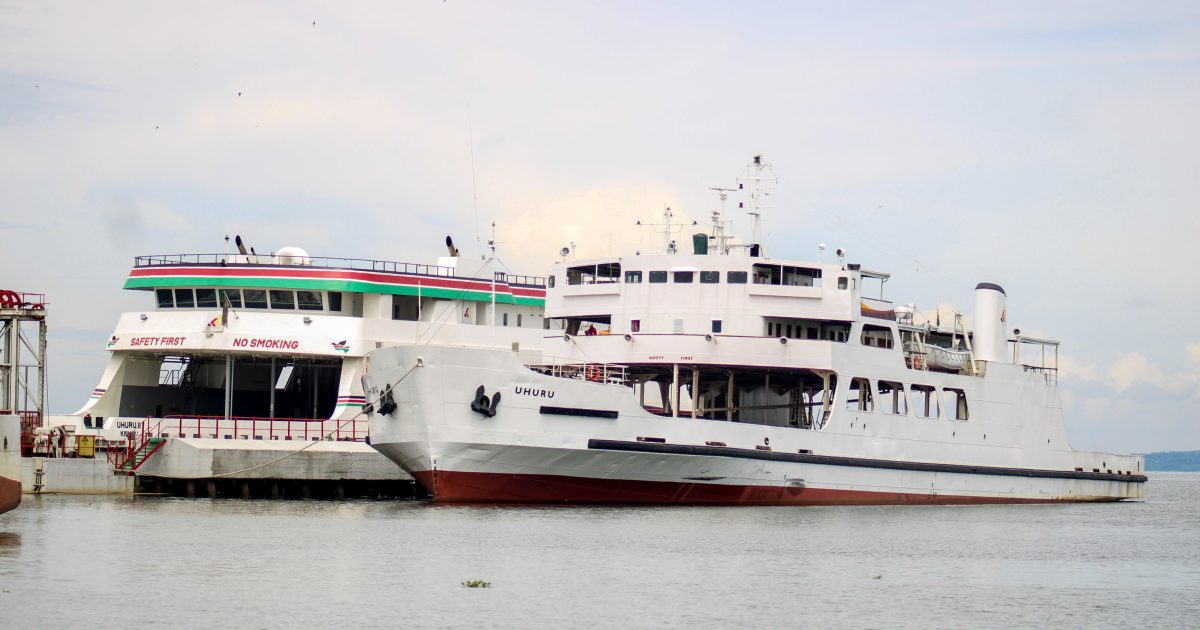
Kisumu Port is charting a new course in regional trade with the introduction of coal shipments from Tanzania.
The move marks a significant shift toward bulk industrial cargo transportation and opens a fresh inland supply corridor for manufacturers in western Kenya.
Port Manager Cargo Services, Patrick Makau, said the lake port has begun handling coal for the first time, positioning Kisumu as a strategic entry point for industrial inputs from southern Tanzania’s mineral-rich Songea region.
In an interview with KNA at his office at the port, Makau said the new cargo stream signals a deliberate move to diversify operations and tap into emerging demand from Kenya’s interior.
“The latest notable development is the emergence of coal shipments from Songea, Tanzania, transiting through Kisumu for the first time,” he said.
The shift has already taken shape with the arrival of a 1,200-tonne consignment of industrial coal delivered aboard the vessel MV Uhuru I from Mwanza, a development seen as the starting point of what could evolve into sustained bulk shipments.
Makau said negotiations between Tanzanian exporters and Kenyan buyers are at advanced stages, targeting manufacturers in western Kenya and expanding into inland markets such as West Pokot.
“There are ongoing negotiations which are at advanced stages between Tanzanian exporters and their newfound clients in West Pokot, with the objective of opening a fresh commercial corridor for manufacturers in Western Kenya,” he said.
The emerging coal route is expected to introduce a new logistics model for the port, shifting part of its focus from cross-border transit cargo to inland distribution of industrial raw materials.
Unlike petroleum products, which are largely shipped to Uganda, coal cargo is expected to serve domestic industries, effectively anchoring a supply chain that feeds manufacturing, construction and energy-intensive sectors within Kenya.
Makau said interest in the route is being driven by the cost advantages of lake transport, with suppliers in southern Tanzania seeking shorter and more efficient access to Kenyan markets compared to long-distance road haulage.
To support the new cargo line, the port is aligning its operations to handle bulk shipments, including berthing of larger vessels capable of lifting higher tonnage per voyage.
“We have vessels now carrying up to 1,000 tonnes per voyage in addition to smaller ones,” Makau said, noting that the increased capacity will be key in sustaining bulk cargo flows such as coal.
The entry of coal is also expected to act as a catalyst for additional bulk commodities through the port, potentially attracting cargo such as clinker and fertiliser and reinforcing Kisumu’s role as a logistics hub for inland trade.
Makau said the development marks a broader shift in regional supply chains, with Lake Victoria increasingly being leveraged as a competitive transport corridor linking Tanzania’s resource base with Kenya’s industrial hinterland.
For Kisumu Port, he said, the coal shipments represent more than a new cargo stream—they signal the opening of a strategic trade route that could redefine its place in East Africa’s logistics network.
The new business line is emerging against the backdrop of a steady rise in activity at the port.
According to Makau, cargo throughput has grown significantly in recent years, with volumes reaching 459,601 tonnes in 2025, while projections indicate further expansion as new cargo streams take root.
Performance in early 2026 reflects the upward trend, with cumulative throughput between January and March hitting 145,753 tonnes, a 46 per cent increase compared to the same period last year.
Export volumes for March alone stood at 44,301 tonnes, largely driven by petroleum but increasingly supported by other cargo categories.
Vessel traffic has also recorded a sharp increase, rising from just 10 vessels in 2017 to 124 in 2025, with current monthly calls averaging between 25 and 30 ships.
In March this year, the port handled 26 vessels, up from 23 in February and 18 in the same month last year.
The growth in volumes, cargo diversity and vessel calls underscores the port’s expanding capacity, providing the foundation for new bulk cargo streams such as coal to take hold and scale up in the coming months.
By Chris Mahandara