By G, KNA
The National Mental Health awareness campaign, South Rift Chapter, was today marked at Moi Gardens, Kericho, where leaders and professionals sounded alarm over rising cases of mental illness and suicide in the country. The event drew participants from Kericho, Bomet, Nandi, Narok, and Nakuru counties.
The campaign began with a symbolic procession through the streets of Kericho town, where participants carried banners and placards emblazoned with bold messages on mental health.
The walk was both a tribute to lives tragically lost to suicide and a call to action, urging the community to break the silence, confront stigma, and embrace open conversations on mental well-being.
Speaking to participants at Moi Gardens, the National Secretary of the Kenya Counselling and Psychological Association (KCPA), Edwin Gitau Kibe, declared that the campaign was more than just an event.
He described it as a clarion call for collective action, demanding that the society arise with urgency to confront the escalating mental health issues in the country.
“Research reveals that one in every four people is silently battling a mental health condition, a staggering reality that can no longer be ignored. This is not a distant problem; it touches our families, our schools, our workplaces, and our communities. Each of us, whether as parents, leaders, neighbors, or institutions, must rise with urgency and resolve to confront this crisis head-on,” said Kibe.
In an interview with the Kenya News Agency (KNA), he cautioned Kenyans against turning to unqualified practitioners, warning that mental health care is far too delicate to be entrusted to masqueraders. He emphasized the need for the public to seek help only from licensed and registered professionals, who are guided by strict ethical standards and accountability.
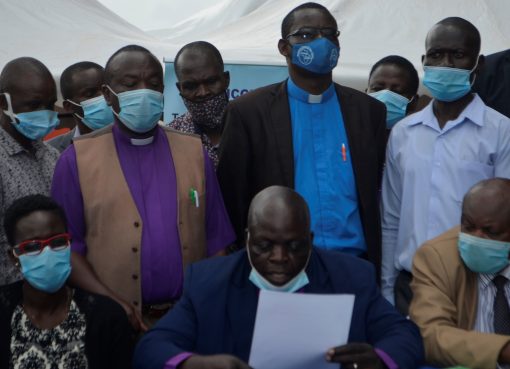
Echoing his sentiments, Reverend Charles Musambai, Secretary of KCPA Nakuru County, warned that suicide is claiming lives at an alarming rate and urged families, faith leaders and health services to act swiftly to create safe, non-judgmental spaces where people can speak openly, access qualified care and find a way back from despair.
“Every seven minutes, somewhere in the world, a precious life is lost to suicide. This is not just a statistic, it is families torn apart, dreams cut short, and communities left in pain. If we are to turn the tide, we must create safe and supportive spaces where people can openly share their struggles without fear of stigma or judgment,” said Musambai.
Dr. Enock Orina Ondari, Chairperson of KCPA Nakuru, expressed concern over the rising number of attempted suicides being reported by community health volunteers. He said the trend was a clear indicator of the growing mental health crisis within communities, stressing the need for urgent interventions to strengthen psychosocial support systems at the grassroots.
“Most people who die by suicide attempt it at least 20 times before succeeding. That is a window for intervention. Men in particular must be encouraged to speak out and seek help,” said Dr. Ondari.
From the academic sector, Evans Kemboi of the African Institute of Research and Development Studies (Kericho Campus) appealed to young people to view counselling not as a sign of weakness but as a powerful tool for building resilience, fostering motivation, and navigating life’s challenges with confidence.
“Many young people today are silently struggling with depression, often hiding their pain out of fear of stigma and judgment. It is time we normalize seeking help, so that reaching out to professionals or trusted support systems becomes a sign of strength rather than weakness,” said Kemboi.
The event brought together partners including the Kenya Red Cross, NACADA, Kenya Highlands University, Kericho Teachers College, and the Ministry of Health. Leaders pledged to extend awareness campaigns into schools, churches, workplaces, and communities, ensuring that the message of hope, support, and collective responsibility continues to spread.
As the curtains fell on the South Rift awareness walk, one message rang clear: mental health is not a private burden but a shared responsibility. By opening dialogue, fighting stigma, and building supportive networks, communities across the region vowed to stand together in turning grief into action and despair into resilience.