Marsabit County leaders have raised concern over low voter registration among residents despite ongoing government efforts to increase access to national identity cards (IDs), urging eligible citizens, especially the youth, to register and participate in democratic processes.
Led by Governor Mohamud Ali, the leaders said the county has fallen short of its target of registering 300,000 voters over the past four years, attributing the shortfall to apathy, inadequate awareness, and challenges that previously affected access to identity documents.
Speaking during a press conference at Jirime Resort in Marsabit town, Governor Ali said the government has streamlined the process of acquiring identity cards after removing vetting requirements and other barriers that had slowed down registration.
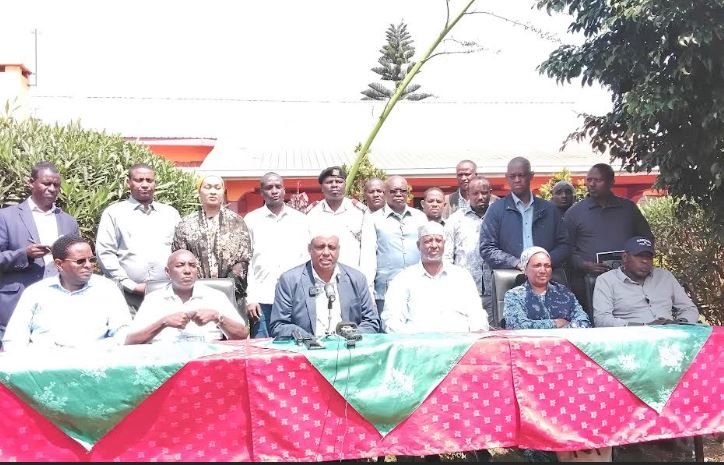
The press conference was attended by Marsabit County Commissioner Stanley Kamande, Saku MP Dido Raso, North Horr MP Wario Adhe, Laisamis MP Joseph Lekuton, and County Woman Representative Naomi Waqo.
Governor Ali emphasized that registration for identity cards remains a free government service and warned chiefs and other administrators against demanding illegal payments from applicants seeking the essential documents.
He said reports of residents being asked to pay money before accessing ID registration services should be investigated, noting that such practices could be contributing to the low uptake of registration.
The Governor revealed that about 17,000 processed identity cards are currently lying uncollected at registration of persons offices and chiefs’ offices across the county.
He urged residents who had applied for the documents to collect them to enable them access government services and participate fully in civic activities.
The leaders also expressed concern that approximately 104,000 residents who already possess identity cards have not registered as voters.
They called for increased awareness campaigns targeting pastoralist communities, who they said require more information on the importance of voter registration.
The registration exercise, being conducted under the 100 Days Rapid Results Initiative (RRI), will also allow holders of old-generation identity cards to apply for the new-generation cards.
Laisamis MP Joseph Lekuton called for greater focus on secondary schools, saying thousands of students who have reached the required age should be encouraged to obtain identity cards and register as voters.
“We need to focus on our young people in schools because many of them are eligible for ID registration and will later become voters,” Lekuton said.
Saku MP Dido Raso attributed the low registration numbers partly to historical challenges where some adults faced difficulties obtaining identity cards due to strict vetting procedures.
He said the removal of previous obstacles by the Kenya Kwanza administration had created an opportunity for all eligible Kenyans to access identification documents and participate in national programmes.
The leaders urged residents to take advantage of the ongoing exercise and register as voters to exercise their constitutional right to elect leaders of their choice during the General Election.
North Horr MP Wario Adhe and Woman Representative Naomi Waqo warned that residents risk being excluded from the electoral process if they fail to register.
Waqo noted that women remain behind in the number of registered ID holders and voters and called for deliberate efforts to close the gap.
She appealed to men in pastoralist communities to support women by allowing them time away from household and livestock duties to acquire IDs and register as voters.
Responding to allegations of illegal charges during ID registration, County Commissioner Stanley Kamande warned government officials and administrators against engaging in corrupt practices.
Kamande said unauthorized charges imposed on citizens’ amount to misconduct and assured residents that officers found culpable would face disciplinary action and prosecution where necessary.
He urged residents to report any cases of corruption to relevant authorities, saying the government would not tolerate individuals who exploit citizens while providing public services.
By Sebastian Miriti and Anthony Melly