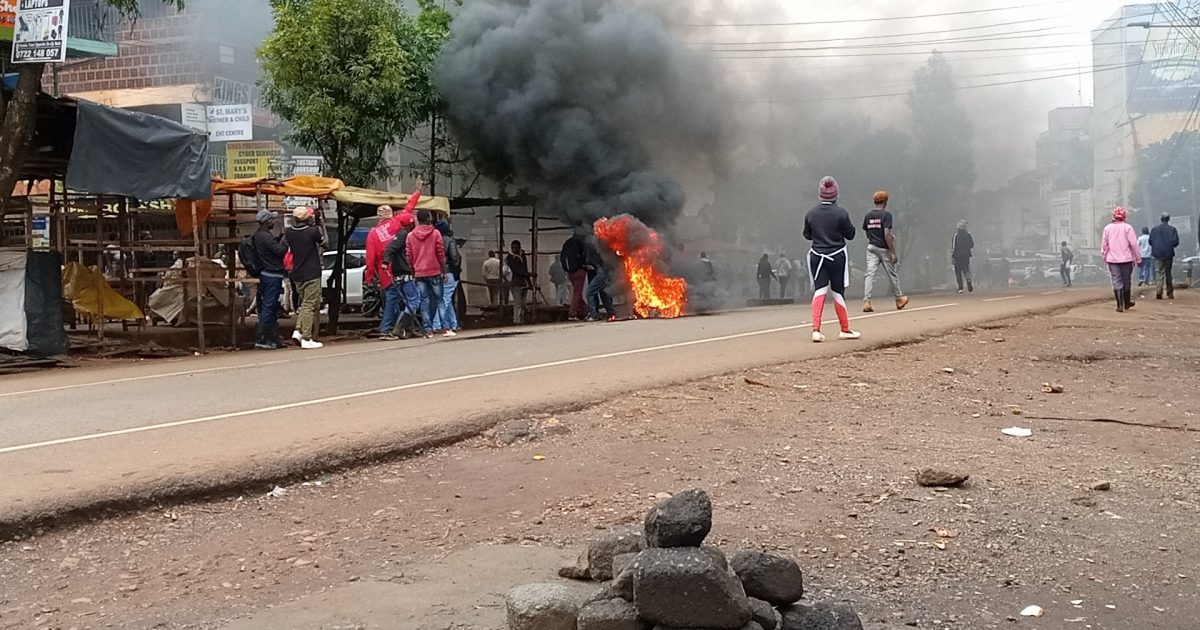
Public transport operations in Kiambu town on Monday came to a standstill after matatu operators suspended services in protest against unprecedented high fuel prices.
The nationwide strike, called by the Matatu Owners Association and effective from midnight on May 18, saw matatus and other public service vehicles withdrawn from the roads. Operators said the latest fuel price increase had made it difficult for them to continue operating without incurring heavy losses.
On Monday morning, the usually busy Kiambu Bus Terminus remained deserted, leaving hundreds of commuters stranded and uncertain on how to reach their workplaces and schools. Protesters barricaded roads using stones and burning tyres, disrupting transport services and demanding government intervention.
Commuters who spoke to KNA expressed frustration over the crisis, saying transport fares had tripled while many risked disciplinary action from employers for reporting late to work.
“These protests are affecting us because we are unable to report to work and risk losing our jobs due to pressure from employers. We are also concerned about our safety because such protests often turn violent,” said one commuter.
Sacco officials also criticized the latest fuel price adjustments announced by the Energy and Petroleum Regulatory Authority (EPRA), saying the increased operating costs were unsustainable.
Kiwaliru Sacco management ordered all its vehicles off the roads, citing the new pricing model as a threat to the survival of the business.
Fuel attendants at several petrol stations in Kiambu town reported reduced business, noting that matatus are among their biggest diesel consumers.
“Matatus are our primary high-volume customers. The ongoing strike has left petrol stations without commercial vehicles, and sales have dropped significantly,” said one attendant, Geofrey Wandito.
Meanwhile, the Ministry of Transport condemned the nationwide protests, terming the disruption of public transportation economically damaging. Traffic police and other law enforcement agencies were directed to clear barricaded roads and restore normal traffic flow.
The strike heavily disrupted daily activities in Kiambu, forcing some businesses to close, preventing workers from accessing their workplaces, and prompting the closure of several primary schools over safety concerns arising from the unrest.
The protests follow the latest EPRA fuel review, which increased pump prices amid rising global oil costs and taxation pressures, triggering concern among transport operators and commuters across the country.
by James Kabutu