The Ministry of Education has stepped up efforts to revive the country’s collapsed Education Assessment Resource Centres (EARCs), starting with 10 regional facilities, in a bid to improve identification and placement of learners with special needs, Cabinet Secretary Julius Ogamba has revealed.
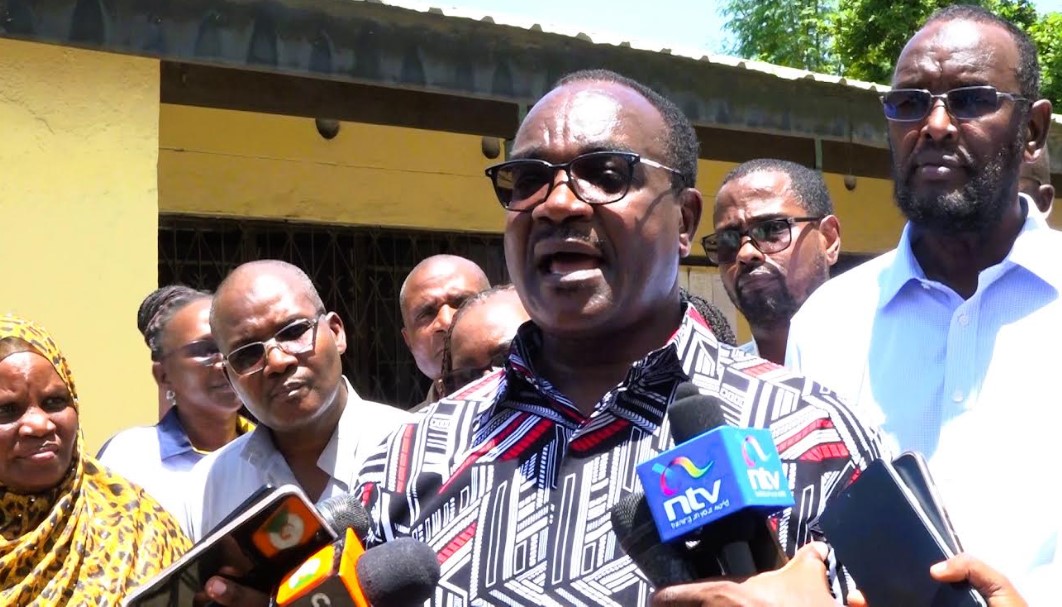
Speaking in Mombasa on a fact-finding tour accompanied by the Director and Chairman of the Kenya Institute of Special Education (KISE) and the Regional Director of Education for the Coast, Ogamba said the centres, once spread across the country’s former districts and provinces, had fallen into disrepair since 2019 and through the COVID-19 period.
“Now, there is a challenge in the sense that those assessment centres are now being hosted, some in our schools, such as the one we are in. And that is not adequate,” Ogamba said, after touring one of the abandoned centres at Tom Mboya School for Children with Cerebral Palsy, Tononoka, Mombasa County, where equipment, doors and windows had been vandalised.
The country previously had 46 EARCs at district level and 10 at regional headquarters, where parents brought children for assessment by ministry and Teachers Service Commission officers before placement in special schools, integrated units or mainstream institutions, depending on the severity of their needs.
The CS said the government had set aside about Sh130 million to begin repairing the first batch of 10 regional centres, with partners being brought on board to support the wider revival of all 56 facilities.
He said the exercise would generate reliable data on the number of learners with special needs and the nature of their disabilities, which range from cerebral palsy to albinism, and would guide staffing, teacher training and equipment purchases.
“Students or learning institutions with special needs require a teacher ratio of 1 to 4, as opposed to what we normally know in normal circumstances; the ratio is 1 to 29,” he said, adding that trained classroom helpers were also needed to give learners individual attention.
He cited hearing aids as an example of equipment that could not be issued without individualized assessment.
On higher education funding, Ogamba clarified reports that the government was reverting to the old university funding model, saying first-year students admitted from September 24 would join under the existing framework, while the new funding bill, already through its first reading in Parliament, awaits a second reading before becoming law.
He said Sh22.12 billion had already been released for continuing students, with first-year funds expected in institutions within a week. The application window for first-year students has been extended to September 21 to accommodate roughly 7,000 of the 202,000 qualified candidates who had yet to apply.
On Teacher Training Colleges, the CS said admission decisions were pending resolution of an ongoing court case.
Ogamba expressed confidence in the new funding model, saying it had been well received by stakeholders, because it would make higher education accessible regardless of a family’s financial capacity.
“We are making education accessible; we are making it equitable, available, adequate, and then sustainable. So, it is really a good proposal, and we do not see any problem,” Ogamba said.
By Ramadhan Nassib