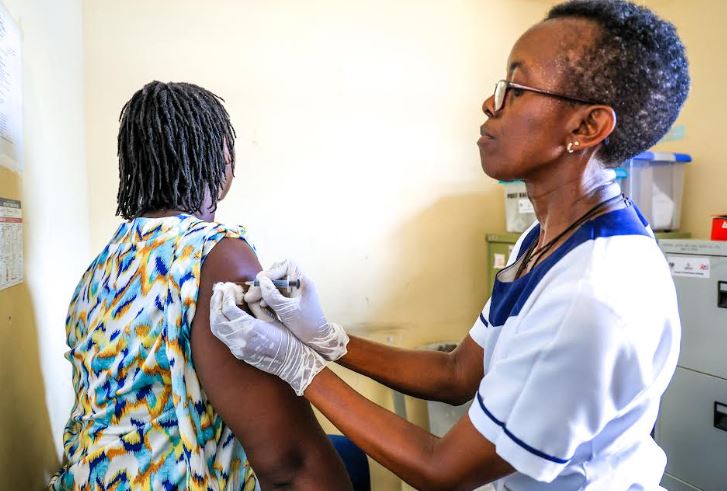
Mombasa County has officially rolled out Lenacapavir, a long-acting injectable pre-exposure prophylaxis (PrEP) for HIV prevention, with the first client receiving the injection at Tudor Sub-County Hospital.
The county-level launch follows the national introduction of the drug on February 26, 2026 in Nairobi by Health Cabinet Secretary Aden Duale. Kenya became the first country in East Africa to introduce the injectable that offers protection against HIV infection for up to six months.
Health officials in Mombasa say the rollout marks a significant milestone in the county’s HIV prevention efforts by expanding available PrEP options for individuals at risk of contracting the virus.
Dr Ahmed Adam, Head of Research and Partner Relations in the Department of Health Services for the Mombasa County Government, said the county was excited to begin offering the long-acting injection to residents.
“Today we are very excited because we are rolling out the injectable PrEP that is available here in Mombasa County. This is Lenacapavir, which protects a person for six months, while Cabotegravir protects for two months,” Dr Adam said.
He noted that the new injectable provides an important alternative to daily oral PrEP, which some clients find difficult to maintain due to pill fatigue, stigma, or logistical challenges such as traveling long distances to health facilities for refills.
According to Dr Adam, the injectable option reduces the burden of daily medication while offering discreet protection for individuals at risk of HIV infection.
“This is an option that is accessible and stigma-free. It is viable for those who cannot use oral PrEP or those who prefer a longer protection period,” he said.
The rollout will initially cover ten health facilities across the county’s six sub-counties to ensure that services are accessible to the general population, key populations, and other vulnerable groups at higher risk of HIV exposure.
Jackline Tsuma, the HIV Coordinator for Jomvu Sub-County who represented the county HIV coordinator during the launch, outlined the facilities where the injection will be available.
“In Mvita we have Mvita DICE and Tudor Sub-County Hospital. In Jomvu, the services are offered at Matunda Wellness Centre and Miritini CDF, which serves fisherfolk and the general population. In Kisauni we have North Upper Kenya DICE and Junda Dispensary, while in Nyali, Kisauni DICE will serve the key population community,” Ms Tsuma said.
She emphasized that the injectable PrEP is accessible to all individuals who face ongoing risk of HIV infection, including pregnant and breastfeeding women, individuals in discordant relationships where one partner is HIV positive, and those who have had recent sexual contact with partners whose HIV status is unknown.
“Everyone with ongoing risk will access the commodities after screening for eligibility. The major criterion is being HIV-negative and having had sexual contact with someone of unknown status in the last six months,” she explained.
Ms Tsuma said the county is also prioritizing pregnant and breastfeeding women attending antenatal clinics, as health authorities have observed new infections among mothers during pregnancy and breastfeeding.
“Our main target includes ANC mothers because we are seeing new HIV infections in pregnant and breastfeeding women that we want to reduce. We do not want babies born with HIV or exposed when they come for services,” she said.
Before receiving the injection, clients must undergo eligibility screening by health professionals. Individuals diagnosed with active liver or kidney disease may not qualify for Lenacapavir but can still access alternative prevention methods such as condoms or other PrEP options.
According to county health records, Mombasa has an HIV prevalence rate of about 4.2 per cent. Approximately 51,000 people living with HIV are currently enrolled on antiretroviral therapy across public, private, and faith-based health facilities in the county.
Health officials say the introduction of Lenacapavir is expected to significantly reduce new HIV infections by improving adherence to prevention medication among individuals at risk.
Husna Aisha, a peer educator from Coastal State Empowering Community and a PrEP champion in Mombasa County, welcomed the introduction of the injection, saying it would address many of the challenges experienced with earlier prevention options.
“I used oral PrEP when it was introduced and the ring when it came, but the ring had limitations. Now, with the injection, it reduces the burden of daily pills and the risk of forgetting. It lasts six months,” she said.
Aisha added that oral PrEP sometimes faced challenges such as occasional shortages, missed doses due to monthly clinic visits, and stigma associated with being seen taking daily medication.
“I decided to take the PrEP injection for my own health safety. I may try to be faithful, but my partner may not, so I have to protect myself,” she said.
By Sitati Reagan