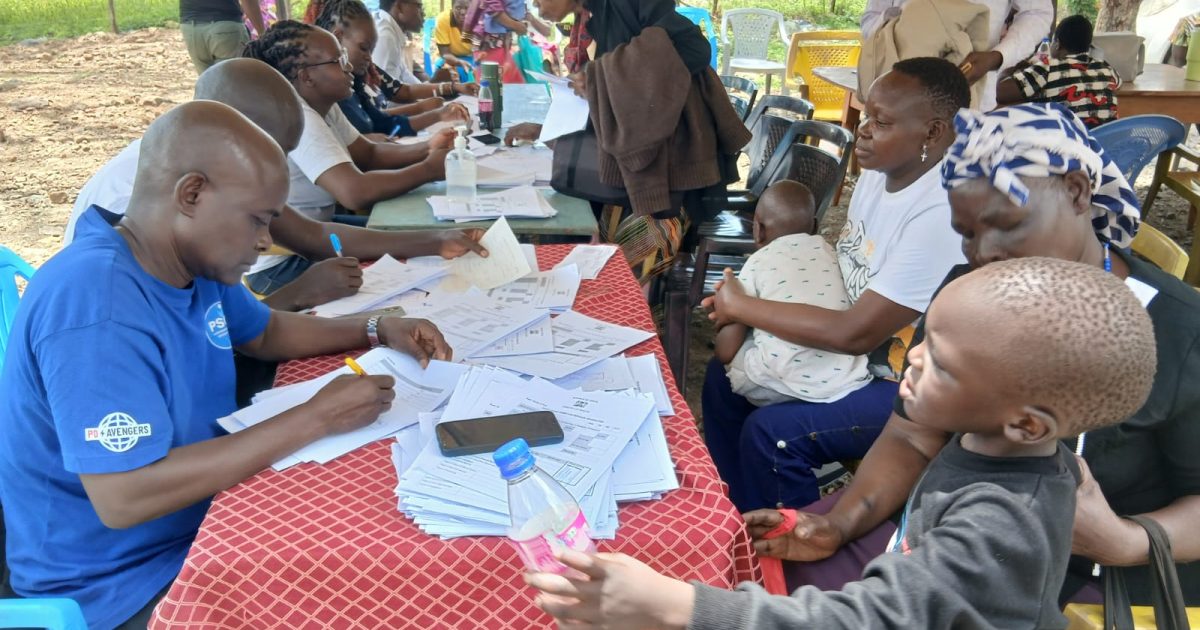
More than 500 children with disabilities in Kisumu County have been mapped and registered in a three-day exercise aimed at linking them to education, healthcare and government support.
The children, some of whom had never been assessed, were documented, screened for nutritional support, physiotherapy and placed in appropriate institutions during the outreach that brought medical, education, civil registration and social protection services under one roof.
The initiative was spearheaded by UNICEF Kenya in partnership with the State Department for Social Protection and Senior Citizens Affairs, the National Council for Persons with Disabilities (NCPWD) and the County Government of Kisumu, with support from Innovation Norway.
For many families in Muhoroni Sub-county, the camp that started at Ombeyi Chief’s Camp before moving to Muhoroni Chief’s Camp and Obino Dispensary in Songhor was the first time their children were counted and their needs documented.
UNICEF Kisumu Zonal Office Social Policy Officer Helen Chemiongoi said the mapping was critical to ensure no child is left invisible.
“For the last two days we have reached 375 children with disabilities and by the end of the exercise today we project to reach 500. One of the critical services we included is birth registration because previously parents came without birth certificates and could not complete the process for the disability card,” Chemiongoi said.
She said children identified with malnutrition were referred for nutritional support, while those without birth certificates were issued with the documents on site through partnership with the Department of Civil Registration.
Director of Social Development and Head of Disability Programmes at the State Department, Richard Bosire, said the one-stop model eases the burden on families who would otherwise travel long distances seeking services from different departments.
“This is a one-stop shop where all services are offered — registration, medical assessment, education assessment and issuance of birth certificates. The purpose of mapping is to account for these children, assist those in need and place them in the right institutions,” Busire said.
The impact of the mapping was evident for caregivers like Jerica Wawire.
Wawire, a mother of a 15-year-old boy, said the exercise brought out issues about her son she did not know about.
Her son has been attending a regular school in Grade Five, but his performance has been wanting.
“He cannot even write his name. I have just been trying to push him to no avail,” she said.
Upon medical and educational assessment at the camp, the boy was placed at Lutheran School for the Disabled, a move expected to address gaps in his education and give him appropriate learning support.
Bosire said such cases explain why many children with disabilities remain out of school or struggle in regular schools.
“We have realised so many children still don’t go to school because they have never been assessed and placed in the right schools,” he said.
Education officers said the mapping is helping identify learners who require specialised support.
Jack Onyango of the Educational Assessment and Resource Centre (EARC) said 82 learners were assessed at Ombeyi, 98 at Muhoroni and 35 at Obino.
“The purpose is to ensure learners who are gifted differently are placed in appropriate institutions where they can benefit academically and in terms of adaptive skills like self-care and safety,” Onyango said, noting that shortage of special units in the area remains a major challenge.
County Department of Public Health officer in charge of Physiotherapy, Disability Mainstreaming and Rehabilitation, George Omamo, said more than 300 children had been assessed and some referred for specialised services including therapy.
“Majority didn’t have birth certificates locking them out of services. Some children are heavy and parents could not bring them. In future the campaign should target to reach them where they are,” Omamo said, adding that stigma continues to keep some children hidden at home.
The county government, he said, has rolled out a campaign to end stigma which he said has started bearing fruits given the huge turnout for the mapping exercise.
NCPWD Nyanza Regional Coordinator George Odhiambo said registration with the council was a major step to ensure that the children get the attention and support they deserve.
The government, he said was running a number of programmes which require the children to be registered first.
“We have bursaries, scholarships, supportive devices and even monthly stipends for caregivers and children with severe disability,” he said.
He asked parents with such children to bring them out so that they benefit from the services.
NCPWD Partnerships Officer Sarah Ayecho called for increased investment in assistive technology.
“Assistive technology is what persons with disabilities need to live a dignified life, to access education and livelihood. Without it they cannot fully participate. We provide devices but we cannot meet the need that exists,” Ayecho said.
UNICEF and the State Department urged parents whose children were not reached to visit the nearest assessment centre, saying continued collaboration between health, education and social protection agencies is key to ensuring children with disabilities are accounted for and not excluded.
By Faith Lumumba