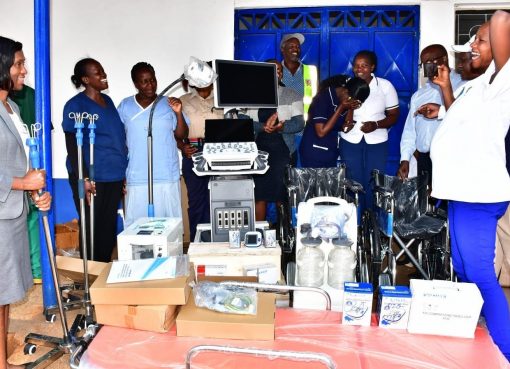
The Principal Secretary (PS) for Aviation and Aerospace Development, Teresia Mbaika, has defended plans by Government to establish and strengthen Ebola isolation and quarantine facilities in the country.
Mrs Mbaika observed that the move is a critical public health measure aimed at safeguarding Kenyans against potential outbreaks of the deadly disease that has claimed several lives in Congo.
She said this on Friday at AIC Mwaani Secondary School during a prize-giving day in Kilungu Subcounty, where the PS said that Kenya must remain vigilant amid Ebola outbreaks reported in neighbouring countries, particularly Uganda.
“Kenyans should not view ebola as a disease that only affects other nations. I warn that the infectious disease could easily find its way into the country due to the regional movement of people and goods,” said Mrs Mbaika.
“We do not know how long the outbreak will last or whether cases may eventually be reported in Kenya. That is why preparedness is extremely important,” she posed.
Her remarks come amid public debate over reports that Kenya could serve as a regional quarantine and treatment hub for Ebola-related emergencies.
In this regard, Mbaika dismissed fears surrounding the initiative, saying the establishment of specialized facilities demonstrates the country’s commitment to protecting its citizens and supporting regional disease response efforts.
“If a facility is being established in Kenya, that should give confidence not only to Kenyans but also to other countries that we have the capacity and infrastructure needed to respond to such health emergencies,” she added.
The PS noted that the country’s preparedness efforts are guided by established public health protocols and should not be misconstrued as simply creating holding camps for patients.
“Things do not just happen. There are protocols and public health measures that must be followed. This is not just about adaptability; it is about ensuring that we are ready to protect lives when the need arises,” she explained.
Mbaika further observed that Kenya has earned a reputation as a regional leader in several sectors, including healthcare, and should continue investing in systems that strengthen its emergency response capabilities.
She highlighted ongoing surveillance and screening measures at key entry points into the country, including airports and border crossings, as part of efforts to prevent the importation and spread of Ebola.
“We have put measures in place at all entry points. There is screening at airports, border posts, and other points of entry to ensure that we keep our population safe from the disease,” Mbaika said.
Health experts have consistently urged governments in the region to maintain heightened surveillance and preparedness given the recurring nature of Ebola outbreaks in parts of East and Central Africa.
Mbaika called on the public to support government interventions and remain alert, stressing that preparedness remains the most effective defence against any potential outbreak.
“As a country, we must be proactive rather than reactive. Preparedness today could save countless lives tomorrow,” she noted.
By Patrick Nyakundi