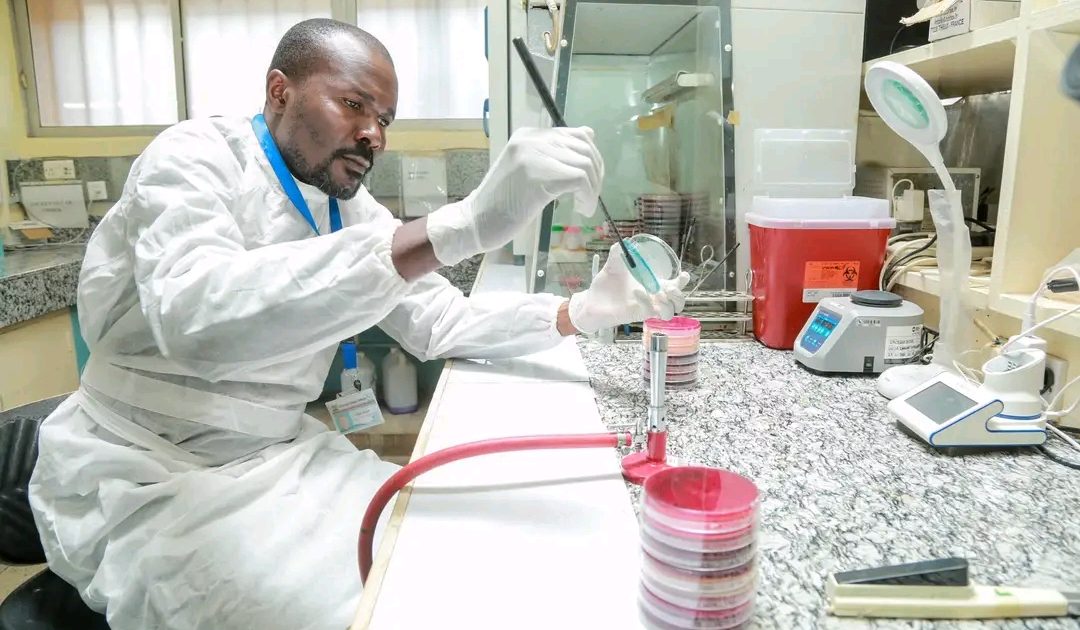
A common habit among healthcare workers stepping out in hospital scrubs has come under scrutiny, with new research linking it to the spread of antimicrobial resistance in the community.
A new study by a researcher at Jaramogi Oginga Odinga Teaching and Referral Hospital (JOOTRH) has identified clinical attire worn outside hospital settings as a potential carrier of harmful pathogens, linking the habit to the growing threat of antimicrobial resistance (AMR).
In the study titled Antimicrobial Resistance (AMR) Across a One-Health Framework, microbiologist Silas Awuor warns that wearing scrubs in public spaces such as markets, in public transport and restaurants, creates a direct pathway for bacteria from hospitals to spread into the wider environment.
“Hospital attire worn outside clinical settings acts as a significant vector for environmental contamination,” Awuor notes in the research co-authored with Eric Omwenga and published in the Annals of Bacteriology Research.
The findings come amid growing global concern over AMR, which claimed an estimated 1.27 million lives in 2023 alone.
The phenomenon, often described as a silent pandemic, occurs when bacteria and viruses evolve to resist standard treatments, rendering common infections harder or impossible to treat.
Awuor, who is also affiliated with Kisii University, attributes the surge in resistance to widespread misuse of antimicrobials in human health, livestock production and agriculture, warning that the trend threatens both public health and food security.
The study was inspired by a routine observation during his commute to work in Kisumu, where he noticed healthcare workers boarding a matatu still dressed in their hospital scrubs after night shifts.
While the public viewed them with admiration, he says the reality is far more disquieting.
“What appears harmless may in fact facilitate the movement of microorganisms from high-risk hospital environments into shared public spaces,” he notes.
According to the research, hospital scrubs easily become contaminated through contact with patients, medical surfaces and bodily fluids.
Even where strict hand hygiene is observed, repeated contact with uniforms such as reaching into pockets can reintroduce pathogens.
The study further raises concern over practices at home, noting that many healthcare workers wash their scrubs together with family laundry, inadvertently exposing household members to hospital-acquired microorganisms.
This, Awuor says, runs contrary to international safety guidelines, which discourage the removal of contaminated clinical attire from controlled healthcare environments.
The findings place renewed scrutiny on infection prevention systems at JOOTRH as it transitions into a national Level Six referral facility.
A hospital environment, the study notes, serves as a reservoir for resistant bacteria, which can easily spread when staff move between clinical and public spaces without changing attire.
To curb the risk, the researchers are calling for stricter enforcement of policies prohibiting the wearing of clinical clothing outside healthcare facilities.
They also urge hospitals to invest in adequate changing rooms and professional laundry services to reduce reliance on home washing.
“AMR is not confined within hospital walls; it is an environmental and public health crisis,” the study warns.
By Chris Mahandara