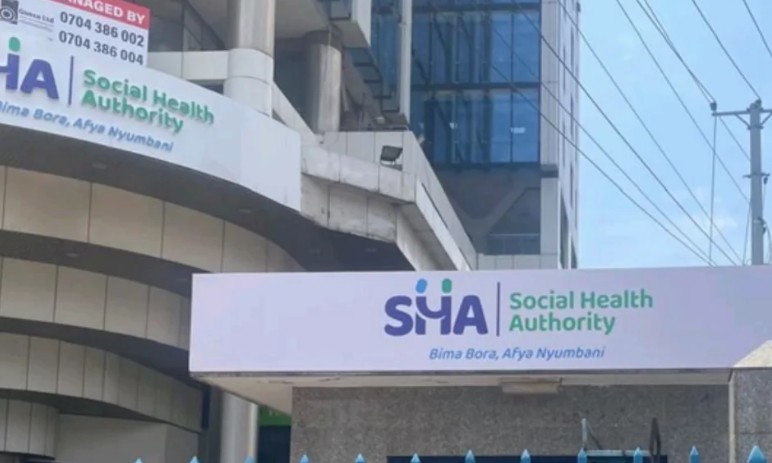
Embu County is emerging as a model in the successful implementation of the Social Healthy (SHA) programme, with patients, health officials, and administrators all testifying to its transformative impact since its rollout in October 2024.
For Milka Njoki Ndung’u, who has undergone dialysis for five years, SHA has been a lifeline.
“The shift from NHIF to SHA was smooth, and the services are good,” she said.
She continued, “I don’t work, but SHA has made it possible for me to continue treatment without stress. It has really helped me.”
Jane Wangari, another dialysis patient, echoed Milka’s gratitude.
“Dialysis is a lifelong journey, and SHA has lifted a huge burden off our shoulders. The support is consistent, and we no longer worry about skipping sessions due to costs.”
On the maternity ward, Purity Wambua recently came to Embu Level 5 Hospital to deliver her baby and was able to register instantly.
“SHA made all the difference. My bill was over Sh10,000 and SHA covered it,” she said.
Their testimonies are living proof of the program’s core purpose of ensuring that all Kenyans, regardless of financial status, access quality healthcare without falling into poverty.
Bancy Wawira, CEO of Embu Level 5 Hospital, confirmed SHA’s effectiveness.
“Level 2, 3, and 4 facilities are now referring outpatients to us with imaging like MRIs already covered under SHA,” she said.
She reported that admitted patients at Level 5 benefit fully from the program, which has eased pressure on families and improved service delivery.
CEC Health Jamal Runyenje reported that so far, 84 out of Embu’s 104 health facilities have made SHA claims, totalling around Sh232 million.
He said the process of onboarding the remaining 20 facilities is on course.
He also outlined the progress made under the National Equipment Scheme, a collaborative effort between the Council of Governors and the Ministry of Health.
“We have already received ultrasound and X-ray machines. We’re expecting CT scan and MRI machines, which will also be fully covered by SHA for both inpatients and outpatients,” he explained
Runyenje highlighted a pharmacy refill rate of 82% and confirmed that KEMSA has received necessary payments for medical supplies.
Runyenje also addressed the ongoing strike by UHC Support Staff under the national government, urging them to return to work.
“We are fighting for their permanent and pensionable terms to be transitioned to county payrolls. Their work is essential,” he said.
To enhance outreach in remote areas, Embu County recently received a disease surveillance vehicle, thanks to support from the national government and the Governor’s office.
“It will help us reach underserved areas and respond faster to outbreaks,” he said.
By Samuel Waititu and Michael Mwinzi