Electoral stakeholders have resolved to strengthen multi-agency coordination, improve early warning systems and enhance election results management as part of efforts to safeguard the 2027 General Election.
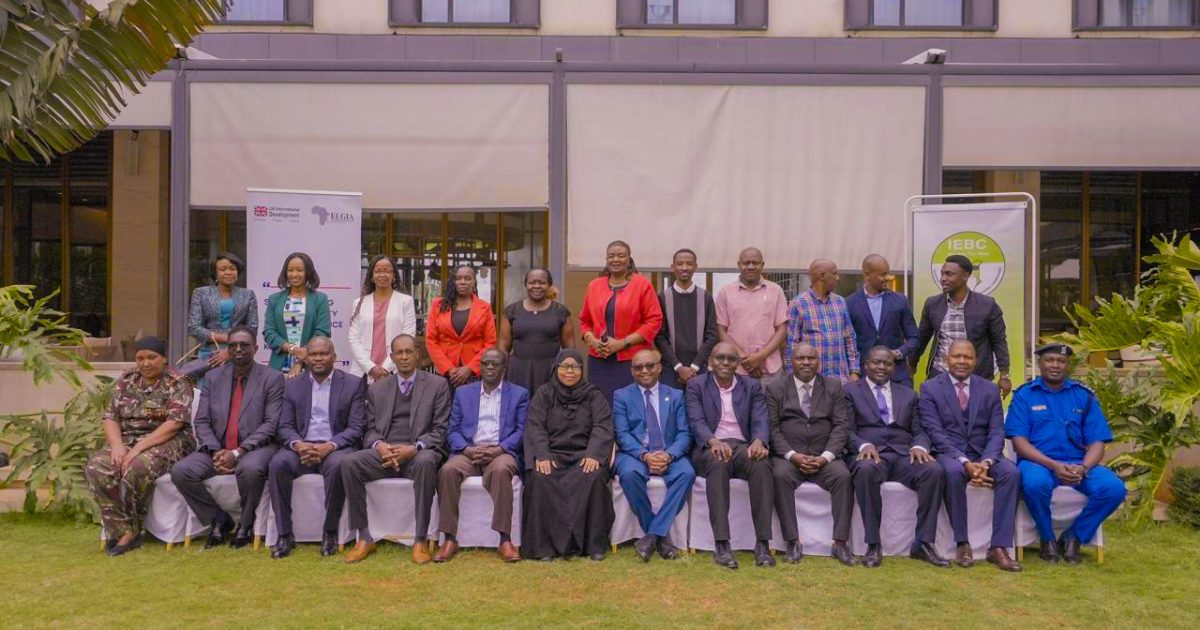
The resolutions were agreed during the Kajiado/Nairobi Cluster Election Security Arrangement Programme (ESAP) Roundtable held at a hotel in Nairobi, where participants reviewed lessons from the 2022 General Election and identified emerging security risks requiring coordinated action ahead of the next polls.
Independent Electoral Boundary Commission (IEBC) Vice Chairperson Fahima Araphat Abdallah, who presided over the meeting said the engagement was part of the nationwide efforts to strengthen coordination, preparedness and security arrangements under the ESAP framework.
Stakeholders called for stronger collaboration with peace committees, enhanced communication to counter misinformation and disinformation, and improved deployment of election personnel and materials to strengthen operational preparedness.
They further called the need for enhanced training and capacity building for Independent Electoral and Boundaries Commission (IEBC) staff, security agencies and other stakeholders, alongside improved personnel welfare through psychosocial support.
Ms. Abdallah said reviewing the implementation of the 2022 ESAP was essential to identifying lessons learned, addressing past challenges and adopting best practices to guide preparations for the 2027 electoral process.
Participants said strengthening the election results management framework would be critical to promoting efficiency, transparency and public confidence in the electoral process.
Ms. Abdallah reaffirmed the Commission’s commitment to fulfilling its constitutional mandate and called for closer collaboration among institutions responsible for election management and security.
“I call for stronger collaboration among institutions involved in election management and security,” she said.
Ms. Abdallah stressed the need for early planning and preparedness, including sharing the election implementation timeline with relevant stakeholders, strengthening training, enhancing the use of technology and ensuring the welfare of personnel involved in election operations.
The Vice Chairperson called for a whole-of-government and multi-agency approach involving security agencies, the judiciary, the Office of the Director of Public Prosecutions (ODPP), the Electoral Law and Governance Institute for Africa (ELGIA), the National Cohesion and Integration Commission (NCIC), information and broadcasting agencies, and other relevant institutions.
She, however, cautioned that the rapid spread of misinformation and AI-generated content could influence public perceptions and undermine confidence in the electoral process, underscoring the importance of accurate and timely communication.
“The electoral environment continues to evolve, with emerging challenges such as misinformation, disinformation, artificial intelligence-generated content and other forms of election-related disruption requiring timely and coordinated responses,” Abdallah said.
She further urged stakeholders to remain committed to their respective mandates while improving cooperation to address potential threats and support peaceful and credible elections in 2027 polls.
Abdallah also called for structured and periodic ESAP meetings to monitor implementation milestones, assess emerging risks and agree on timely mitigation measures.
Irene Chepkwony, Assistant Director, Counselling and Wellness, representing the Directorate of Information and Broadcasting, underscored the Directorate’s critical role in election preparedness through strategic communication and personnel welfare.
She called for strengthened capacity to disseminate accurate, timely and credible electoral information, counter misinformation and disinformation and provide psychosocial support to officers undertaking demanding election-related assignments.
She emphasised that credible information and a psychologically prepared workforce are essential to peaceful, credible and secure elections.
“Accurate and timely information is critical in countering misinformation and disinformation, while psychosocial support is essential to ensuring the well-being and preparedness of officers involved in the electoral process,” said the counsellor.
During the meeting, participants were taken through the ESAP mandate, expectations and implementation framework, with discussions focusing on experiences from the 2022 General Election and potential security challenges ahead of the 2027 polls.
The discussions highlighted the need to shift from reactive responses to proactive measures focused on the early identification, prevention and mitigation of electoral risks.
Among those who supported the Chairperson in facilitating the roundtable meeting were Albert Gogo, Deputy Director, Electoral Operations, Nairobi, and Festus Mucheke, Deputy Director, Electoral Operations, Kajiado.
Other participants included Kajiado County Commissioner Michael Yator, Dr. Meshack Lomoywara, Acting Director of Electoral Boundaries and Risk Management, the Director of Legal Services, representatives of the Judiciary, IEBC officers and officials from relevant government agencies and stakeholder institutions.
The meeting concluded with a call for sustained collaboration and stronger institutional preparedness as the country moves closer to the 2027 General Election.
The ESAP framework provides a platform for electoral, security and other relevant institutions to coordinate efforts to identify, prevent and respond to risks that could affect the peaceful conduct of elections.
By Ian Chepkuto