By C, KNA
The Government has reiterated its commitment to strengthening Kenya’s education system, through sustained reforms, improved equity, and enhanced teacher support.
Education Cabinet Secretary (CS), Julius Migos, at the same time underscored the need for urgent reforms in teacher training, employment and retooling, to address the country’s growing teacher shortage.
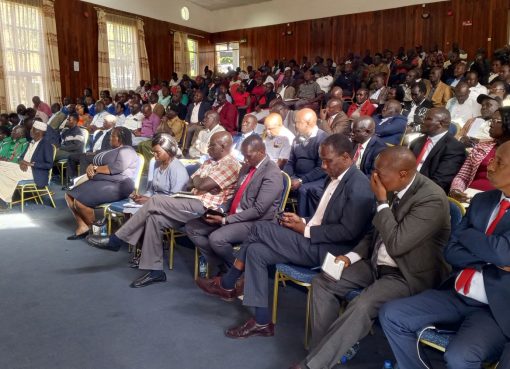
Speaking at the opening of the Teacher Education Conference at the Mombasa Beach Hotel, the CS said Kenya stands at a critical point in shaping the future of education under ongoing curriculum reforms.
The three-day forum, themed “Status of Pre-Service Teacher Training and Teacher Employment in Kenya”, brought together stakeholders from basic, TVET, and university education centres to deliberate on teacher preparation, recruitment, and professional growth.
Migos noted that the Teachers Service Commission (TSC) Report shows a shortage of 72,422 Junior Secondary School teachers and 65,070 Senior Schoolteachers, representing gaps of 49 percent and 33 percent respectively.
He stressed that the shortage is most acute in Social Studies, Integrated Science, Pre-technical studies, vocational, and STEM fields.
“Teacher education is the cornerstone of our national development. Without well-trained educators, we cannot achieve the vision of the Competency-Based Education,” Migos said.
He outlined reforms already underway, including requiring all P1 and ECDE certificate teachers to upgrade to diploma level. Setting a minimum KCSE grade of C (Plain) for entry into diploma programs, with stricter subject requirements in STEM.
Other reforms include the establishment of the Kenya Teacher Training College and Kenya School of Teacher and Education Management. Introducing a mandatory one-year retooling program for teachers who graduated before 2023, among others.
Despite increased enrollment in teacher training institutions with 183,000 students currently enrolled in education degree programs and 68,972 placed in education courses in the 2025/26 KUCCPS cycle, the CS admitted that Kenya faces a mismatch between trained teachers and available opportunities.
The TSC currently manages 431,831 employed teachers, but nearly 369,430 registered teachers remain unemployed, a gap the CS said must be addressed through policy reforms, structured internships, and mentorship programs.
The CS also appealed to striking public university staff, to resume duties, noting that the government had released Sh2.73 billion to honor the 2017–2021 Collective Bargaining Agreement.
“With this demonstration of good faith, I urge university staff to manifest patriotism and return to work for the sake of our students,” he said.
Migos urged delegates to use the Conference to develop sustainable solutions that would align teacher training with Kenya’s curriculum reforms and future workforce needs.
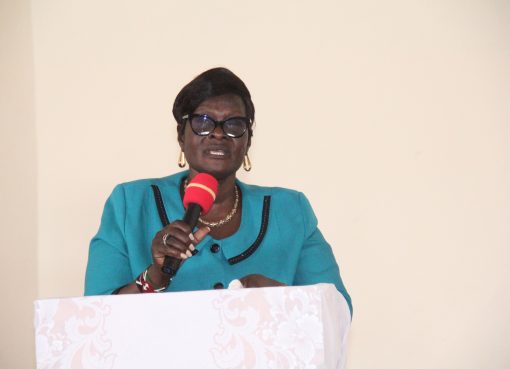
The Principal Secretary (PS)-In-Charge of TVET (Technical, Vocational Education and Training) in Kenya, Dr. Esther Muoria, highlighted that there is need for teachers to move from being just teachers to mentors.
“If we are going to move this country to another level, we have to mentor these young people and everybody in the country,” she said.
The Chair of Vice Chancellors in Kenya Professor, Daniel Mugendi, highlighted that their aim as professionals, is to come together and brainstorm about the future of education and how they will be able to make transition to the new curriculum (CBE).
“We are here to produce the results that are required to take us to the next generation”, he added.
The Conference is expected to produce recommendations on teacher recruitment, training pathways, and policy frameworks, to support the Competency-Based Curriculum roll-out nationwide.